






What Exactly Has Changed?
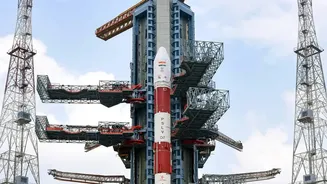
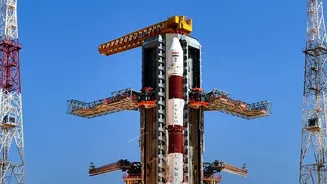
Previously, foreign investment in India's space sector was heavily restricted, requiring government approval for nearly all activities. The new policy, amended in early 2024, creates a tiered system to attract investment more easily. Now, up to 100% FDI
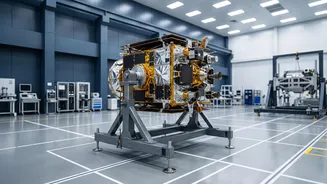
is permitted via the automatic route for manufacturing components and subsystems for satellites and ground segments. For more sensitive areas, the policy allows up to 74% FDI under the automatic route for satellite manufacturing and operations, and up to 49% for launch vehicles and spaceports. Investments beyond these caps are still possible but require government approval. This landmark shift dismantles the old government-monopoly structure, inviting private and foreign players to participate directly in building India's space infrastructure.
Why This, Why Now?
The reform is a core part of the Indian Space Policy 2023, which aims to transition the Indian Space Research Organisation (ISRO) from an operator to a research-focused enabler. The goal is to let private enterprise, both domestic and international, handle the commercial aspects of the space economy. This strategic pivot is expected to rapidly scale India's presence in the global space market, which is currently valued at over $9 billion and projected to hit $44 billion by 2033. By opening the doors to FDI, India is looking to accelerate technology transfer, foster collaborative research, and integrate its burgeoning space industry into the global supply chain, aligning with its broader 'Aatmanirbhar Bharat' (self-reliant India) vision.
A Launchpad for Local Startups
For India's 400-plus space-tech startups, this is a game-changer. Access to foreign capital has been a significant hurdle for many innovators. The liberalised FDI norms are expected to unlock a flood of new funding opportunities, enabling startups to scale their operations, invest in R&D, and compete on a global stage. The government is further sweetening the deal with initiatives like a ₹1,000 crore venture capital fund dedicated to the space sector, managed under the Indian National Space Promotion and Authorisation Centre (IN-SPACe). This financial infusion, combined with the potential for partnerships with established international players, provides a powerful launchpad for homegrown companies working on everything from satellite manufacturing to data analytics.
Creating a New Galaxy of Jobs
The expansion of the space sector is directly linked to the creation of high-skilled jobs. As foreign companies invest in setting up manufacturing plants, R&D centres, and operational hubs in India, the demand for engineers, scientists, data analysts, and specialised technicians is set to soar. The entire value chain—from component manufacturing and satellite fabrication to launch services and downstream applications—will require a larger, more skilled workforce. While some reports note a current gap in specialised, hands-on experience, this policy is seen as a catalyst for growth. With 1.5 million STEM graduates produced annually, India has a deep talent pool ready to be tapped as the industry expands, driving economic growth and creating new career pathways for a generation.
Navigating the Path Forward
While the opportunities are immense, the road ahead requires careful navigation. The regulatory body, IN-SPACe, plays a crucial role in ensuring that this influx of foreign investment proceeds smoothly and securely. All foreign entities must still operate through an Indian company and receive authorisation from IN-SPACe, a process that maintains oversight. Balancing commercial ambitions with national security, particularly in sensitive areas like launch technology, remains a key priority. The success of this policy will depend on a clear and efficient regulatory framework that can manage competition, ensure compliance, and foster a symbiotic relationship between international investors and domestic industry players, ultimately propelling India towards its goal of capturing a larger share of the global space economy.