





A Mission of Firsts
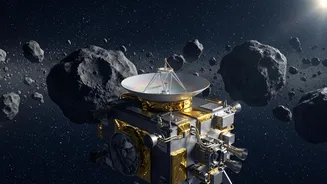
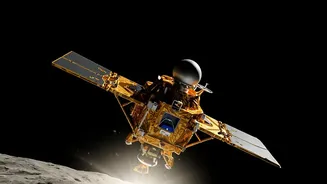
While the headline suggests the entire vehicle is ready, the completed component is a sophisticated, autonomous landing probe, which was designed, built, and tested entirely within the UAE. This lander is a payload for a larger mothercraft, the MBR Explorer,
named after Dubai's ruler, Sheikh Mohammed bin Rashid Al Maktoum. The lander will soon be transported to Colorado in the United States for integration with the MBR Explorer spacecraft, which was developed in partnership with American researchers. This mission, officially called the Emirates Mission to the Asteroid Belt (EMA), is the UAE's ambitious follow-up to its successful Hope Probe, which has been orbiting Mars since 2021. The EMA represents a significant step up, aiming not just for another planet, but for multiple deep-space targets.
The Grand Tour Itinerary
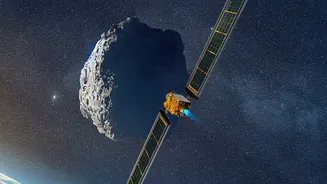
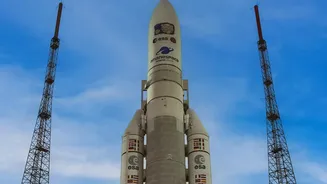
Set for a tight launch window in March 2028 from Japan, the MBR Explorer will embark on a complex, multi-year voyage. It won't fly straight to the asteroid belt. Instead, it will perform a series of planetary 'slingshots' to build speed, using the gravity of Venus in 2028, Earth in 2029, and Mars in 2031 to propel it into deep space. Along its path, the spacecraft will conduct high-speed flybys of six different asteroids between 2030 and 2033. This grand tour is one of the most complex exploration sequences ever planned, gathering data on a diverse set of space rocks. The entire journey will culminate in 2034, when the MBR Explorer finally reaches its primary destination.
Destination: The Mysterious Justitia
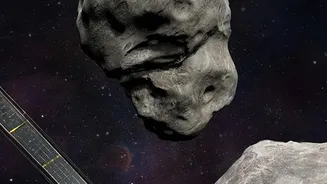
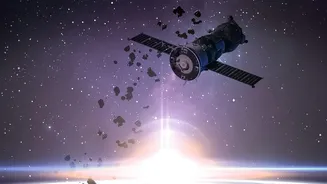
The ultimate prize of the mission is the seventh and final asteroid, (269) Justitia. What makes Justitia special is its unusual reddish colour, a characteristic more common to objects found in the far outer solar system, beyond Neptune. Scientists theorise that Justitia may be a cosmic migrant that was formed in the frigid Kuiper Belt and was later nudged into the main asteroid belt. If so, its surface could hold pristine organic compounds and water-rich minerals—the essential building blocks of life. The MBR Explorer will spend seven months orbiting and studying Justitia from above. Then, in early 2036, it will release the newly completed UAE-built lander for a controlled descent to the surface, aiming to give humanity its first close-up look at this mysterious red world.
Building a High-Tech Nation
Beyond the pure science, the Emirates Mission to the Asteroid Belt serves a powerful strategic purpose for the UAE. It is designed to accelerate the growth of the nation's private-sector space and technology industries. The development of the autonomous lander in Abu Dhabi is a testament to this goal, creating a new generation of Emirati engineers with hands-on experience in building complex systems for deep space. By undertaking such a challenging mission, the UAE is cementing its status as a leading global player in space exploration and demonstrating a long-term vision to build a diversified, knowledge-based economy that is not solely reliant on oil revenue. The mission is as much about building national capability and inspiring youth as it is about exploring asteroids.
The Long Road to Launch
With the lander complete, the clock is ticking. The mission team faces an unforgiving timeline to transport the probe, integrate it with the main spacecraft, and conduct final tests. The March 2028 launch window is critical; the specific alignment of the planets that makes the gravity-assist route possible is rare. Mission officials have stated that if they miss this three-week window, a similar opportunity will not occur for at least another century. There is no backup plan. For now, a key piece of the puzzle is ready. The next major step is the launch, which will kick off a patient, 13-year wait for the final, game-changing data from the surface of Justitia.