




A Thanksgiving to the Goddess
At its heart, Bonalu is a vibrant folk festival dedicated to the Mother Goddess, Mahakali. Celebrated across Telangana, particularly in the twin cities of Hyderabad and Secunderabad, it marks a month of thanksgiving during the Hindu month of Ashada (typically
July and August). The festival's origins trace back to the 19th century, when a deadly plague swept through the region. A military battalion from Hyderabad, stationed in Ujjain, prayed to the Mahakali there, vowing to build a temple for her if she saved their city. The plague subsided, and the soldiers fulfilled their promise, establishing a tradition of gratitude that has since woven itself into the very fabric of the city's identity. It is also believed that during this month, the Goddess returns to her maternal home, where devotees welcome and pamper her.
The Sacred Offering
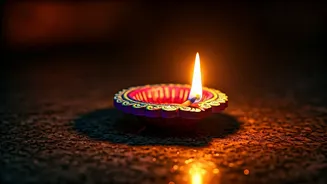
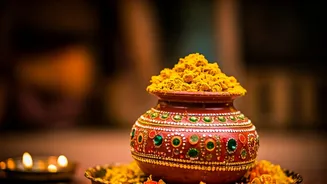
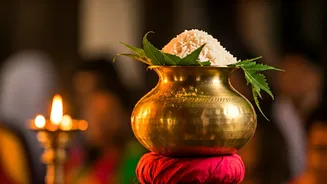
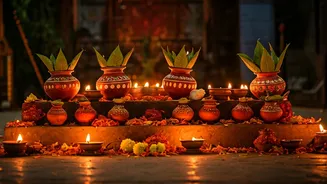
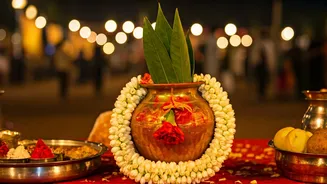
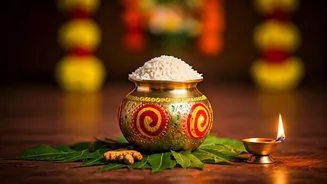
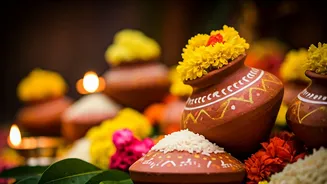
The word 'Bonalu' is derived from the Telugu 'Bhojanalu', meaning a meal or feast. This refers to the central ritual of the festival: the offering of Bonam. Women, dressed in traditional silk sarees, prepare rice cooked with milk and jaggery in new earthen or brass pots. These pots are decorated with turmeric, vermilion, and neem leaves, with a lit lamp placed on top. Carrying these sacred pots on their heads, they form processions and proceed to the temples to make their offering to the Goddess. It is a stunning visual, a river of colour and devotion flowing through the city streets, with some women believed to enter a trance-like state, possessed by the spirit of the Goddess herself.
The Fierce Protector: Pothuraju
No Bonalu procession is complete without the imposing figure of Pothuraju, believed to be the brother of Goddess Mahakali. Played by a well-built, bare-bodied man, he is a formidable sight. His body is smeared with turmeric, his forehead marked with a large vermilion dot, and he carries a thick whip which he lashes to clear the path. Pothuraju is the protector of the procession, the guardian of his sisters carrying the Bonam. He dances with a wild energy to the frantic beat of drums, an embodiment of fierce devotion that is both captivating and intimidating, a central and unmissable part of the Bonalu spectacle.
A Month of Celebrations
The festival is not a single-day event but a month-long affair that moves through different parts of the city. For 2026, the festivities begin around mid-July. The celebrations start on the first Sunday at the Golconda Fort, moving to the Ujjaini Mahakali Temple in Secunderabad and the Balkampet Yellamma temple on the second Sunday. The climax arrives on the third and fourth Sundays, with grand celebrations in the Old City of Hyderabad, particularly at the Sri Mahankali Temple in Lal Darwaza. Each Sunday brings lakhs of devotees to the temples, creating an atmosphere of intense community and faith. The festival culminates with the 'Ghatam' procession, where a decorated copper pot representing the Goddess is carried by a priest and ceremoniously immersed in water.
Where Tradition Meets the Modern City
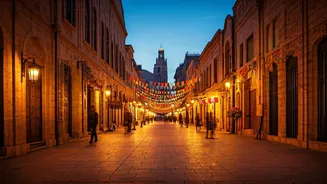
Bonalu is more than just a series of rituals; it is a living, breathing cultural phenomenon. The streets of the Old City, especially around Charminar and Lal Darwaza, transform into a fairground. Brightly lit streets, towering cutouts of the Goddess, and the constant sound of folk music create an immersive experience. In recent years, the Telangana government has declared it a state festival, allocating funds to ensure smooth arrangements, including security and facilities for the massive crowds. It’s a festival where ancient beliefs are celebrated with modern pomp, a time when families come together, and the entire city seems to pause and participate in a collective act of faith and celebration, showcasing Hyderabad's unique cultural soul.