





The Allure of Hacking the Planet
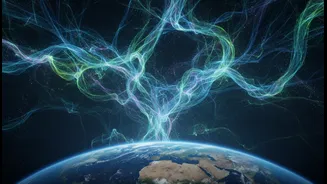
The dream is a powerful one: what if we could just flip a switch to cool the planet? This is the core appeal of geoengineering, a field of planetary-scale climate interventions designed to counteract global warming. Proposals range from spraying reflective
particles into the stratosphere to brightening clouds over the ocean. The motivation is clear. As emissions continue to rise, these technologies seem to offer a 'safety valve' or a last-ditch effort to prevent catastrophic outcomes. Proponents argue they could buy us precious time while we transition away from fossil fuels. The problem is, our planet's climate system is an intricate web of interconnected processes, and pulling on one thread can have dangerous and unpredictable consequences elsewhere.
The Dangers of Hacking the Sun
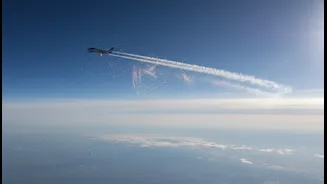
One of the most discussed geoengineering methods is Solar Radiation Management (SRM), which aims to reflect a small fraction of sunlight back into space. The most common proposal involves injecting sulfate aerosols into the stratosphere, essentially mimicking the cooling effect of a large volcanic eruption. While models suggest this could lower global temperatures, the risks are staggering. For one, it does nothing to stop the rising concentration of greenhouse gases in the atmosphere or the resulting ocean acidification. More alarmingly, studies show that meddling with solar radiation could dramatically alter regional weather patterns, potentially weakening the vital Indian summer monsoon, which underpins the livelihoods of over a billion people. An uneven deployment could lead to devastating droughts, floods, and crop failures in some regions while benefiting others.
The Peril of 'Termination Shock'
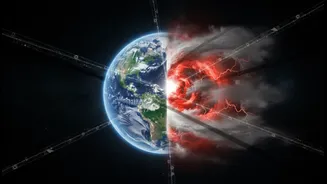
Perhaps the most cinematic risk associated with solar geoengineering is the “termination shock.” Since SRM would only mask the warming from greenhouse gases, not eliminate it, any sudden stop to the deployment could be catastrophic. Imagine a scenario where, due to political conflict, economic collapse, or a terrorist act, the decades-long project of spraying aerosols into the sky is abruptly halted. The planet's temperature would not just rise, it would skyrocket, rebounding rapidly to the level it would have been without the intervention. This rapid warming would be far more challenging for ecosystems and societies to adapt to than the more gradual warming we face now, potentially causing an even greater catastrophe than the one it was meant to prevent.
A Complex System, Not a Simple Machine
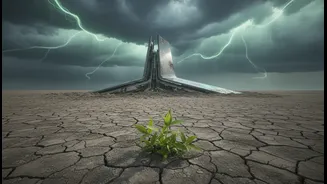
Climate change is what policy experts call a 'wicked problem'—a challenge so complex and interconnected with other systems that it defies simple solutions. The issue is not just technical; it's deeply entwined with our economies, politics, and energy systems. A technological intervention that works in a computer model may fail to account for the chaotic and unpredictable nature of the real world. Recent studies show some forms of geoengineering could cripple major climate cycles like El Niño, with far-reaching consequences for global weather. Turning the Earth into a laboratory for unproven, high-stakes experiments carries the risk of locking in irreversible damage.
The Governance Nightmare
Beyond the scientific risks lies a geopolitical minefield. Who gets to control the planet's thermostat? If one nation's actions to cool the globe cause a drought in another, who is held responsible? There is currently no international framework to govern the research or potential deployment of these technologies. The potential for international conflict is immense. Furthermore, the promise of a future techno-fix creates a 'moral hazard,' potentially slowing down the urgent and necessary work of cutting emissions today. It offers the dangerous illusion of an easy way out, distracting from the proven, albeit more difficult, path of systemic change.