


A Landmark Discovery
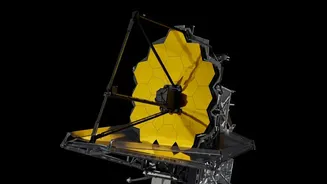
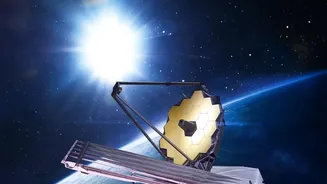
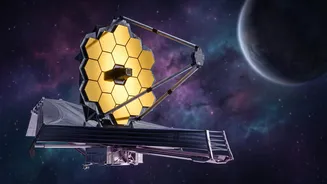
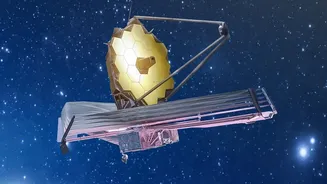
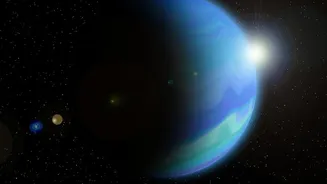
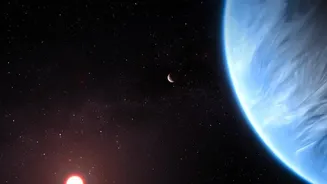
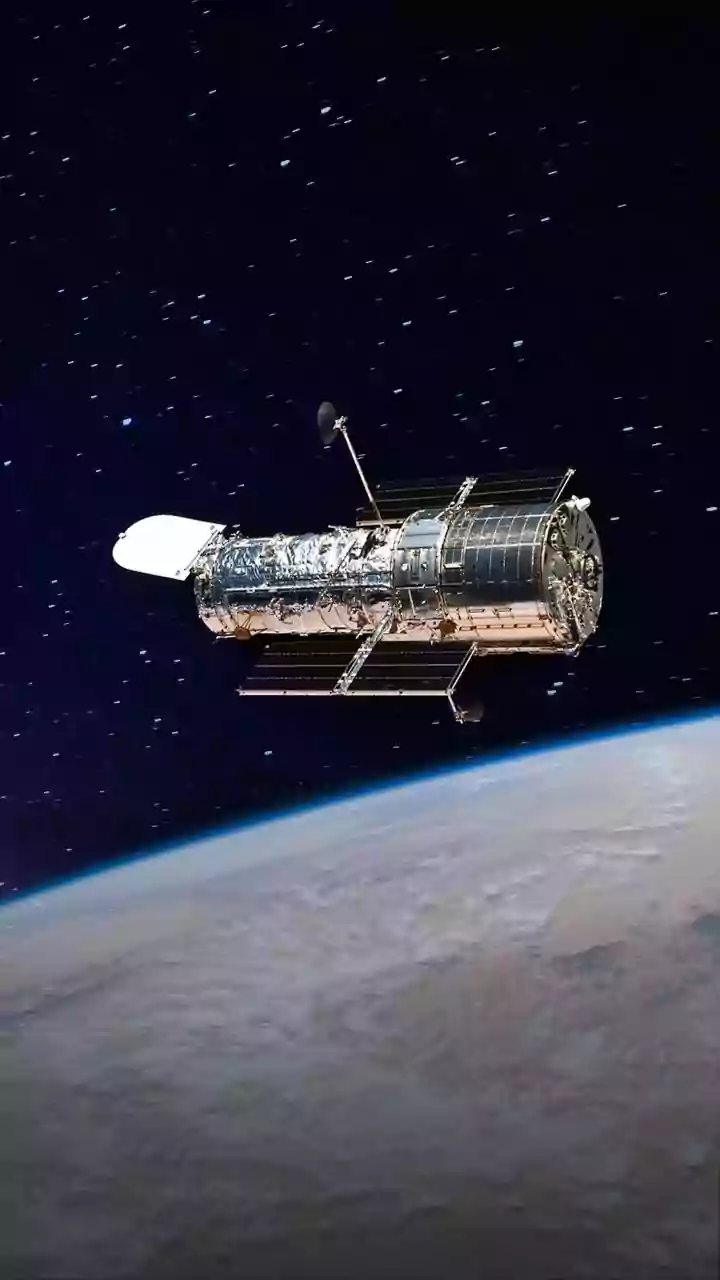
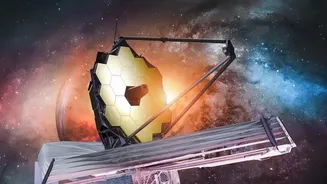
In a recent announcement that has electrified the astronomy community, scientists confirmed that the James Webb Space Telescope (JWST) has detected the chemical signature of water vapour, likely in the form of clouds, in the atmosphere of a 'Super-Earth'
exoplanet. An exoplanet is a planet that orbits a star outside our solar system. This groundbreaking observation marks a pivotal moment in our quest to understand the worlds beyond our own. While water has been detected on gas giants before, finding it on a potentially rocky world is a significant step forward. The discovery doesn't just confirm the incredible power of the JWST's instruments; it opens a new chapter in the search for potentially habitable planets.
What Are 'Super-Earths'?
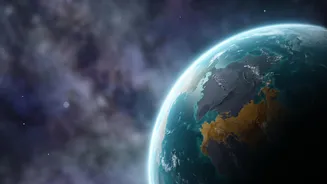
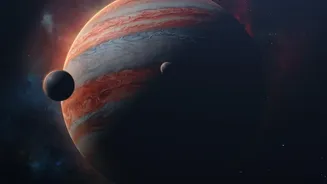
The term 'Super-Earth' might sound like a planet of superheroes, but it refers to a class of planets unlike any found in our solar system. These are worlds with a mass higher than Earth's but lighter than our ice giants like Neptune. They can be between two and ten times the mass of our home planet. Super-Earths are surprisingly common in our galaxy, yet their nature remains a mystery. They could be rocky worlds, water worlds completely covered in deep oceans, or even dense gas planets known as 'mini-Neptunes'. Because our own solar system lacks a planet in this size range, every new piece of data on Super-Earths provides crucial insights into how planetary systems form and evolve.
How Webb Peers Into Alien Skies
Detecting the atmosphere of a planet hundreds of light-years away is an extraordinary feat of engineering and science. The JWST achieves this using a technique called transit spectroscopy. When an exoplanet passes in front of its host star from our perspective, a tiny fraction of the starlight filters through the planet's atmosphere. Different molecules in the atmosphere absorb specific wavelengths, or colours, of light. By capturing the starlight before and during this transit, astronomers can see which wavelengths have been absorbed, creating a chemical fingerprint of the atmosphere. The JWST's powerful infrared spectrographs are exquisitely sensitive to these tiny changes, allowing them to identify molecules like water, methane, and carbon dioxide from across the galaxy.
The Significance of Water
Finding water is a thrilling development because, as far as we know, it is a crucial ingredient for life. The presence of water vapour strongly suggests the possibility that liquid water could exist on the planet's surface under the right temperature and pressure conditions. However, scientists are quick to manage expectations. The detection of water vapour alone does not mean the planet is habitable. The world in question could have a scorching hot atmosphere where water exists only as steam, or it might orbit a volatile star that bathes its surface in lethal radiation. For example, previous JWST observations of the rocky super-earth GJ 486 b also found hints of water, but scientists couldn't be sure if it was from the planet or the star itself.
Not Life, But a Crucial Signpost
It is critical to understand that this discovery is not evidence of alien life. Rather, it is a signpost pointing astronomers in the right direction. By identifying worlds with water in their atmospheres, scientists can build a target list of promising candidates for further, more detailed study. Future observations will aim to identify other 'biosignatures'—gases like oxygen and methane—in a combination that could hint at biological processes. The detection of water vapour clouds is a foundational first step. It proves that the tools and methods work, and that we are now capable of characterising the atmospheres of small, potentially rocky worlds that orbit distant stars. This is no longer the realm of science fiction; it is the cutting edge of modern astronomy.