

A Storm Within a Storm
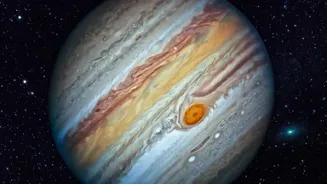
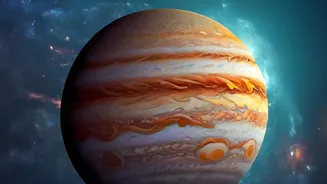
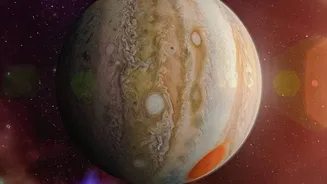
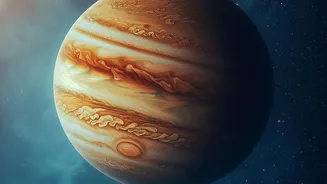
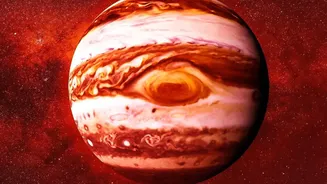
For as long as we have pointed telescopes at Jupiter, its Great Red Spot has been a symbol of cosmic stability—a colossal, swirling storm that has raged for at least 150 years. But recent, high-resolution images are peeling back the layers of this familiar
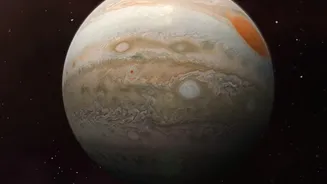
giant, revealing a much more chaotic and dynamic system than previously imagined. Scientists have discovered that the spot is not a single, uniform vortex. Instead, it is a complex weather system filled with its own smaller storms, filaments, and eddies. The latest views, captured by advanced planetary cameras, have focused on these features, which some have dubbed 'cosmic tornados' for their swirling, violent nature. These are not just tiny specks; some of these internal vortices are enormous weather events in their own right, caught within the larger embrace of the main storm. For the first time, scientists are able to track their movement and evolution with stunning clarity.
What Are These Cosmic Tornados?
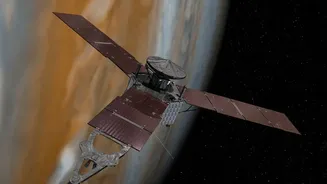
While the term 'cosmic tornado' paints a vivid picture, these features are more accurately described by scientists as vortices or eddies. Unlike tornadoes on Earth, which are driven by a different set of atmospheric conditions, these Jovian vortices are masses of rotating gas that behave like smaller, spinning storms within the Great Red Spot. Analysis from missions like Juno and the Hubble Space Telescope shows a wide variety of structures inside the main storm. There are long, dark filaments of gas moving at incredible speeds of over 500 kilometres per hour, compact cloud clusters that may indicate convection, and turbulent zones where the flow of gas is chaotic. These features are all part of the intricate dance of energy that keeps the Great Red Spot churning. Some researchers believe that these smaller eddies may play a crucial role in the overall dynamics of the storm, either by feeding it energy or by sapping its momentum.
A Shrinking Giant
The discovery of what's happening inside the Great Red Spot comes at a time when the storm itself is undergoing a historic transformation: it is shrinking. Observations stretching back to the late 1800s show that the spot was once vast enough to swallow three Earths, measuring over 40,000 kilometres across. By the time the Voyager probes flew by in 1979, it had shrunk to about 23,000 kilometres. Recent measurements from Hubble confirm this trend continues, with the storm now measuring just over 16,000 kilometres across, making it more circular than oval. Scientists have noted that the rate of shrinkage has even accelerated at times. The big question is why. One leading hypothesis is that the interaction with smaller eddies, like the 'cosmic tornados' now being observed, could be altering the storm's internal energy and causing it to lose size and strength over time.
New Eyes on an Old Friend
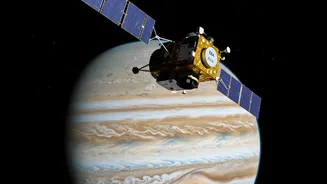
These unprecedented views are possible thanks to a new generation of powerful observatories, including the James Webb Space Telescope (JWST) and the ongoing Outer Planet Atmospheres Legacy (OPAL) program from the Hubble Space Telescope. While Hubble has been providing yearly check-ups on the outer planets, revealing long-term changes, JWST's infrared capabilities allow it to peer into different layers of Jupiter's atmosphere. For instance, JWST has observed the region above the Great Red Spot, which was previously thought to be uninteresting. It discovered a surprisingly complex structure of waves and hotspots, possibly created by the violent turbulence from the storm below. This turbulence can generate atmospheric gravity waves that travel upwards and deposit their energy, heating the upper atmosphere. This suggests the Great Red Spot's influence extends far beyond the clouds we can see, impacting the planet's global climate.
What It Means for Planetary Science
Studying the Great Red Spot and its internal dynamics isn't just about cataloging strange weather on a distant world. It provides a unique natural laboratory for understanding fluid dynamics under extreme conditions. The physics governing Jupiter's storms can help scientists refine their models for hurricanes on Earth and understand the atmospheres of exoplanets orbiting other stars. The shrinking of the solar system's most iconic storm is a powerful reminder that even the most seemingly permanent celestial features are in a constant state of change. We may be part of the generation that witnesses the transformation, or even the end, of this centuries-old wonder. Each new image brings another clue, deepening the mystery of why the giant is fading and what that means for our understanding of the gas giants that populate our universe.