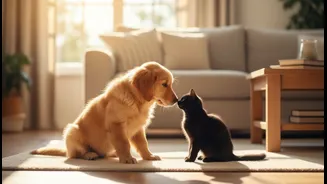



More Than Just a Feeling
The connection we feel with our pets is undeniable, and now, science is validating it. The field of human-animal interaction is uncovering the profound psychological and physiological effects of these relationships. Studies show that even brief interactions,
like petting a dog or cat for just 10 minutes, can measurably lower cortisol, the body's primary stress hormone. This isn't just about feeling good; it's a tangible biological response. Researchers are finding that the bond between humans and their pets is a two-way street, where both parties experience hormonal changes, altered behaviors, and measurable health benefits. As we move beyond anecdotal evidence, a fascinating picture emerges of how two different species, dogs and cats, have uniquely adapted to life with humans.
The Canine Connection: An Evolved Bond
Dogs have lived alongside humans for millennia, and the latest science suggests their ability to connect with us is deeply ingrained. Research shows dogs are exceptionally skilled at reading human emotions. They can distinguish between happy and angry facial expressions, interpret our tone of voice, and even detect stress through scent. This isn't just learned behavior; studies suggest dogs may have evolved specifically to understand human emotional cues. The key to this deep connection often involves oxytocin, the “love hormone.” Mutual gazing between a dog and its owner has been found to increase oxytocin levels in both, strengthening their bond in a way similar to that between a mother and infant. This chemical feedback loop fosters trust and affiliation, making the dog-human relationship one of the most powerful interspecies connections known.
The Enigmatic Feline: A Different Kind of Love
Cats have long been stereotyped as aloof and independent, but research is painting a much more nuanced portrait. Studies show that cats, much like dogs and even human children, form secure and insecure attachments to their owners. A securely attached cat uses its owner as a source of comfort in unfamiliar situations. Contrary to the belief that they only care about food, many cats prefer human interaction over food or toys. Their communication is just more subtle. For instance, a recent study highlighted that a cat's purr is a stable, individual vocal fingerprint, more so than its highly adaptable meow, which has evolved to communicate specifically with humans. Even the purr itself is more complex than once thought, with research showing it's produced by a special anatomical adaptation in the cat's larynx, not just repetitive muscle contractions. These findings challenge us to look past old clichés and appreciate the unique ways cats show affection.
Not a Competition, But a Contrast
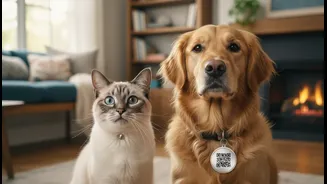
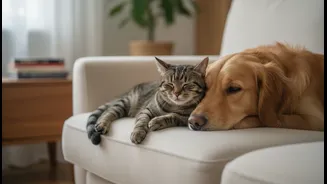
When comparing dogs and cats, it's less a question of which loves us more and more about how they express it. Their evolutionary paths are key. Dogs were domesticated as social cooperators, making them naturally more reliant on human cues and comfort. Cats, on the other hand, were drawn to human settlements for pest control, forming a more independent, symmetrical relationship. This is reflected in their behavior. In stressful situations, dogs often seek out their owners for comfort, a classic 'safe haven' behavior. Many cats, however, might hide or seek solitude. Their attachment is real, but their expression of it is different. Studies on physical contact show that stroking and leaning are key bonding actions for dogs, while rubbing (or bunting) is more significant for cats, highlighting their distinct 'love languages'. Furthermore, while oxytocin plays a role in both species, its effect can vary; for some anxious cats, forced affection can actually decrease oxytocin levels.
What This Means for You and Your Pet
This wave of research does more than just satisfy our curiosity; it helps us become better pet owners. Understanding that your dog is hardwired to read your emotional state reminds us that our moods can directly impact their well-being. Recognizing the signs of a secure attachment in your cat—like greeting you at the door or using you as a base for exploration—allows you to appreciate their affection on their own terms. Science confirms that the bond is real and has a tangible impact on health and happiness for both people and their animals. Knowing that female owners tend to pick up on subtle cues better might encourage male owners to be more observant, while research showing cats meow more at men suggests they're trying to communicate more explicitly when needed. Ultimately, this new understanding encourages us to observe, listen, and respond to our pets as the complex individuals they are.