


Meet SHAPE: The Exoplanet Hunter in Disguise
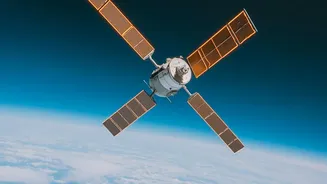
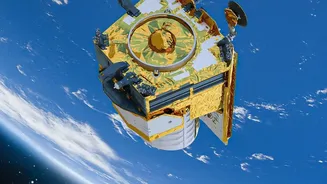
Aboard Chandrayaan-3’s Propulsion Module—the part of the spacecraft that carried the lander and rover to the Moon—was a unique scientific instrument called SHAPE. The name is an acronym for Spectro-polarimetry of Habitable Planet Earth. It was the only
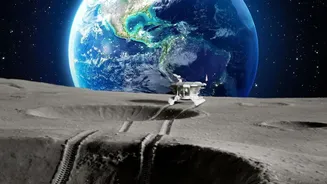
scientific payload on the Propulsion Module, designed with a clever secondary objective. After releasing the Vikram lander, the module continued to orbit the Moon, giving SHAPE a perfect vantage point. Its mission: to look at Earth as if it were a mysterious, far-off world and study the characteristics that make it habitable. This data acts as a vital baseline, a cosmic cheat-sheet for scientists searching for other life-sustaining planets in the universe.
How to Study a Planet's Secrets From Afar
SHAPE’s method involves a technique called spectro-polarimetry. In simple terms, it analyzes the light reflected from a planet. The spectrum of this light reveals which gases are present in its atmosphere, like oxygen or carbon dioxide, by showing which wavelengths of light are absorbed. The 'polarimetry' part measures the polarization of light—how the light waves are oriented after bouncing off surfaces like clouds, oceans, or land. This combined analysis creates a detailed 'fingerprint' of a planet. SHAPE specifically looks at these signatures in the near-infrared wavelength range (1.0 to 1.7 micrometers), which is ideal for detecting key atmospheric components and surface features.
Earth as a Cosmic Benchmark
We know Earth has life, a breathable atmosphere, and vast oceans. For astronomers studying distant exoplanets—planets orbiting other stars—Earth is the only confirmed example of a habitable world. The challenge is that these exoplanets are so far away that they appear as just a single point of light. By observing Earth as a 'disc-integrated' whole, just like a distant exoplanet, SHAPE captures the combined light signatures of our planet. It recorded how these signatures change as Earth rotates, presenting different faces (continents, oceans, cloud cover) and as it moves through different phases, much like our Moon does. This provides a crucial reference library for what an Earth-like planet's light fingerprint should look like to a distant telescope.
A Clever Use of Mission Architecture
The inclusion of SHAPE was a stroke of scientific ingenuity. The Propulsion Module’s primary job was to transport the lander. By adding this lightweight, 4.8 kg experimental payload, ISRO repurposed the module for extended scientific observation long after its main task was complete. After its lunar operations, ISRO even maneuvered the Propulsion Module out of lunar orbit and back into a high Earth orbit in December 2023 to allow SHAPE to continue its observations. This extended mission provides even more data on Earth from various angles and distances, enhancing the quality of the 'exoplanet blueprint' it is creating.
Paving the Way for Future Discoveries
The ultimate goal of the SHAPE experiment is to aid in the global quest to find life beyond Earth. When next-generation telescopes are pointed at potentially habitable exoplanets, the data they collect can be compared against the reference signatures gathered by SHAPE. If a distant planet's light fingerprint shows similar characteristics—especially the polarization patterns caused by clouds and the spectral signs of key atmospheric gases—it would be a strong candidate for further investigation. Essentially, Chandrayaan-3's SHAPE experiment didn't just explore the Moon; it turned its gaze back on us to help us recognize our own reflection across the cosmos.