


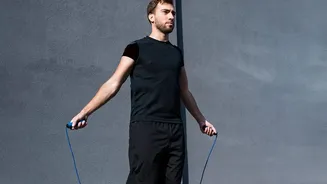
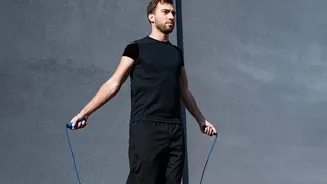
Ready to take your fitness to the next level with a jump rope? This simple tool offers a powerful workout, but success lies in the details. Your skipping surface and your shoes can make the difference between a great session and an injury.
Finding the Right Space to Jump
The surface
you jump on is critical for both safety and performance. The ideal surface is firm but has a slight give to absorb impact. Suspended wood floors, like those in basketball courts or dance studios, are considered the gold standard because they provide bounce and reduce stress on your joints. Rubberized gym flooring or running tracks are also excellent choices. If you don't have access to a gym, your main goal is to avoid the worst offender: concrete. Jumping directly on concrete or asphalt sends a shock through your joints with every landing, which can lead to shin splints and other overuse injuries. It also dramatically wears down your rope. Softer surfaces like thick grass or plush carpet might seem like a good alternative, but they can be just as problematic. They absorb too much energy, provide no rebound, and can cause the rope to snag, increasing your risk of tripping or rolling an ankle.
The Outdoor Solution: A Jump Rope Mat
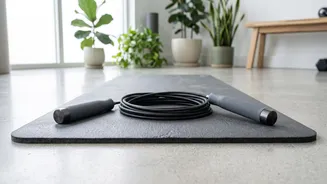
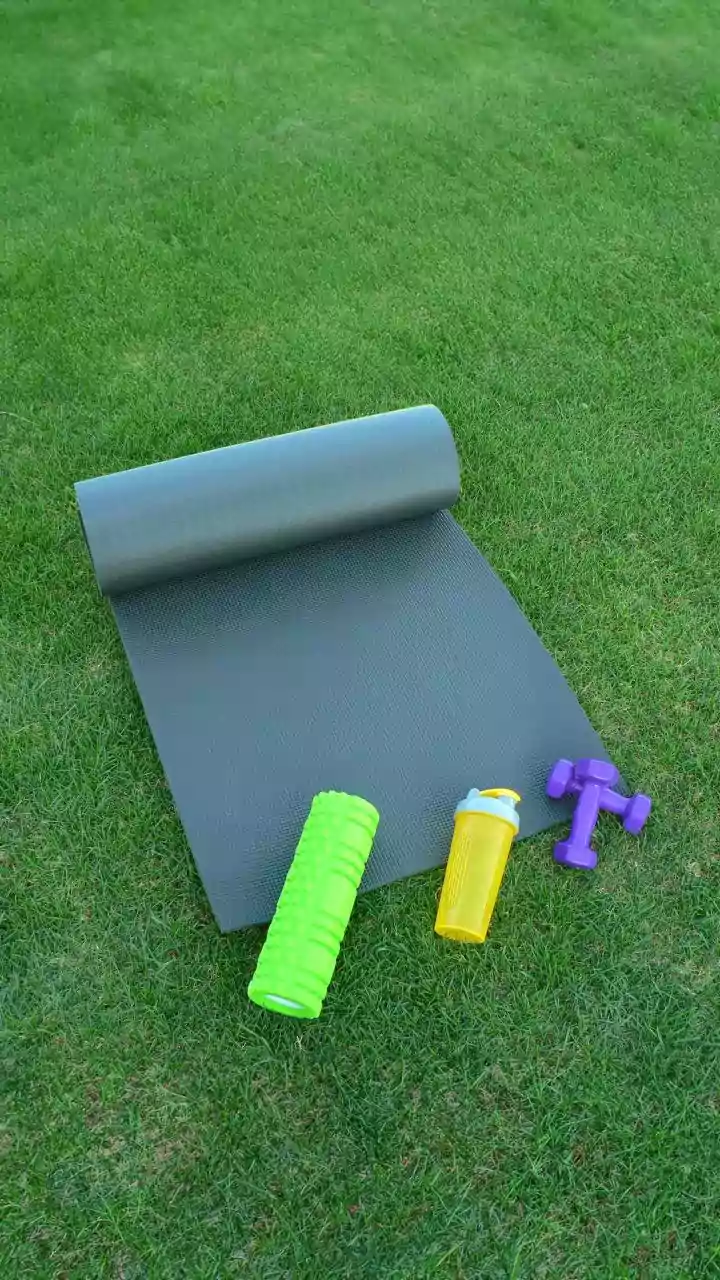
If your only option is a hard surface like a driveway, patio, or garage floor, a jump rope mat is a non-negotiable investment. These mats are specifically designed for high-impact activity. They are typically made from dense rubber or foam that provides a crucial layer of cushioning to protect your joints from the harshness of concrete. A good mat creates a consistent, non-slip surface that helps you maintain proper form and reduces the risk of injury. Furthermore, it will drastically extend the life of your jump rope by creating a smooth contact point, preventing the abrasion that rough surfaces cause. When choosing a mat, look for one designed for jumping rope or plyometrics; a standard yoga mat is generally too thin and soft, and won't provide adequate protection or durability for repeated impact.
What Makes a Good Skipping Shoe?
The right footwear is just as important as the right surface. While you might be tempted to grab your cushioned running shoes, they aren't always the best choice. Running shoes are often built with significant heel cushioning to accommodate a heel-to-toe strike. When jumping rope, you land on the balls of your feet, so you need a shoe with ample cushioning and support in the forefoot. Look for cross-training or workout-specific shoes that offer a balance of flexibility, stability, and impact absorption. Key features include a breathable upper to manage sweat, a relatively flat outsole for stability, and a secure fit to prevent your foot from sliding inside the shoe. Ensure there's enough room in the toe box—about a thumb's width—to prevent bruised toenails, especially during more intense movements like double-unders.
Footwear Mistakes to Avoid
One of the most common errors is using shoes with an elevated heel or a thick, chunky sole. These can create instability and make it harder to maintain balance on the balls of your feet. Another mistake is using old, 'dead' shoes. The foam cushioning in athletic shoes breaks down over time, losing its ability to absorb shock long before the shoe looks worn out. If landings start to feel harsh, your shoes might be the culprit. While some people enjoy jumping barefoot, it's best reserved for soft, forgiving surfaces like a proper mat or soft grass, and generally for shorter sessions. On hard surfaces, going barefoot offers no impact protection. Finally, avoid the temptation to wear a shoe that is too loose. An improper fit is a leading cause of blisters and can compromise your stability during jumps.