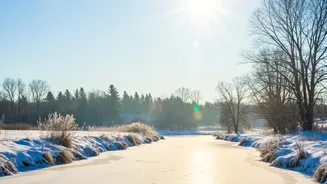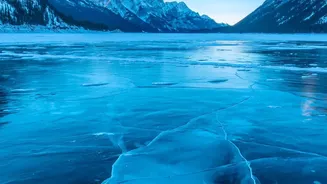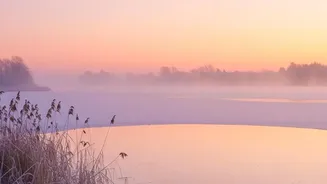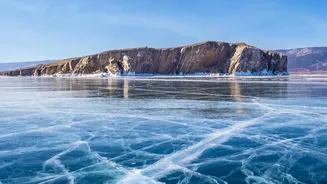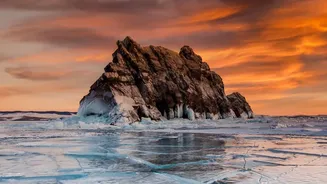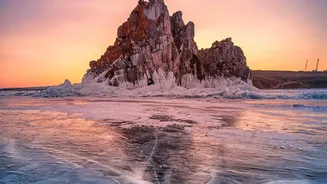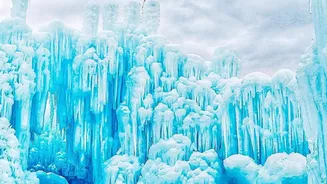


A frozen lake might seem like a vast, silent expanse of white, but look closer. Its surface is a canvas for stunning natural art, where physics and chemistry create intricate patterns and mirror-like reflections that tell a scientific story.
The Mirror on the Ice
One of the
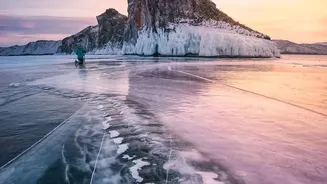
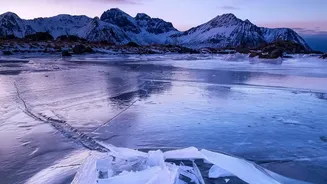
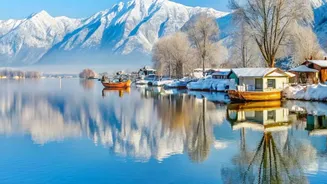
most captivating features of a newly frozen lake is its ability to act as a giant, dark mirror, reflecting the sky, trees, and mountains with breathtaking clarity. This phenomenon occurs when the ice forms slowly and smoothly under calm conditions. This 'black ice' is highly transparent because it contains very few trapped air bubbles, allowing light to pass through to the dark water below. The smoothness of the surface, a quality known as being 'specular', is key. When light from the sky or a distant treeline hits this ultra-smooth surface, it bounces back at a predictable angle, creating a near-perfect reflection, much like a still pond. However, if the ice is disturbed by wind or freezes quickly, its surface becomes rough and uneven, scattering light in all directions and destroying the mirror effect.
Bubbles Trapped in Time
Look beneath the surface, and you might see stacks of white, disc-like shapes frozen in suspended animation. These are not air pockets, but bubbles of methane gas. They are created by bacteria on the lakebed that feed on decaying organic matter, like dead plants and leaves. This decomposition process releases methane, which bubbles up through the water. In warmer months, these bubbles simply pop at the surface and escape. But in winter, as the lake freezes from the top down, the rising bubbles get trapped against the underside of the growing ice sheet. As the ice thickens, subsequent bubbles get trapped underneath the previous ones, creating stunning vertical stacks that look like frozen sculptures. While beautiful, these methane bubbles are also a potent greenhouse gas, released into the atmosphere when the ice thaws.
A Symphony of Cracks and Ridges
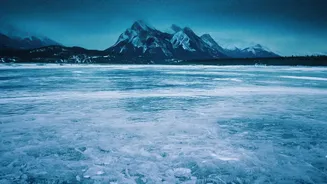
The sharp, resonant sounds that echo across a frozen lake are the result of the ice cracking. These cracks, which often form in striking geometric or web-like patterns, are caused by thermal stress. As air temperatures fluctuate, the ice expands and contracts. When it gets very cold, the ice contracts and can split open. Water from below seeps into the new crack and freezes. Later, when the weather warms, the ice sheet expands. With the crack now filled, this expansion creates immense pressure, which can cause the ice to buckle and shove upwards, forming dramatic pressure ridges. These ridges can be a testament to the powerful forces at play, creating jagged lines that break up the smooth surface of the lake.
Nature’s Fleeting Ice Flowers
Under very specific conditions, you might witness one of nature's most delicate and rare formations: frost flowers. These are not frozen plants, but intricate, feathery ice crystals that seem to 'grow' on the surface of new, thin ice. They form in cold, calm weather when the air is significantly colder than the ice surface. Moisture sublimating from the warmer ice hits the frigid air above, becoming supersaturated and then crystallising on any small imperfection on the surface. The result is a beautiful, spiky structure that looks like a crystal bouquet. In a different but related phenomenon, 'ice flowers' or 'ice ribbons' can also form on the stems of certain plants near the water's edge when sap freezes, expands, and extrudes through cracks in the stem, creating delicate, ribbon-like curls of ice.
The Curious Case of Ice Pancakes
In larger bodies of water with wave action, a peculiar formation known as 'pancake ice' can occur. These are circular discs of ice, ranging from a few inches to several feet in diameter, often with raised rims. They form when slush or newly formed sheets of ice are broken up and jostled by waves. The constant bumping and rotating against each other grinds down the edges, smoothing them into a circular shape. The raised edges are formed when slush splashes up on the sides during collisions and freezes. These 'pancakes' can eventually freeze together to form a solid, textured ice sheet, marking a transitional stage in the lake's journey to becoming fully frozen.