





What Are Stepwells?
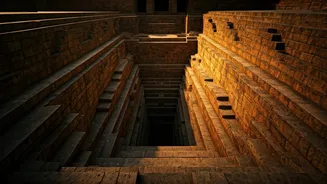
Before you hit the road, it helps to know what you’re looking for. Stepwells, known as 'baolis' or 'vavs', are unique to the Indian subcontinent. They were designed to solve a fundamental problem: accessing groundwater in regions with seasonal rains.
But their function evolved into something far more profound. They became cool, shaded retreats from the summer heat, elaborate social hubs where communities gathered, and canvases for breathtakingly intricate carvings. Each stepwell tells a story of its time, its patrons, and the people it served. As you descend the steps, you're not just going down to a water source; you're travelling back in time.
Agrasen ki Baoli, New Delhi
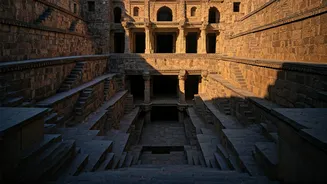
Let’s start with one hiding in the heart of the capital. Tucked away amidst the high-rises of Connaught Place, Agrasen ki Baoli is an unexpected oasis of calm and history. This 60-metre-long, 15-metre-wide structure features 108 steps descending into the earth. The stone walls, lined with arched niches, grow cooler and quieter with every step down. Though its origins are debated—some believe it was built by the legendary King Agrasen—it was likely rebuilt in the 14th century during the Tughlaq or Lodi periods. Its central location makes it the perfect quick escape for Delhiites or a fascinating first stop for visitors exploring the city's layered history.
Panna Meena ka Kund, Rajasthan
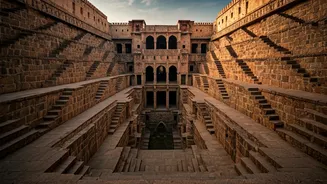
Just a short drive from Jaipur, near the famous Amber Fort, lies a stepwell that is a photographer’s dream. Panna Meena ka Kund is a masterpiece of symmetry. Its crisscrossing staircases form a mesmerising geometric pattern that plays tricks on the eye. Built in the 16th century, this was more than a water source; it was a community space for locals, especially women, to gather and socialise away from the public gaze. The octagonal gazebos and recessed niches add to its charm. Tip: Visit in the early morning or late afternoon when the light is soft, making the shadows and shapes of the steps truly pop.
Adalaj ni Vav, Gujarat
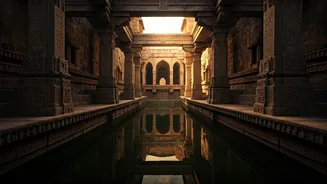
If stepwells could talk, Adalaj ni Vav would be a master storyteller. Located just outside Ahmedabad, this five-storey-deep vav is a stunning example of Solanki architecture. Its walls are covered in intricate carvings depicting everything from mythological scenes and floral motifs to everyday life—women churning butter, dancers, and musicians. Built in 1498, it has a tragic and fascinating backstory involving a queen, a promise, and a sacrifice. The structure is designed to be a natural air conditioner, with the temperature inside remaining several degrees cooler than the outside. It's a must-visit on any road trip through Gujarat, showcasing the pinnacle of stepwell artistry.
Toorji Ka Jhalra, Jodhpur
Not all ancient structures are static relics. Toorji Ka Jhalra in Jodhpur is a prime example of a heritage site brought back to life. Built in the 1740s but later neglected and submerged, this red sandstone stepwell was painstakingly restored in recent years. Today, it’s a vibrant hub in the heart of the Blue City. You'll find locals and tourists alike gathered around, with some brave souls even taking a plunge into its deep, cool waters. Surrounded by chic cafes and boutique shops, it’s a perfect blend of ancient architecture and modern urban culture, proving that these historic structures can still be a central part of community life.
A Note on Responsible Visiting
These sites are precious parts of our heritage. When you visit, treat them with respect. Do not litter, avoid climbing on delicate structures unless permitted, and be mindful of local customs. The goal is to preserve these wonders so that they can continue to inspire for centuries to come. Take photos, make memories, but leave no trace behind.