



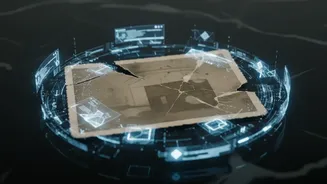
The Challenge with Old Photos
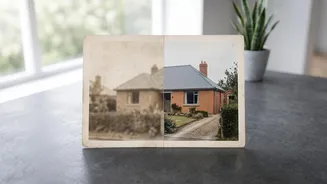
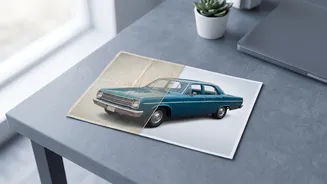
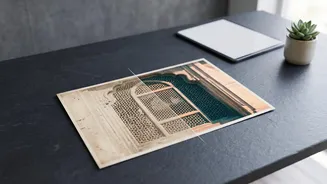
Every old photograph tells a story, but time often tries to erase it. Physical damage like cracks, tears, stains, and missing corners can obscure critical parts of an image. Chemical degradation leads to fading, discoloration, and a loss of contrast.
For years, the only solution was painstaking manual restoration by a professional, who would spend hours digitally painting over flaws pixel by pixel. This process was expensive, time-consuming, and required a high degree of artistic skill, putting it out of reach for many.
How AI Changes the Game
Instead of just editing an image, AI-powered tools aim to understand and reconstruct it. The technology behind this is a subset of AI called deep learning. An AI model is 'trained' on a massive dataset containing millions of pairs of images—both damaged and clean versions. By analyzing this vast library, the AI learns common patterns of degradation and, more importantly, how to reverse them. It learns what a human face, a fabric texture, or a natural landscape is supposed to look like, allowing it to make highly educated guesses about what's missing.
The Core Technique: Image Inpainting
The primary method for repairing cracks and missing sections is called 'image inpainting'. Think of it as a hyper-intelligent version of Photoshop's content-aware fill. When the AI detects a scratch or a tear, it analyzes the pixels surrounding the gap. Using the knowledge from its training, it doesn't just copy and paste from nearby; it generates entirely new pixels that create a seamless and contextually appropriate fill. Advanced models can realistically reconstruct complex textures and even parts of faces that are completely missing.
Bringing a World of Color
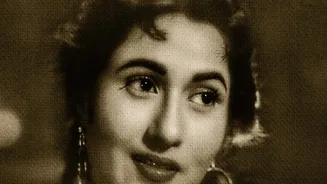
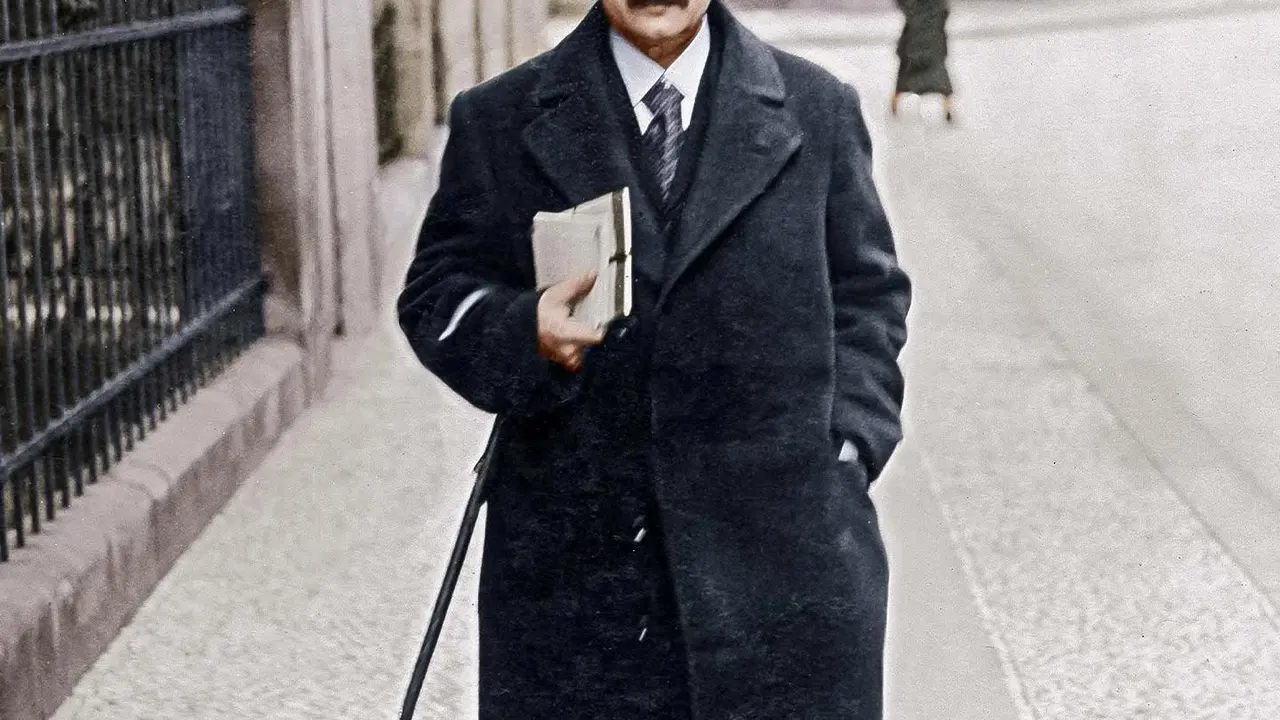
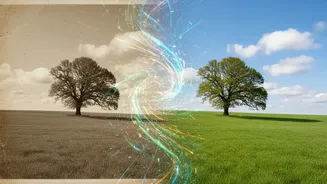
For black-and-white photos, AI offers another touch of magic: colorization. A black-and-white image only contains brightness information, not color. AI colorization models are trained on millions of color photos to learn the relationship between objects and their typical colors. The AI recognizes a patch of pixels as 'sky' and knows it should likely be blue, or identifies a face and applies plausible skin tones. While not always perfectly accurate to the original scene—it can’t know if a dress was navy or forest green—it can create vibrant, believable results that bring a new emotional dimension to old images.
Generative Models: The Creative Engine
The most powerful restoration tools use a sophisticated architecture called a Generative Adversarial Network, or GAN. A GAN consists of two competing neural networks: a 'Generator' and a 'Discriminator'. The Generator's job is to create the repaired image patch, while the Discriminator's job is to judge whether that patch looks real or fake by comparing it to its knowledge of authentic photos. This back-and-forth process pushes the Generator to create increasingly realistic and detailed reconstructions until its work is indistinguishable from a real photo.
Limitations and the Human Touch
Despite its power, AI is not a perfect solution. The technology is making an informed guess, not recovering a lost memory. AI can sometimes 'hallucinate' details, creating faces that look slightly off or textures that don't match the original. For photos with extreme damage or historical importance, the nuanced judgment of a human expert is still vital to ensure accuracy and preserve the photo's integrity. AI tools are best seen as a powerful assistant, democratizing restoration for everyday users but not fully replacing the artistry of a professional.