




A New Era of Lunar Living
The dream of living on the Moon is moving closer to reality. With the Artemis program, NASA intends to establish a sustained human presence, complete with a 'Moon Base' near the lunar south pole. This isn't a short-stay mission; it's about creating a permanent
foothold for science and exploration. But before astronauts can move in, scientists need a much clearer picture of the dangers they will face. The lunar environment is profoundly hostile, and surviving there long-term requires a deep understanding of its many threats. To address this, NASA recently selected three new suites of scientific instruments under its Payloads and Research Investigations on the Surface of the Moon (PRISM) program. These investigations are designed to act as an 'interplanetary survival guide', mapping hazards and resources to ensure astronaut safety.
The Danger in the Dust
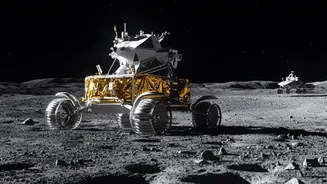
One of the most deceptive threats is the lunar dust, or regolith. Unlike the rounded sand particles on Earth, lunar dust is composed of tiny, jagged shards of glass-like material, pulverized by billions of years of micrometeorite impacts. Because the Moon has no wind or water, these particles never erode, remaining razor-sharp. During the Apollo missions, this abrasive dust scratched visors, wore down space suit boots, and caused vacuum seals to fail. Astronauts who inhaled it experienced 'lunar hay fever', with sore throats and congestion. For a long-term habitat, the risks are far greater. The dust is also electrostatically charged by solar radiation, causing it to levitate and cling to everything, which could lead to clogged machinery, damaged solar panels, and severe respiratory issues for inhabitants. One of the new PRISM selections, the DISCO payload, will study how rocket exhaust disturbs this dust and assess its stability, helping NASA design safer surface operations.
Unstable Ground and Extreme Temperatures
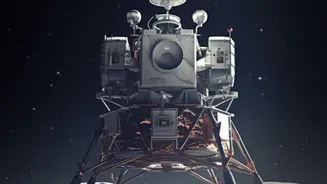
A lunar base needs a stable foundation, but the Moon is not a completely dead world. It experiences 'moonquakes' from tidal stresses and meteorite impacts. The Apollo missions placed seismometers on the Moon's near side, but the far side remains a mystery. To fill this gap, NASA is sending the Farside Seismic Suite (FSS), which will carry two highly sensitive seismometers to the far side of the Moon. This will provide the first data on far-side seismic activity and help scientists understand the Moon's internal structure. Another new payload, the Lunar Environment Monitoring Station (LEMS-SP), will also include a seismometer to monitor for micrometeoroid strikes. These instruments will also contend with another major hazard: extreme temperatures. Without an atmosphere to distribute heat, the lunar surface can swing from over 120°C in sunlight to -130°C in darkness, creating immense challenges for any structure or equipment.
The Invisible Threat of Radiation
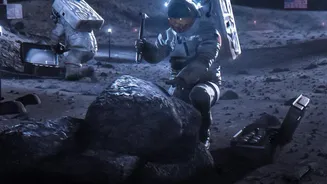
Perhaps the most serious long-term health risk for lunar settlers is the constant bombardment of radiation. Earth is protected by its magnetic field and thick atmosphere, but the Moon has neither. This leaves astronauts exposed to dangerous galactic cosmic rays and solar particle events, which can damage DNA and increase the risk of cancer. Finding natural shelter is a top priority. Scientists have long theorized that ancient volcanic lava tubes could exist beneath the lunar surface, providing ready-made, radiation-shielded habitats. One of the newly selected PRISM investigations, GIMLI (Geophysical Instruments for Marius Lunar pit Investigation), will explore a promising pit to see if it leads to a large, underground lava tube. Using radar and seismic sensors, GIMLI will peer beneath the surface to confirm if these natural caves could one day shelter humanity's first off-world outpost.