




Choose Your Drying Zone Wisely
The first step is to designate a specific area for drying clothes. Instead of scattering damp garments over chairs and doors across the house, containing them in one spot makes management easier. Choose a room or a corner with good natural ventilation,
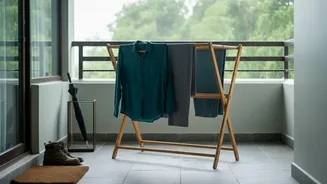
like one near a window that can be opened when it's not actively raining, or a balcony that is protected from downpours. This area should ideally be a low-traffic part of your home to avoid knocking over racks and to keep the dampness contained. A spare room, a laundry room, or even a well-ventilated bathroom can work perfectly. Confining the laundry to a single zone helps control the spread of moisture and makes targeted drying efforts more effective.
Maximise Air Circulation
Airflow is the single most important factor in drying clothes indoors. Stagnant, humid air will only keep your clothes damp and encourage mildew. To combat this, position a pedestal or ceiling fan to blow air across the clothes. This continuous movement of air helps whisk moisture away from the fabric, significantly speeding up the evaporation process. Even a gentle breeze from a fan on a medium setting is more effective than heat alone. If possible, create a cross-breeze by opening windows on opposite sides of the room for short periods when the rain stops. The goal is to keep the air moving around every garment.
Invest in the Right Tools
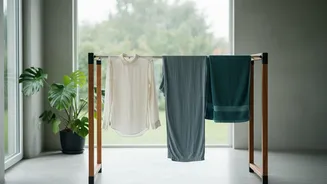
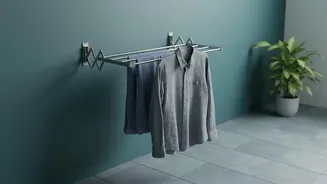
Having the right equipment can transform your drying experience. A sturdy, foldable drying rack is an essential investment, allowing you to hang many clothes in a compact space. To truly conquer monsoon humidity, consider a dehumidifier. This appliance works by pulling excess moisture directly from the air, creating a drier environment that allows clothes to dry in hours instead of days. For the best results, place the dehumidifier near your drying rack in a closed room to maximize its efficiency. Many modern dehumidifiers even have a dedicated 'laundry mode' for this purpose. Other useful tools include hangers for shirts and dresses, which save rack space and reduce wrinkles, and portable peg hangers for smaller items like socks.
Proper Washing and Hanging Techniques
Effective drying starts in the washing machine. Use the highest spin cycle your clothes can tolerate to remove as much excess water as possible before they even see the rack. Don’t overload the washing machine, as tightly packed clothes retain more water. Before hanging each item, give it a good, vigorous shake to open up the fibres and release trapped water. When placing clothes on the rack, leave ample space between each garment. Overcrowding traps moisture and is a primary cause of that dreaded damp smell. Hang items on hangers whenever possible and alternate between thick and thin fabrics to promote better overall airflow.
Preventing Musty Odours and Mould
High indoor humidity doesn't just affect laundry; it can lead to mould on walls and furniture. Don't leave damp clothes in the hamper; wash them promptly to prevent mildew from setting in. A simple hack to combat odours is to add a small amount of white vinegar to the final rinse cycle of your wash, which helps kill odour-causing bacteria. To manage ambient moisture in your drying zone and closets, place moisture absorbers like silica gel packets or even open bowls of rock salt nearby. Sunlight is a natural disinfectant, so on the rare sunny day, take the opportunity to air out your clothes and even your closets to kill spores and banish musty smells.