




The Disappointment in a Jar
Let’s be honest, the difference between a good samosa night and a great one often comes down to the quality of the chutney. Commercially prepared chutneys, for all their convenience, often miss the mark. They are engineered for a long shelf life, which
means they are typically loaded with sugar, salt, and synthetic preservatives like sodium benzoate. These additives can dull the vibrant, fresh flavours of the core ingredients, leaving you with a condiment that is one-dimensionally sweet or sour, with a lingering artificial aftertaste. Tomatoes lose their tang, herbs lose their aroma, and spices lose their punch. The result is a generic sauce that does little to complement the rich, savoury filling of a well-made samosa.
The Magic of Making Your Own
The solution is simpler and quicker than you think: make your own. The word ‘chutney’ comes from the Hindi word ‘chatni’, meaning ‘to lick’, and that’s exactly what a good one should make you want to do. When you make chutney at home, you control everything. You are using fresh, pure ingredients without any need for chemical preservatives. The flavour profile is brighter, more complex, and infinitely more satisfying. You can taste the sharpness of the ginger, the fresh kick of the green chillies, and the bright notes of the herbs. It is, quite simply, real food that tastes real. The process is straightforward, often involving little more than blending fresh ingredients or a simple simmer on the stove.
The Green Hero: Mint-Coriander Chutney
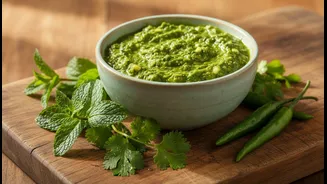
The most iconic partner to a samosa is the vibrant green chutney. This uncooked condiment is a powerhouse of fresh, herbaceous flavour that cuts through the richness of the fried pastry. Making it takes just five minutes. The classic combination involves a generous amount of fresh coriander and mint leaves, a kick of green chilli, a sliver of ginger, and the tang of lemon juice. A common ratio is two parts cilantro to one part mint to avoid any bitterness from over-blending the mint. Some recipes add a little yoghurt or even a few cashews to create a creamier, thicker consistency. Blending with ice-cold water can also help maintain its brilliant green colour. The result is a dip that’s bursting with life, something a bottle can never replicate.
The Sweet & Sour Sidekick: Tamarind Chutney
The other essential samosa accompaniment is the sweet and sour tamarind chutney, often called imli or saunth chutney. This is the perfect sweet counterpoint to the spicy green chutney. Its base is tamarind pulp, which provides a unique sourness that is balanced with a sweetener like jaggery or dates. This mixture is gently simmered with a blend of aromatic spices until it thickens. Common spices include roasted cumin powder, dried ginger powder (saunth), red chilli powder, and a pinch of black salt (kala namak) for a distinctive tangy, sulphurous note. While it requires a bit of cooking, a batch can be made and stored in the refrigerator for weeks, ready to be deployed for any snack emergency.
Customisation Is King
The true beauty of homemade chutney lies in your ability to tailor it perfectly to your taste. You decide the level of spice, sweetness, and tang. Prefer your green chutney fiery? Add an extra chilli. Want your tamarind chutney richer? Add some chopped dates to the simmer. This level of control allows you to create a condiment that not only tastes better but is also an expression of your own culinary preference. Each region, and indeed each household in India, has its own variation on these classics, reflecting local ingredients and tastes. By making your own, you are participating in a rich culinary tradition that has been passed down for generations.