


A Celestial Double Feature
Late July brings not one, but two meteor showers to our night skies: the Southern Delta Aquariids and the Alpha Capricornids. These annual events happen when Earth passes through streams of debris left behind by comets. The Southern Delta Aquariids originate
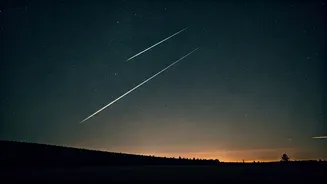
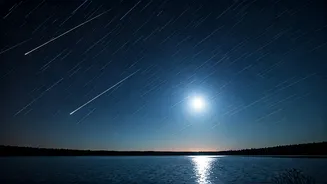
from Comet 96P/Machholz, while the Alpha Capricornids are from Comet 169P/NEAT. Though not the most intense showers of the year, their simultaneous peak provides a wonderful opportunity for skywatching. The Delta Aquariids are known for being faint but steady, producing up to 25 meteors per hour in perfect conditions. The Alpha Capricornids are less frequent, with about five meteors per hour, but are famous for producing slow-moving, exceptionally bright fireballs that can light up the entire sky.
When and Where to Look
The prime time for this double feature is the night of July 30 and into the pre-dawn hours of July 31, 2026. While the official peak for the Delta Aquariids is during the daytime in India on July 30, the best practical viewing times will be between 1:30 a.m. and 4:30 a.m. IST on both July 30 and 31. This is when the radiant points—the constellations Aquarius and Capricornus from which the meteors appear to fly—are highest in the southern sky. You don’t need to find the exact constellations, as meteors will be visible across the entire sky. Just find a comfortable spot and look up towards the south.
The Moonlight Problem of 2026
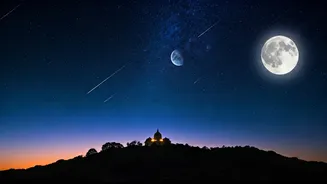
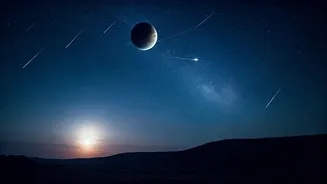
There is a significant catch for viewers in 2026: a very bright Moon. The Full Buck Moon occurs on July 29, meaning the sky will be flooded with bright moonlight during the showers' peak. The Moon will be about 98% full, which will wash out most of the fainter Delta Aquariid meteors. It’s important to set realistic expectations. Instead of a constant barrage of shooting stars, the show will be more subtle. However, all is not lost. The Alpha Capricornids are known for their bright fireballs, which are powerful enough to be seen even in moonlight. Your best bet is to focus on spotting these brilliant, slow-moving meteors.
Your Ultimate Viewing Guide
To maximize your chances of catching a few shooting stars, follow these simple steps. First, get away from city lights. Light pollution is the biggest obstacle to seeing meteors, so find a dark spot in a rural area or a park with an open view of the sky. Second, be patient and allow your eyes to adjust to the darkness for at least 20-30 minutes. This means no looking at your phone. Third, no special equipment is needed. In fact, your eyes are the best tool for the job, as they provide the widest field of view. Finally, get comfortable. Bring a reclining chair, a blanket, and some snacks. Meteor watching is a waiting game, so you might as well be cozy.
Navigating Monsoon Skies
For many in India, July means monsoon season, and clouds can be a frustrating obstacle. Don't let that discourage you entirely. Weather is often localized, and there can be unexpected breaks in the clouds. Keep a close eye on your local weather forecast in the days leading up to the peak. If the forecast is poor for July 30-31, try looking in the week before. The showers are active for a long period—from mid-July to late August—so you might get lucky on a different night. The mornings from July 21 to 26 are a good alternative, as the Moon will set earlier, providing darker skies.