






The thought of your home loan EMI changing can be unsettling. For millions of Indians with floating rate loans, this is a real possibility. Understanding how and why these rates change is the first step to managing your biggest financial commitment.
Understanding Floating vs. Fixed Rates
When
you take a home loan, you primarily choose between two types of interest rates: fixed and floating. A fixed interest rate remains the same for the entire loan tenure, offering you predictability in your monthly payments (EMIs). A floating rate, on the other hand, is linked to a benchmark and can change periodically. This means your EMI or loan tenure can increase or decrease depending on market conditions. While floating rates often start lower than fixed rates, they carry the risk of upward revisions. However, they also offer the benefit of rate reductions when the market moves downward and usually come with no penalties for prepayment.
The Engine of Change: The External Benchmark Rate
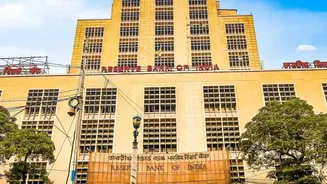
Since October 2019, the Reserve Bank of India (RBI) has mandated that all new floating rate retail loans from banks must be linked to an External Benchmark Lending Rate (EBLR). This was done to ensure greater transparency and faster transmission of policy rate changes to borrowers. For the vast majority of banks, the chosen external benchmark is the RBI's own repo rate. The repo rate is the interest rate at which the RBI lends money to commercial banks. A bank's final lending rate is calculated by adding a spread or margin (which covers credit risk and operational costs) to this external benchmark. This EBLR system means when the RBI adjusts its repo rate, your loan's interest rate is directly impacted.
Why Banks Revise Their Rates
Banks revise their floating lending rates primarily in response to changes in the RBI's repo rate. The RBI's Monetary Policy Committee meets regularly to review economic conditions, especially inflation. To control high inflation, the RBI may increase the repo rate, making it more expensive for banks to borrow money. Consequently, banks pass this increased cost on to customers by raising their EBLR-linked lending rates. Conversely, to stimulate economic growth, the RBI might cut the repo rate, leading to cheaper funds for banks and, subsequently, lower interest rates for borrowers on floating rate loans. Under the EBLR framework, banks are required to reset their rates at least once every three months following a change in the external benchmark.
How a Rate Change Affects Your Loan
When the interest rate on your floating loan increases, lenders typically offer two options. The most common approach is to keep the EMI amount the same but extend the loan tenure, meaning you will be paying off the loan for a longer period. The second option is to increase your monthly EMI while keeping the original tenure. While a longer tenure might seem more manageable month-to-month, it results in a significantly higher total interest payout over the life of the loan. A rate cut works in the opposite way, potentially reducing your EMI or shortening your loan tenure.
What Can You Do as a Borrower?
While you cannot control RBI's policy decisions, you can take steps to manage your loan burden. The most effective strategy is making partial prepayments whenever you receive surplus funds, like a bonus or investment returns. Prepayments directly reduce the principal amount, which in turn lowers your total interest outgo. For floating rate loans given to individuals, RBI rules prohibit lenders from charging any prepayment penalties. Another option is to increase your EMI amount voluntarily, even by a small percentage annually, which can drastically shorten your loan tenure. If you are on an older, MCLR-based loan, you could also evaluate switching to the more transparent EBLR system, though you should calculate the potential savings against any conversion fees.