


Glide on a Crystal-Clear Mirror in Meghalaya
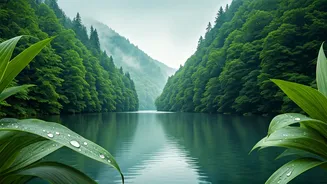
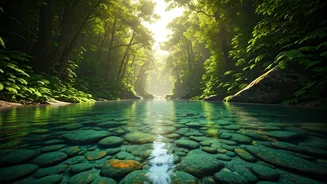
Imagine floating on a boat that seems to hover in mid-air. This isn't a fantasy; it's a typical afternoon on the Umngot River in Dawki, Meghalaya. Nestled on the border with Bangladesh, this river is famed for its astonishingly clear water, so transparent
that the riverbed, with its smooth stones and fish, is visible from the surface. The visual is so surreal that photos often look edited. A boat ride here feels less like a journey on water and more like gliding across a sheet of glass. The best time to experience this clarity is during the winter months, from November to February, when the water is calm and sediment-free. It’s a humbling reminder of nature's pristine beauty and a photographer’s dream destination. For the more adventurous, kayaking and even some cliff-jumping spots are available nearby.
Navigate an Ancient Mangrove Maze in Tamil Nadu
While the Sundarbans get most of the attention, the Pichavaram Mangrove Forest in Tamil Nadu offers an equally mesmerising, and far less crowded, experience. It is one of the world's largest mangrove jungles, a complex labyrinth of water channels, islets, and dense foliage. As you navigate the narrow canals in a small rowboat or motorboat, the roots of the mangrove trees form a dense, otherworldly web on either side. The canopy above often creates a natural tunnel, dappling the water in shifting patterns of light and shadow. The forest is a vibrant ecosystem, home to hundreds of species of birds, fish, and crustaceans. The silence, broken only by birdsong and the gentle splash of a paddle, feels like entering a lost world. It's a powerful ecological experience that highlights the critical importance of these coastal guardians.
Discover the Floating Paradise of Manipur
In the heart of Manipur lies Loktak Lake, a body of water unlike any other in the world. Its most unique feature is the presence of 'phumdis' – heterogeneous masses of vegetation, soil, and organic matter at various stages of decomposition that float on the lake's surface. These floating islands are so large and stable that local fishermen build their homes on them. The largest single phumdi is home to the Keibul Lamjao National Park, the world’s only floating national park and the last natural refuge of the endangered Sangai, or brow-antlered deer. Exploring Loktak Lake means boating through channels carved between these floating landmasses, visiting fishing villages that drift with the current, and witnessing a unique harmony between humanity and nature. It’s a surreal and unforgettable landscape that challenges your very definition of what a lake can be.
Conquer the High-Altitude River in Ladakh
For those who equate water with adrenaline, the Zanskar River in Ladakh presents a formidable challenge and an unparalleled reward. In the summer, its fierce rapids offer some of the most thrilling and remote river rafting experiences in the Himalayas, taking you through deep gorges with towering, barren cliffs in shades of purple and brown. The journey is not for the faint of heart, but it provides access to a landscape that is otherwise inaccessible. But the Zanskar has another, even more famous personality. In the depths of winter, the river freezes solid, transforming into a pathway known as the 'Chadar Trek'. For centuries, this frozen highway was the only way for locals to connect with the outside world. Today, it is one of the world's most epic winter treks, a true test of endurance on a hidden waterway of solid ice.
Witness the Ocean's Starry Night in Karnataka
You don't need to look up to see the stars. On certain nights along the coast of Karnataka and Goa, you just need to look down at the water. This magical glow is caused by bioluminescent phytoplankton, microscopic organisms that emit a ghostly blue light when disturbed. Known as 'sea sparkle', this natural phenomenon turns the shoreline into a celestial spectacle. Wading into the water or watching the waves crash sends ripples of light across the surface. Kayaking through these glowing waters feels like paddling through a galaxy. While the event is unpredictable and depends on various environmental factors, it's most often spotted after monsoons, from October to January. Finding a quiet, dark beach away from city lights, like those near Gokarna or on the islands of the Andamans, increases your chances of witnessing this breathtaking secret of the sea.