




Why Your Herbs Are Dying
Before we get to the solution, let’s understand the problem. Fresh green herbs are essentially living plants that have been cut from their root system. Like cut flowers, they are extremely perishable. Once harvested, they begin to lose water rapidly through
their leaves, a process called transpiration. When they are packed in plastic bags and kept in the fridge, two things often go wrong: they either dry out from the cold, dry air, or they become slimy from trapped moisture and condensation. This is why that bunch of dhania you bought on Monday is often unusable by Wednesday. The key to longevity is providing a controlled source of hydration without creating a swampy environment.
The Glass Jar Solution Explained
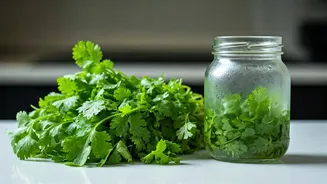
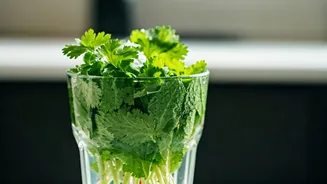
The magic of the glass jar method is its simplicity. By placing the stems of your herbs in water, you are treating them exactly like a bouquet of flowers. The stems absorb just enough water to keep the leaves hydrated, plump, and crisp. This prevents the wilting caused by dehydration. The glass jar provides a stable base, and when stored correctly in the refrigerator, it creates a cool, humid micro-environment that dramatically slows down the decay process. It’s a low-effort, high-reward technique that reduces food waste and saves you money, ensuring you always have fresh herbs on hand for your dals, chutneys, and curries.
Soft Herbs vs. Hard Herbs
Not all herbs are created equal, and this method works best for what are known as 'soft herbs.' These are herbs with tender, pliable stems and delicate leaves. Think of kitchen staples like coriander (dhania), mint (pudina), parsley, and basil. They lose moisture very quickly and benefit the most from a constant water source. On the other hand, 'hard herbs' have woody, tough stems and more resilient leaves. This category includes rosemary, thyme, and oregano. These herbs are more prone to rotting in excess moisture and require a slightly different storage approach to keep them at their best.
Step-by-Step for Soft Herbs
Ready to save your dhania? Here’s the exact process: 1. **Prepare the Herbs:** As soon as you get them home, remove any bands or ties. Snip off about an inch from the bottom of the stems, just like you would with flowers. This fresh cut allows for better water absorption. Discard any yellowed or slimy leaves. 2. **Fill a Glass or Jar:** Choose a jar or glass that is tall enough to support the herbs. Fill it with about an inch or two of fresh, cool water—just enough to submerge the cut stems. 3. **Place and Cover:** Place the herb bouquet into the jar. To create a mini-greenhouse effect, you can loosely cover the leaves with a clean plastic bag. Don't seal it tightly; you want some air to circulate. For basil, it's best to leave it on the counter, as the cold fridge can turn its leaves black. 4. **Store and Maintain:** Place the jar in your refrigerator. For best results, change the water every two days to keep it fresh and prevent bacteria from growing. Your herbs can last for up to two weeks this way.
What About Hard Herbs?
For woody herbs like rosemary and thyme, the glass-of-water method can be too much moisture. They fare better with a different technique that focuses on gentle humidity. First, take a paper towel and dampen it slightly—it should be moist, not dripping wet. Lay the herbs in a single layer on the paper towel and gently roll them up. Place this roll inside a sealed plastic bag or an airtight container. Store this in your refrigerator’s crisper drawer. The damp towel provides just enough moisture to prevent the herbs from drying out without causing them to mold, keeping them fragrant and usable for several weeks.