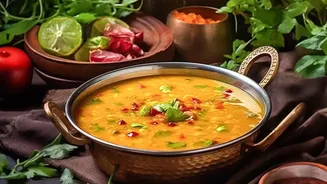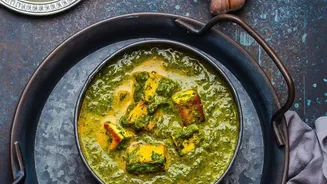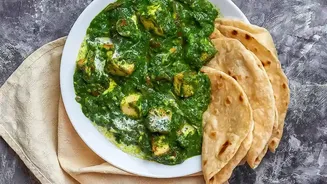



When you hear 'saag,' you might picture the iconic Sarson ka Saag of Punjab. But the true beauty of this dish lies in its versatility. Saag is less a single recipe and more a celebration of the fresh, leafy greens available in your local market.
The Soul of Saag: Beyond Mustard Greens
The word
'saag' comes from the Sanskrit 'shaak', which simply means leafy green vegetable. While Sarson ka Saag, made from pungent mustard greens, is the most famous version, especially during North Indian winters, it is just one of many possibilities. Across India, from the Himalayas to the southern coasts, cooks use a wide array of greens to create their own regional versions of this beloved dish. The core idea is to slow-cook greens until they are meltingly tender, creating a dish that is both rustic and deeply nutritious. Experimenting with different leaves allows you to play with flavours, textures, and a whole spectrum of health benefits.
Spinach (Palak): The Accessible All-Rounder
For many, spinach is the most accessible and versatile green for making saag. Its mild, slightly sweet flavour provides a gentle base that pairs beautifully with bolder spices. Unlike the more robust mustard leaf, palak cooks down quickly and results in a smoother, creamier texture. Nutritionally, spinach is a powerhouse, packed with iron, calcium, magnesium, and vitamins A and K. While Sarson ka Saag often balances the pungency of mustard with spinach, a saag made entirely from palak is equally delicious, offering a comforting and quick alternative that is perfect for any day of the week.
Bathua (Lamb's Quarters): The Earthy Winter Favourite
During winter, especially in Uttar Pradesh and Bihar, markets are filled with Bathua, also known as lamb's quarters or pigweed. This green has a distinct earthy and slightly salty flavour that sets it apart from spinach. Often considered a 'wild' green, it is incredibly nutritious, rich in potassium, phosphorus, calcium, and antioxidants. Because of its robust character, bathua is often mixed with other greens like spinach or mustard to create a more complex flavour profile. It also helps to create a wonderfully creamy consistency when cooked and mashed, making it a prized ingredient for a traditional saag.
Amaranth (Chaulai): The Peppery Powerhouse
Amaranth leaves, known as Chaulai or Lal Saag, are another excellent choice, commonly found in the Himalayan foothills and South India. Available in both green and red varieties, these leaves have a slightly peppery, robust flavour. They are a nutritional treasure, rich in protein, calcium, iron, and vitamins A, E, and C. A Chaulai ka Saag, popular in regions like Uttar Pradesh, is a dish in its own right. The leaves cook down to create a hearty, flavourful dish that pairs wonderfully with makki ki roti or simple steamed rice, offering a different but equally authentic saag experience.
Fenugreek (Methi): The Aromatic Enhancer
Fenugreek leaves, or methi, are known for their distinct, pleasantly bitter aroma and taste. While a saag made entirely of methi might be too overpowering for some, it is a fantastic addition to a mix of other greens. Just a handful can add a complex, fragrant dimension to your dish. Methi is renowned for its health benefits, including aiding digestion and helping to regulate blood sugar. It is also rich in iron and calcium. When combined with the mildness of spinach or the pungency of mustard, methi provides a beautiful aromatic lift that makes the final dish even more memorable.
Tips for Perfect Homemade Saag
Regardless of the greens you choose,, a few techniques are key.. First,, wash your leaves thoroughly,, as they can hold a lot of grit.. Second,, slow cooking is essential;; simmering the greens until they are completely tender is what creates that signature texture.. Many traditional recipes use a mix of at least two or three greens for a more layered flavour.. A thickener like maize flour (makki ka atta) or gram flour (besan) is often added to give the saag its characteristic creamy body.. Finally,, don't skimp on the final tempering (tadka) of ghee,, garlic,, ginger,, and spices—it's what brings all the flavours together..