






From Physician to Pioneer
Anil Menon is not a typical astronaut. Born in Minneapolis to Indian and Ukrainian immigrants, his path to space has been unconventional. He is a US Space Force colonel and an emergency medicine physician with extensive experience in extreme environments.
He’s treated patients after earthquakes in Haiti and Nepal, provided care to climbers on Mount Everest, and served as SpaceX's first flight surgeon, where he helped launch the company's first human spaceflights. This background in medicine and crisis response is precisely what makes his upcoming eight-month mission so significant. Menon isn't just going to space to conduct experiments; he's going as a doctor whose primary focus is understanding how the human body copes under the ultimate stress, a perspective that has profound implications for healthcare on Earth.
The Ultimate Laboratory in the Sky
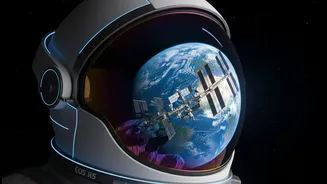
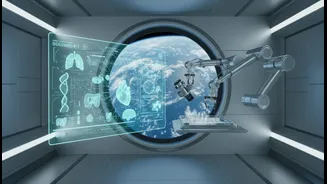
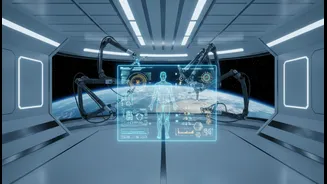
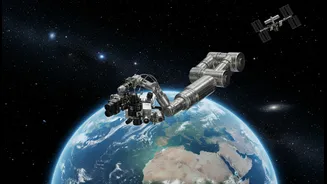
The International Space Station (ISS) is a powerful laboratory for a simple reason: microgravity accelerates the aging process. In months, astronauts can experience the kind of bone density loss, muscle atrophy, and cardiovascular changes that take decades to develop on Earth. This makes the ISS an unparalleled environment to study chronic conditions. For his part, Menon will be conducting several key experiments. He will use ultrasound to study how fluid shifts and blood flow are affected in space, research that could shed light on cardiovascular issues. He will also test technologies to produce IV fluids from the station’s drinking water and use AI-powered tools for medical diagnostics—innovations crucial for deep-space missions where calling a doctor isn't an option.
Mastering Extreme Planning
An eight-month mission 400 kilometres above Earth is the ultimate logistical challenge. Every gram of food, every drop of water, and every minute of an astronaut’s time is meticulously planned years in advance. Contingencies are built for every conceivable failure. This level of extreme planning offers a powerful model for businesses and individuals. The systems developed for space missions—from inventory management to resource allocation and remote team coordination—are templates for efficiency. For example, the remote guidance techniques used to help astronauts perform complex medical procedures, like the ultrasound scans Menon will conduct, are already being adapted for use in rural and emergency healthcare situations on Earth where specialists aren't available. The goal is to create systems so robust they can function autonomously, a principle with applications in everything from supply chain management to disaster response.
Bringing Space Strategy Down to Earth
So how does this translate to your daily life? The connection lies in the mindset. The strategies used to keep astronauts healthy and productive are, at their core, about proactive planning and resourcefulness. Consider the research into astronaut nutrition and exercise to prevent bone loss; these are highly optimized wellness plans that can inform smarter fitness and health strategies for everyone. The development of portable, AI-driven diagnostic tools could one day mean more accessible healthcare for all. Even the way astronauts manage their time and psychological well-being in isolation offers lessons in remote work and mental resilience. The mission forces a radical focus on efficiency, sustainability, and forward-thinking—principles that can be applied to personal finance, project management, or even just planning a weekly schedule. The technologies are impressive, but the underlying philosophy of meticulous preparation is the most transferable lesson.