







Fly the Aircraft First
In any cockpit emergency, the first and most critical rule is to fly the aircraft. The remaining pilot's immediate priority is to maintain safe control. This means taking command, often with the phrase "I have control," and ensuring the plane is at a safe altitude
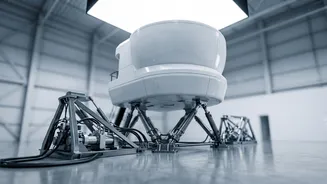
and on a stable flight path. If the incapacitation occurs during a critical phase like takeoff or landing, the pilot may abort the procedure and climb to a safe altitude to assess the situation. The remaining pilot must single-handedly perform the duties of both pilot flying and pilot monitoring, a task they are regularly trained for in simulators. This initial focus is purely on aviation, not on diagnosing the medical issue with their colleague.
Securing the Cockpit and the Pilot
Once the aircraft is stable, the next step is to ensure the incapacitated pilot cannot interfere with the flight controls. The conscious pilot will move the affected pilot's seat fully back and secure them tightly with their seatbelt and shoulder harness. This prevents them from slumping forward onto the yoke or controls. In some aircraft like an Airbus, the remaining pilot can press a button to disable the other pilot's side-stick controls entirely, preventing accidental inputs. The focus remains on safety; while concerned for their crewmate, the pilot's duty is to the aircraft and its passengers.
Communicating the Emergency
With the aircraft secure, the pilot will then communicate the situation to the outside world. This involves making a distress or urgency call to Air Traffic Control (ATC). Depending on the severity, this will either be a "Pan-Pan" call, indicating an urgent but not immediately life-threatening situation, or a "Mayday" call for grave and imminent danger. The pilot will inform ATC of the pilot incapacitation and their plan to divert to the nearest suitable airport. Simultaneously, they will contact the lead flight attendant, inform them of the situation in the cockpit, and request assistance.
The Team Effort Kicks In
This is where a multi-layered response begins. ATC will give the flight priority, clearing airspace and guiding the pilot to an appropriate airport with the necessary emergency services. In the cabin, the flight attendants, who are trained first responders, will enter the cockpit to provide medical assistance. They may administer oxygen, use the onboard medical kits, and will often ask if there is a doctor or other medical professional among the passengers who can help. One flight attendant may remain in the cockpit on the jump seat to assist the pilot while others prepare the cabin for an expedited landing.
A Safe, Prioritised Landing
The remaining pilot, while now operating alone, is fully qualified to land the aircraft. Commercial pilots regularly practice single-pilot operations in simulators for precisely this scenario. They will run through checklists, configure the aircraft for landing, and execute the approach, all while being guided by ATC. Emergency vehicles will be on standby at the airport, but pilots are trained not to be distracted by their presence and to focus on a safe touchdown. Upon landing, the pilot will taxi to a designated area where medical teams can immediately board and attend to the ill crew member.