




A New Flashpoint in an Old Conflict
The fragile quiet between the United States and Iran has been shattered by a recent series of tit-for-tat military actions. US forces conducted what they termed 'self-defense' strikes on an Islamic Revolutionary Guard Corps (IRGC) missile site on Qeshm
Island, a strategic point in the Strait of Hormuz. These actions were in response to what American officials described as Iranian aggression targeting US personnel. In turn, Iran has launched drone and missile attacks on US military installations in Bahrain and Kuwait, with both Gulf nations reporting they repelled the assaults. This rapid escalation follows a period of relative calm after the major conflict earlier in 2026 and puts the entire region on high alert.
Why Dams Are a Strategic Centerpiece
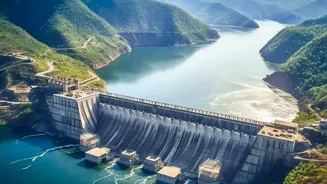
Amid the conflict, a troubling strategic pattern has emerged: the proximity of Iranian military assets to its own vital water infrastructure. Analysts and researchers have noted a significant geographic overlap between Iran's extensive network of dams and suspected underground missile facilities, often called 'missile cities'. Experts theorise that these dams, some of the largest in the world like the Dez and Karun-4, may serve a dual purpose. They provide the steady, independent water and electricity required to operate sprawling, concealed military complexes, ensuring 'operational continuity' even if the national grid is disrupted. This makes the dams not just civilian infrastructure but potential enablers of military capability.
A High-Stakes 'Human Shield' Doctrine
The placement of missile launchers and entire underground bases near dams raises grave concerns under international law. While some analysts argue the proximity is coincidental, as both dams and military bunkers are often built in remote, mountainous regions, others see a deliberate strategy. By embedding military assets with or near 'installations containing dangerous forces' like dams, the IRGC creates a perilous dilemma for its adversaries. International humanitarian law offers special protection to dams, prohibiting attacks that could cause the release of dangerous forces and severe civilian losses. Attacking a missile site could risk a catastrophic dam failure, unleashing a devastating flood and humanitarian crisis. This tactic effectively turns critical civilian infrastructure into a shield for military operations, a practice condemned by the laws of war.
The Cost of a Miscalculation
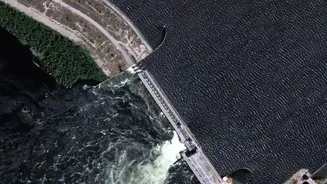
The consequences of a strike on or near one of these dams are difficult to overstate. A dam failure would not only cause immense loss of life and property damage downstream but also cripple agriculture, water supply, and power generation for millions of Iranians. For example, the Dez Dam alone is critical for irrigation and electricity in the breadbasket province of Khuzestan. For an attacking force, a mistake could be politically and strategically disastrous. A 2017 incident in Syria, where a US 'bunker-buster' bomb struck the Tabqa Dam but failed to explode, highlighted the immense risks. Experts believed its detonation could have caused the dam to fail. The current situation in Iran multiplies that risk across numerous sites, where any miscalculation could lead to an unprecedented catastrophe.
Global Ripples of a Regional Gamble
Iran's strategy of intertwining its military power with its essential infrastructure creates a flashpoint with global implications. The renewed fighting in and around the Strait of Hormuz, a vital artery for global oil shipments, already threatens economic stability. The IRGC, which controls many of the construction firms that build these dams, has effectively integrated them into its strategic planning. This raises the stakes for the US, Israel, and their Gulf allies. Any military action must now weigh the benefit of disabling a missile site against the catastrophic risk of unleashing a flood. As tensions simmer, the world watches nervously, aware that the waters held back by Iran's great dams have become part of a dangerous geopolitical game.