






A Gift from Halley's Comet
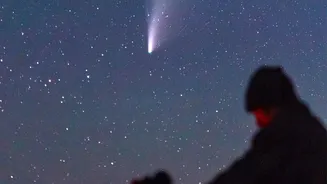
The Orionid meteor shower is an annual event that occurs when Earth passes through the stream of debris left behind by the most famous comet of all: 1P/Halley. While Halley's Comet itself only visits the inner solar system every 76 years—last seen in 1986
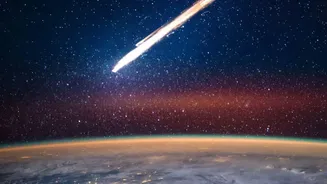
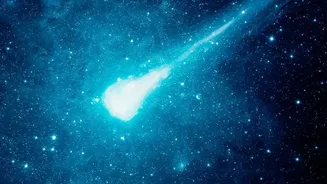
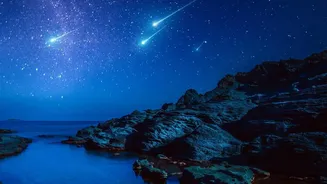
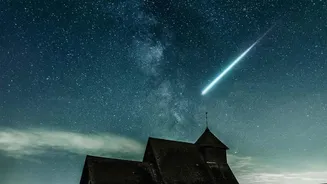
and not due back until 2061—its dusty trail gives us two meteor showers each year: the Eta Aquarids in May and the Orionids in October. These tiny pieces of cometary dust, many no bigger than a grain of sand, burn up upon entering our atmosphere at incredible speeds of around 66 kilometres per second, creating the bright, fast streaks we call meteors or 'shooting stars'. The Orionids are known for their speed and brightness, and they sometimes leave behind persistent, glowing trains.
The Science of the Radiant
Every meteor shower has a “radiant,” which is the point in the sky from which the meteors appear to originate. For the Orionids, this point is in the constellation Orion the Hunter, which is how the shower gets its name. Think of it like driving through a snowstorm at night; the snowflakes seem to fly at you from a single point ahead. The same principle of perspective applies to meteor showers. While the meteors appear to come from Orion, you don't need to stare directly at the constellation. In fact, you'll see longer, more spectacular streaks if you look about 45 to 90 degrees away from the radiant. Looking right at it will show you meteors, but they will appear much shorter as they are coming straight toward you.
Why Early Birds See More Meteors
The main reason pre-dawn hours are superior for viewing is because of the radiant's position and Earth's movement through space. In the evening, we are on the trailing side of Earth's orbit. After midnight, our spot on the planet rotates to face the direction Earth is travelling, essentially like turning to face the 'windshield' of our planet as it plows through the comet debris. The Orionid radiant rises in the east late in the evening and climbs higher in the sky throughout the night, reaching its highest point just before dawn. A higher radiant means more meteors are visible across the entire sky, rather than being obscured by the horizon. This alignment means you'll see more meteors per hour as dawn approaches.
Dodging the Moonlight in 2026
For the 2026 peak on the night of October 21-22, the Moon will be a significant factor, but it helps enforce the pre-dawn recommendation. The Moon will be in a waxing gibbous phase, around 78-80% illuminated, which is quite bright. This bright moonlight will wash out many of the fainter meteors during the late evening and just after midnight. However, on the peak mornings, the Moon will set a few hours before sunrise. This creates a perfect, dark window of opportunity. The best strategy for 2026 is to wait for the moon to set, which will be around 3 a.m. local time, and then watch the sky until twilight begins.
Your Viewing Checklist for Success
You don't need a telescope or any special equipment to enjoy the Orionids—just your eyes. Find a location away from city and street lights, as a dark sky is essential for seeing the most meteors. Give your eyes about 20-30 minutes to fully adapt to the darkness. Comfort is key, so bring a reclining chair or a blanket to lie on. Dress in warm layers, as even in India, the pre-dawn hours can get chilly. Be patient; meteors often come in spurts. Look up, take in as much of the sky as possible, and enjoy the show that lasts until dawn.