

Our Long-Held Water Obsession
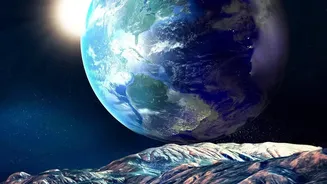
For as long as we have looked to the stars, we've been searching for a reflection of ourselves. In astrobiology, that has meant looking for planets that look a lot like Earth. The key ingredient in that search has always been liquid water. On our planet,
every form of life we know requires it to survive and thrive, from the deepest ocean trenches to the driest deserts. It's the universal solvent that facilitates the chemical reactions necessary for life. This logic has led scientists to focus on the 'habitable zone' around stars — the orbital sweet spot where temperatures are just right for liquid water to exist on a planet's surface. Finding a rocky world in this zone with signs of water has been seen as the jackpot, the strongest possible hint that we might not be alone. But this Earth-centric approach, while logical, might also be limiting our imagination and our search.
Why Water Isn't Enough
The presence of liquid water is a crucial piece of the puzzle, but it’s far from the whole picture. A planet could be swimming in water and still be entirely sterile. It might be bombarded by lethal radiation from its star, lack a protective magnetic field, or have a toxic atmosphere. It could also have an unstable orbit, leading to wild temperature swings that would extinguish any life struggling to emerge. The simple 'habitable zone' concept doesn't account for these other critical factors. As our understanding of planetary science grows, scientists are realizing that just being 'habitable' might be setting the bar too low. Instead of looking for a twin of Earth, perhaps we should be looking for a planet that is even better equipped for life.
Enter the Superhabitable World
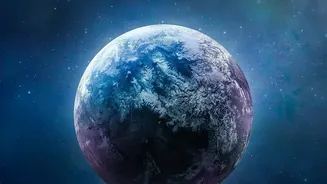
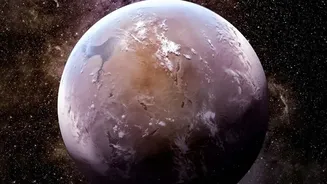
This is where the concept of a 'superhabitable' world comes in. Coined by scientists, including astrobiologist Dirk Schulze-Makuch, a superhabitable planet isn't just a world that can support life; it's a world that could support more biomass and greater biodiversity than Earth. These are hypothetical planets with conditions more favourable for the emergence and evolution of complex life. The idea forces us to question our assumption that Earth is the ultimate template for a living world. While our planet is clearly good for life, it might not be perfect. By identifying the criteria for superhabitability, scientists can create a new checklist for future telescope missions, focusing our attention on the most promising targets among the thousands of known exoplanets.
A Better Host Star
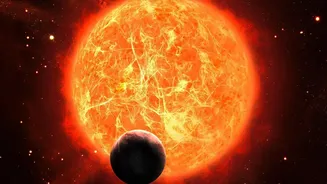
One of the key criteria for a superhabitable world is the type of star it orbits. Our sun is a G-type star with a lifespan of about 10 billion years. While it has served us well, it might not be the ideal host. K-type dwarf stars, often called 'orange dwarfs', are considered top candidates. These stars are cooler, less massive, and have much longer lifespans — anywhere from 20 to 70 billion years. This incredible stability offers a much longer window for life to not only arise but to evolve into complex forms. Earth took nearly 4 billion years to produce technologically advanced life. A planet around a K-dwarf would have vastly more time. Furthermore, K-dwarfs are less active than the more common red dwarfs, emitting less dangerous X-ray and ultraviolet radiation that could strip a planet's atmosphere or harm life.
The Ideal Planet Profile
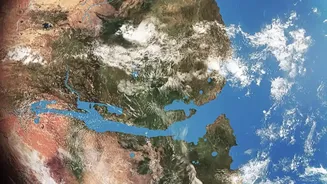
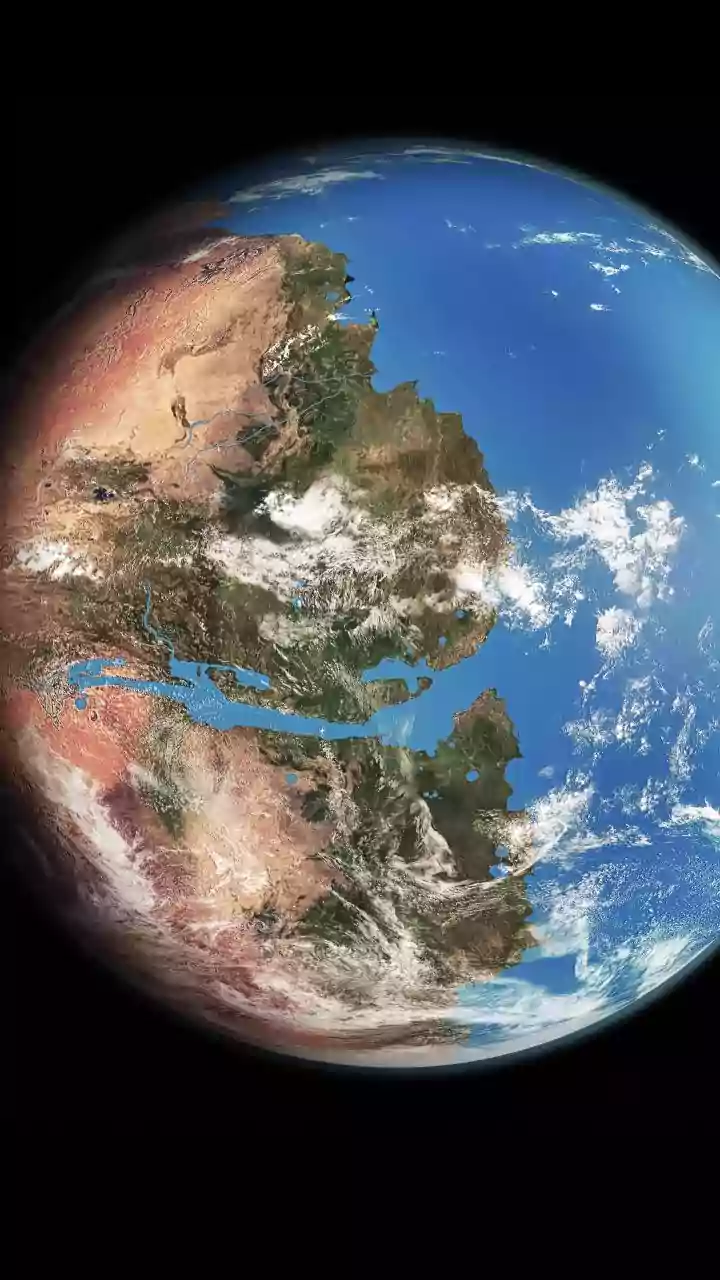
Beyond its star, the planet itself has a profile. An ideal superhabitable world would likely be slightly larger and more massive than Earth — perhaps up to 1.5 times the size and twice the mass. This increased mass helps it retain its atmosphere more effectively. It would also likely have more volcanic activity, which helps recycle essential elements for life and stabilize the climate over geological timescales. A superhabitable world would also be slightly warmer and wetter than Earth, with an average surface temperature about 5 degrees Celsius higher. This would create larger, more biodiverse tropical regions. Having its water distributed across shallower oceans and smaller landmasses, rather than vast oceans and huge continents like Earth, could also encourage more biodiversity along countless coastlines.