



The Golden Age of Finding Dots
For the past two decades, exoplanet science has been a story of explosive growth. Missions like NASA's Kepler Space Telescope transformed the field from a niche curiosity into a headline-grabbing powerhouse. Kepler, and its successor TESS, were incredibly
successful, discovering thousands of planets by staring at stars and waiting for the tell-tale dimming of light as a planet passed in front. This 'transit method' was a numbers game, designed to answer a single, fundamental question: Are we alone? Not in terms of life, but in terms of planets. The answer was a resounding no. We learned that planets are not the exception, but the rule; there are likely more planets than stars in our galaxy. This was the brilliant dawn, a phase of pure discovery where every new detection was a victory and the catalogue of known worlds swelled with bewildering variety.
From 'How Many' to 'What Are They Like?'
The success of this discovery phase has, ironically, led to its own twilight. Simply finding more planets is no longer the primary goal. The scientific frontier has shifted from detection to characterization. Knowing a planet exists is one thing; knowing its mass, its density, what its atmosphere is made of, and whether it has clouds or oceans is another entirely. This is where the 'twilight' metaphor becomes useful. It's a move from the bright, flashy dawn of discovery to the more subtle, detailed work of dusk. The central challenge in modern exoplanet studies is no longer just finding the signal, but translating that faint, indirect data into reliable physical properties. It’s a transition from quantity to quality, and it is orders of magnitude more difficult.
The Immense Challenge of Characterization
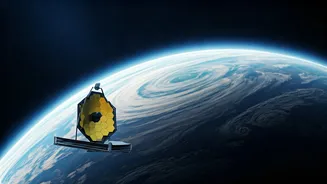
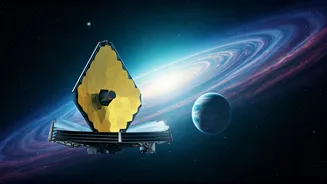
Peering into the atmosphere of a planet hundreds of light-years away is an almost unimaginable technical feat. Telescopes like the James Webb Space Telescope (JWST) do this by analyzing the starlight that filters through a planet's atmosphere during a transit. The chemical elements in the atmosphere absorb specific wavelengths of light, leaving a faint barcode that scientists can decode. But the signals are minuscule, often buried in the noise of the much brighter host star. For Earth-sized planets in the habitable zone of sun-like stars, the challenge is even greater. The planetary signal can be a billion times fainter than the star's glare. This work is slow, painstaking, and fraught with ambiguity. It requires complex modeling where many assumptions have to be made, and a wide range of compositions can often explain the same limited data. Progress is no longer measured in the number of planets found per year, but in the slow, methodical analysis of a few high-priority targets.
A Twilight Before a New Dawn
This slowdown is not a sign of stagnation, but of a field maturing. The hard-won lessons and incremental progress of today are laying the groundwork for the next generation of observatories. NASA is already planning for the Habitable Worlds Observatory (HWO), a future flagship mission specifically designed to take on these challenges. HWO's primary goal will be to directly image dozens of potentially habitable worlds and scrutinize their atmospheres for biosignatures—chemical signs of life like oxygen and methane. Building such a powerful machine requires a deep understanding of the problems, which can only come from pushing current technology like JWST to its absolute limits. The 'twilight' is therefore a crucial preparatory phase. It’s the period where scientists refine their techniques, identify the most promising targets, and define the very questions that will drive the next great era of discovery.