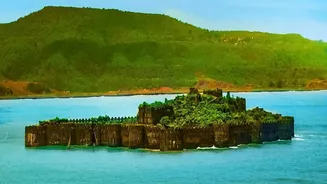








Rising from the Arabian Sea, a formidable stone fortress guards the Maharashtra coastline. This is Murud-Janjira, a sea fort whose story is not just written in stone and cannon, but in its legendary reputation as unconquered.
The Legend of the Unbeaten Fortress
Perched on an oval-shaped
rock near the coastal village of Murud, Janjira Fort has a history that stretches back to the late 15th century. It began as a small wooden structure built by local Koli fishermen to defend against pirates. Recognizing its strategic value, the structure was later transformed into a robust stone fortress by the Siddi dynasty, a community with African origins who established a powerful maritime state. For centuries, this fort stood as a symbol of their power, repelling repeated attacks from mighty forces including the Marathas under Chhatrapati Shivaji Maharaj, the Portuguese, and the British. Its moniker, 'the unconquerable fort', is not a myth; it is a testament to its brilliant design and the tenacity of its defenders. The Siddis ruled from Janjira until it merged with the Indian Union in 1948, marking the end of an era for this invincible stronghold.
An Architectural and Strategic Marvel
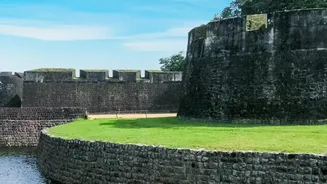
Janjira's strength lies in its ingenious architecture. The fort’s 40-foot-high walls seem to rise directly from the sea, making any assault from the water a monumental challenge. It boasts 19 imposing rounded bastions, which once held over 500 cannons. Three of these massive cannons, named Kalal Bangdi, Chavri, and Landa Kasam, are still present, silent reminders of the fort's formidable firepower. One of its most clever features is the main entrance, which faces the Rajapuri jetty but remains hidden until a boat is almost upon it, a design meant to confuse attackers. Equally fascinating is the presence of two large freshwater ponds within the fort, which ensured a sustainable water supply during long sieges. This self-sufficiency was crucial to its ability to withstand prolonged attacks. A secret underwater gate, the 'Darya Darwaza', also provided an escape route, adding another layer to its legendary defenses.
The Essential Visitor's Guide
Today, a visit to Murud-Janjira is an adventure that connects you directly to its storied past. The fort is accessible via sailboats from the Rajapuri jetty, about 5 km from Murud town. The boat ride itself offers a stunning perspective of the fort as it grows larger and more imposing on approach. The fort is located approximately 165 km south of Mumbai, making it a popular day trip or weekend getaway. The journey from Mumbai or Pune by road is a scenic drive through the Konkan coast. Alternatively, you can take a ferry from Mumbai's Gateway of India to Mandwa and then travel by road to Murud. The nearest railway station is Roha, from where you can take local transport to reach the fort.
Planning Your Trip: What to Know
The best time to visit Murud_Janjira is between October and March. During these months, the weather is pleasant and the sea is calm, ensuring a smooth boat ride and comfortable exploration. It's best to avoid the monsoon season (June to September) as rough seas can make the boat journey risky and services are often suspended. When visiting, wear comfortable shoes as the terrain inside the fort is uneven. It's also wise to carry your own water and snacks, as there are no shops inside the fort complex. Hiring a local guide at the jetty can greatly enhance the experience, as they share fascinating stories and point out details you might otherwise miss. Plan to spend at least two to three hours to fully appreciate the ruins, the ramparts, and the panoramic views of the Arabian Sea.