







Turn the Kitchen into a Laboratory
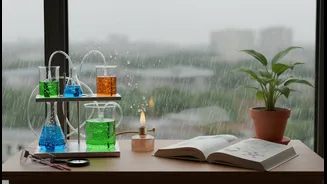
Cooking is a fantastic way to teach a multitude of subjects without your child even realising it. Measuring out flour, sugar, and spices is a hands-on lesson in maths, from simple counting to fractions. Reading a recipe together enhances language skills
and teaches the importance of following directions. The process itself is a delicious science experiment: watch yeast activate, see how heat transforms batter into a cake, or mix different ingredients to understand basic chemistry. It also builds life skills, boosts confidence, and kids are more likely to try new foods if they've helped prepare them. So, pull out an old recipe book and cook up a storm—and some knowledge.
Become a Family of Storytellers
A day off is the perfect time to fire up the imagination. Reading a book together is a classic for a reason, but you can take it further. Ask your child to retell a favourite family story or a tale from the Panchatantra in their own words. For a more hands-on approach, create sock puppets and put on a show. This not only improves language and communication skills but also builds confidence. You could also start a collaborative story, where each family member adds one sentence at a time. The results are often hilarious and always creative, proving that storytelling is a powerful tool for learning and bonding.
Explore the World from Your Sofa
Thanks to technology, you can travel the globe without leaving your living room. Many world-class museums offer virtual tours, allowing you to explore everything from the National Museum in Delhi to the galleries of the Louvre. You can take a 360-degree tour of the Taj Mahal or wander through Nandankanan Zoological Park. Many Indian government platforms like DIKSHA and Swayam also offer free, curriculum-based educational content, from videos to interactive modules, that can supplement a day's learning in a structured yet engaging way. It’s a fantastic way to introduce children to art, history, and science in an immersive format.
Unleash Creativity with Arts and Crafts
A box of crayons, some old newspapers, and a bit of glue can be the gateway to hours of creative fun. Art and craft activities are brilliant for developing fine motor skills, learning about colours and shapes, and encouraging self-expression. You can try traditional Indian art forms like Warli or Madhubani painting, which connect children to their cultural heritage. Or, simply let them draw, paint, or build whatever they imagine. The process of creating something from scratch is incredibly empowering for a child and teaches problem-solving in a playful context.
Stage an Indoor Scavenger Hunt
A scavenger hunt is a brilliant way to get kids moving and thinking. You can make it as simple or as complex as you like. For younger children, hide objects of a certain colour or shape around the house and have them find them. For older kids, you can write riddles or clues that lead them from one place to another. This turns your home into a landscape of adventure and encourages problem-solving, reading, and observation skills. The 'treasure' at the end doesn't have to be a material prize; it could be choosing the family movie for the evening or getting to pick their favourite meal for dinner.
Embrace the Power of Unstructured Play
Perhaps the most important activity of all is no activity. In our highly scheduled lives, we often forget the value of 'boredom'. Unstructured, child-led play is crucial for development. It’s during these free moments that creativity, problem-solving, and independence truly flourish. When children invent their own games, build forts out of blankets, or simply stare out the window, their brains are hard at work, making new connections and figuring out the world on their own terms. So, it's okay to let them be 'bored'. You might be surprised by the amazing things they come up with when left to their own devices.