





More Than Just Taste Buds
Our perception of flavour is a complex interplay of senses, not just the work of our tongue. What we commonly call 'taste' is actually a fusion of taste, smell, and even sound and sight. Our brains combine signals from our taste buds (detecting sweet,
salty, sour, bitter, and umami) with aromas detected by our nose. This is why when you have a cold and your nose is blocked, food often tastes dull. On a high-speed train, several environmental factors come together to disrupt this delicate sensory dance, fundamentally changing how we experience our food compared to when we're standing still on a platform.
The Air Up There (Sort Of)
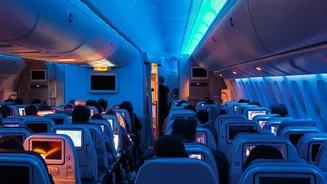
While not as extreme as an airplane, the cabin of a high-speed train has a controlled atmosphere that affects your senses. The air is often drier, with lower humidity than a typical building. This dryness affects the mucous membranes in your nasal passages. Since about 80% of what we perceive as flavour comes from our sense of smell, a drier nose means fewer aroma molecules are detected, leading to a blander experience. Furthermore, slight changes in air pressure can reduce the sensitivity of your taste buds to sweet and salty flavours by as much as 30%. Your mouth may also produce less saliva in the dry environment, which is crucial for breaking down food and carrying its flavour molecules to your taste receptors.
The Roar of the Rails
One of the biggest culprits in flavour theft is the constant, low-frequency background noise. The rumble of the engine and the sound of the wheels on the track, typically hovering around 85 decibels, has a proven effect on our palate. Studies have shown that loud background noise significantly suppresses our ability to perceive sweet and salty tastes. Interestingly, the same noise can actually enhance our perception of umami—the savoury, meaty flavour found in things like tomatoes, mushrooms, and aged cheese. This might explain why a tomato juice or a cheese sandwich can sometimes seem more satisfying on a journey. The nerve that carries taste information from the tongue to the brain passes through the middle ear, suggesting a direct physiological link between what we hear and what we taste.
A Distracted Palate
Beyond the physics and biology, psychology also plays a significant role. When you're on a high-speed train, your brain is multitasking. It's processing the constant motion, the blur of the landscape rushing past the window, and the ambient chatter of other passengers. This cognitive load serves as a distraction. Your brain's attention is divided, and it may not allocate the same focus to the nuances of your food as it would in a calm, stationary environment like a station cafe. The multisensory experience of travel—the sights, sounds, and motion—can easily overpower the subtle signals of taste and smell, leading to a diminished dining experience.
How Caterers Compensate
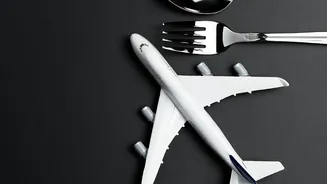
Food and beverage companies that service airlines and, increasingly, high_speed rail, are well aware of this phenomenon. They don't just serve restaurant food on a tray; they specifically engineer recipes for the travel environment. To combat the sensory dulling effects of low humidity, pressure, and noise, chefs often increase the intensity of seasonings. They might add more salt and spices than would be considered normal on the ground. They also lean heavily into umami_rich ingredients like tomato paste, soy sauce, and parmesan cheese, which, as we've learned, can be enhanced by the ambient noise of the cabin. So if your train meal tastes surprisingly robust, it's likely by very careful design.