

Why August is Prime Time for Saturn
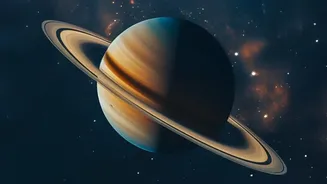
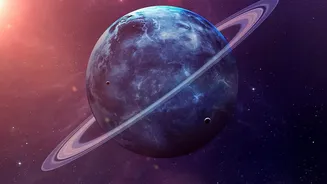
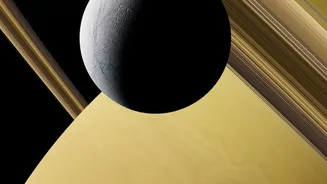
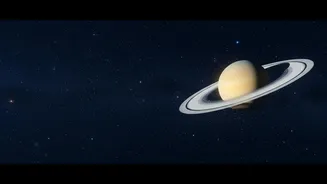
Throughout August, Saturn is making its grand entrance into our evening sky, paving the way for its best appearance of the year. The planet is currently moving towards opposition, an annual event when Earth passes directly between the sun and Saturn.
This year's opposition is on October 4, but the weeks leading up to it are a fantastic time for viewing. As we catch up to Saturn in our orbital path, it appears progressively brighter and larger in our sky. In early August, you can spot Saturn rising in the east around 11 p.m., but by the end of the month, it will be visible as early as 9 p.m., making it much more convenient for an evening of stargazing. This extended visibility throughout the night makes August a perfect month to get acquainted with the famous ringed planet.
Finding Saturn in the Night Sky
You don't need to be an expert astronomer to locate Saturn. It will appear as a bright, steady, yellowish-white point of light in the eastern sky. Unlike stars, which twinkle, planets shine with a constant glow. This month, Saturn resides in the faint constellation of Pisces, the Fish. If you have trouble identifying constellations, don't worry. The Moon will act as your guide on two key nights. Look for the Moon to pass close to Saturn on the night of August 4 and again on August 30-31. These celestial meetups are the sky’s way of pointing a giant arrow directly at your target. Using a stargazing app on your smartphone can also help you pinpoint its exact location in real time, removing any guesswork.
Naked Eye, Binoculars, or Telescope?
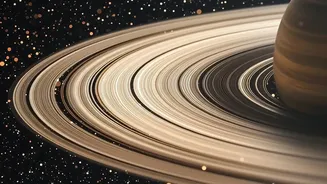
Your viewing experience will depend on the equipment you have. With just your naked eyes, Saturn will look like a particularly bright star, but its steady gleam is unmistakable. Even a basic pair of binoculars will start to reveal its secret: Saturn will appear not as a point, but as a tiny, slightly elongated oval, hinting at the presence of its famous rings. However, to truly witness its iconic rings, you’ll need a telescope. Even a small telescope with at least 25x magnification will be able to resolve the rings as a distinct structure separate from the planet itself. With a larger amateur telescope, you might even spot the Cassini Division—a dark gap that splits the rings—and Saturn's largest moon, Titan, which looks like a tiny star right next to the planet.
The Challenge of Monsoon Skies
While Saturn is ready for its close-up, there's one major hurdle for many in India: the monsoon. August is peak rainy season, and cloud cover can frustrate even the most patient skywatcher. The key is to be opportunistic. Keep an eye on the weather forecast and be ready to head outside during any clear spells. The good news is that post-rain skies are often incredibly clear, as the water washes away dust and pollutants, leading to exceptionally crisp viewing conditions. For those determined to get a guaranteed view, travelling to a rain-shadow region can be a good option. High-altitude deserts like Spiti Valley in Himachal Pradesh or areas in Ladakh often experience clearer skies during the monsoon months, making them ideal destinations for astronomy.
A Bonus Celestial Showcase
Saturn isn’t the only attraction in the August sky. The famous Perseid meteor shower, one of the best of the year, peaks on the night of August 12-13. This year is particularly special because the peak coincides with a new moon, meaning the sky will be extra dark, allowing even faint meteors to shine. Furthermore, on the same morning, a rare alignment of six planets—Mercury, Jupiter, Mars, Saturn, Uranus, and Neptune—will be spread across the pre-dawn sky. While some of these will be challenging to spot, Saturn and Mars will be easily visible. So, if you're out looking for Saturn, you might be treated to shooting stars and a planetary parade as well.