





What Is Sound, Really?
Before we can understand why space is silent, we need to get a handle on what sound actually is. It’s not just something that goes into your ears; it’s a physical phenomenon. Sound is a mechanical wave, which means it needs a medium—a substance made of
atoms and molecules—to travel through. Think of it like a line of dominoes. When you knock over the first one, it transfers its energy to the next, which transfers it to the one after that, and so on. A sound wave works similarly. A vibrating object, like a guitar string or your vocal cords, pushes against the particles (molecules) of the medium around it, like air. This creates a chain reaction of compressions (areas where particles are squished together) and rarefactions (areas where they are spread apart). This wave of vibrating particles travels outward until it reaches your eardrum, which then vibrates, allowing your brain to interpret it as sound. Without the dominoes, the chain reaction can’t happen.
The Ultimate Empty Room
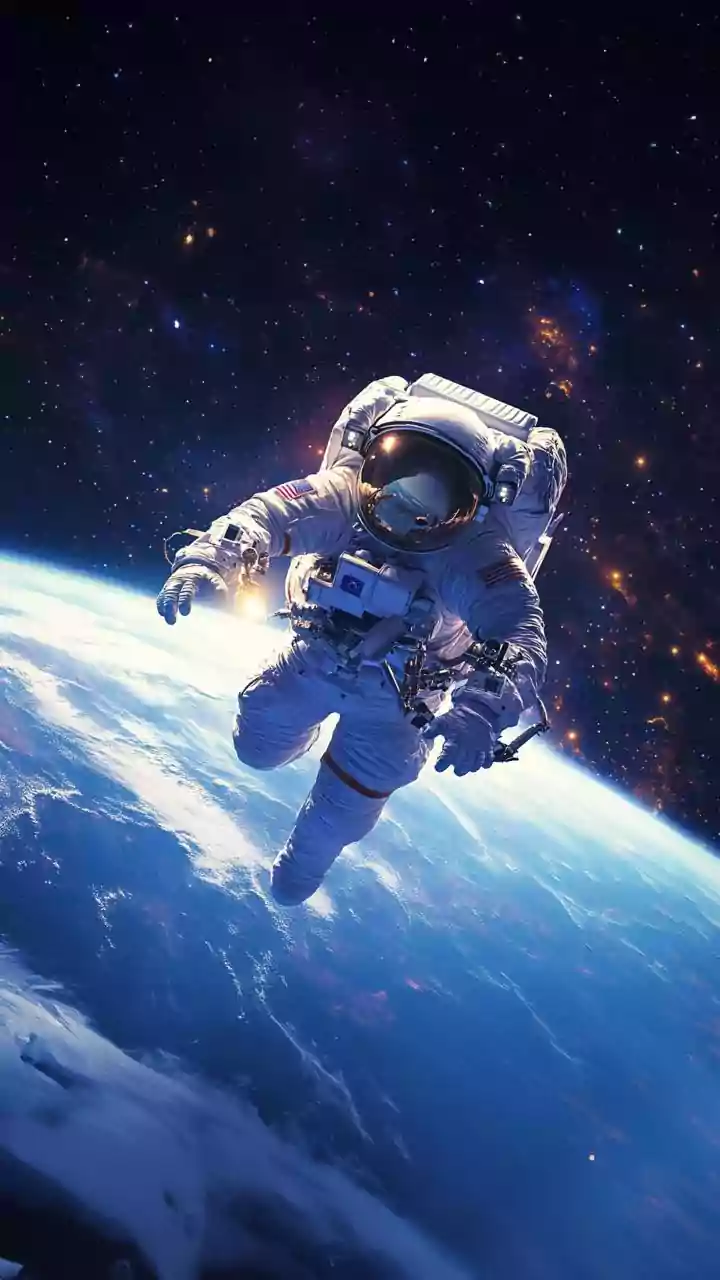
Space, for the most part, is an almost perfect vacuum. This doesn't mean it's completely empty—there are stray atoms, dust particles, and plasma floating around. But the distance between these particles is enormous. On Earth, at sea level, there are about 25 quintillion air molecules in a single cubic centimeter. In the vacuum of interplanetary space, that number can drop to just a handful of atoms. Because the particles are so incredibly spread out, there's no medium to carry the vibration. An exploding spaceship would certainly produce a massive amount of energy and light, but the vibrations from the blast would have nothing to push against. The wave of sound energy would stop almost immediately, with no dominoes to knock over. It’s not that the sound is quiet; it’s that it literally cannot exist. It’s the ultimate silent treatment from the universe.
Why Hollywood Gets It Wrong (On Purpose)
So why are movie explosions so loud? The simple answer is drama. A silent, fiery explosion just doesn't have the same visceral impact on an audience. Filmmakers like George Lucas have been open about this, admitting they prioritize entertainment and emotional resonance over strict scientific accuracy. Sound designers for films like *Star Wars* and *Star Trek* create a rich auditory landscape to make the action feel more immersive and intense. They are telling a story, not teaching a physics lesson. It's an artistic choice, and a necessary one for the medium. In fact, one of the rare films to portray space silence accurately was Stanley Kubrick's *2001: A Space Odyssey*. Its silent scenes of space travel were revolutionary and, for some audiences at the time, deeply unsettling because they broke the established cinematic language.
The Nuances of Noise in the Cosmos
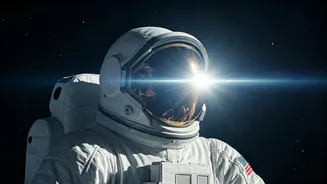
This doesn't mean there's absolutely no sound anywhere beyond Earth's atmosphere. If you were an astronaut inside a spaceship, you’d hear everything perfectly. The ship is filled with air, providing a medium for sound waves to travel from your crewmate’s mouth to your ear, or from a clanging tool to the ship’s hull. Likewise, if you put on a helmet and stood on a planet with an atmosphere, like Mars, you could hear sounds. NASA's Perseverance rover has microphones that have recorded the sounds of the Martian wind. Because Mars's atmosphere is much thinner than Earth's (about 1% of the density), sounds there are much quieter and more muffled, with high-pitched noises barely traveling at all. Sound can also travel through solids. An astronaut on a spacewalk could theoretically feel the vibrations of an impact on their ship through their boots if they were in direct contact, even if they couldn't “hear” it through the vacuum.