






Your Life Is The Hanging Basket
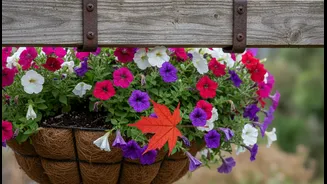
Imagine your life—your career, your relationships, your sense of self—as that vibrant hanging basket. It’s the beautiful, visible part of your existence that you present to the world. It can be cultivated to be lush and full, a source of pride and joy.
Like a basket, it has a certain capacity. We fill it with work, family, hobbies, and ambitions. But also like a basket, it is a vessel that is entirely dependent on what holds it up. Without strong support, even the most beautiful arrangement is vulnerable and at risk of coming crashing down. Thinking of your life in this way isn't meant to be simplistic, but to offer a gentle reminder that the visible success and happiness we cultivate is only one part of the story. The real strength comes from the structure that supports it.
The Unseen Work of Secure Hooks
A hanging basket is useless without a secure hook. This is the foundational structure that bears the entire weight, often out of sight and out of mind until it fails. In our lives, these hooks are our support systems. They are the strong, reliable connections and internal frameworks that keep us steady through life's storms. These supports include trusted friends and family who provide emotional comfort and a sense of belonging. They are also our core values, the principles that guide our decisions and give us a sense of purpose and clarity. A professional support team, like a therapist or a mentor, can also be a crucial hook, providing guidance and coping strategies. Building this support system is not a one-time task; it requires ongoing effort. It means reaching out, nurturing existing relationships, and sometimes being brave enough to build new ones by joining groups or volunteering. These hooks are what give us the resilience to bounce back from adversity.
The Necessity of Falling-Leaf Checks
Even the most securely hung basket needs maintenance. You have to water it, remove dead leaves, and check for pests. These are the “falling-leaf checks” of our own lives—the regular, mindful practice of self-reflection. A self-check-in is a conversation with yourself to ask, “How am I really doing?”. It’s about noticing the small signs of stress, anxiety, or burnout before they escalate into bigger problems. Think of your stress capacity as a bucket; every small worry adds a bit of water, and regular checks can prevent it from overflowing. Ignoring these small signs is like letting dead leaves accumulate in the basket; eventually, they can lead to decay and affect the health of the entire plant. These checks don’t need to be grand gestures. They can be as simple as taking a few minutes each day to journal, practicing mindfulness or meditation, or taking a quiet walk to process your thoughts. This practice improves your self-awareness, helping you understand your emotional triggers and needs.
How to Perform Your Own Checks
Incorporating these checks into your life can be simple. Start by scheduling a few minutes each day for quiet self-reflection. Ask yourself specific questions: What was a high point and a low point of my day? What am I feeling right now, and where in my body do I feel it? What do I need more of, or less of, this week? It can be helpful to write down your thoughts, as this can provide clarity and help you spot patterns over time. Also, check in with your support system. Having a conversation with a trusted friend can offer a fresh perspective. Pay attention to your physical well-being, as it's deeply connected to your emotional health. Are you getting enough sleep? Are you eating well and moving your body? These are not just physical health questions; they are fundamental self-care checks. The goal isn't to judge yourself, but to listen with compassion and make small, constructive adjustments.