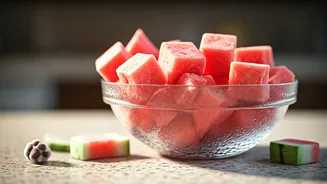









Why Watermelon Is a Superb Summer Treat
When served correctly, watermelon is more than just a sweet treat for your dog; it's a hydration powerhouse. Comprising about 92% water, it’s an excellent way to supplement your dog's daily water intake, which is crucial during hot and humid days when
dehydration is a real risk. Beyond its water content, this fruit is packed with beneficial nutrients. It's a good source of potassium and vitamins A, B6, and C, all of which contribute to your dog’s overall health. Unlike many commercial dog treats that can be high in fat, calories, and preservatives, watermelon is a low-calorie, natural option. This makes it an ideal snack for dogs on a weight management plan or for owners who simply want to provide a healthier alternative. The natural sugars give it a delicious taste that most dogs love, turning a simple hydration effort into an exciting treat they will look forward to.
Your Simple Step-by-Step Guide
Preparing these cooling bites is incredibly simple and requires minimal effort. Here’s how to do it safely: 1. **Select the Right Fruit:** Opt for a seedless watermelon if possible. This saves you the tedious task of removing every single seed, which is a crucial step. 2. **Remove All Seeds:** If you can't find a seedless variety, you must meticulously remove all seeds, both black and white. Ingesting seeds can lead to intestinal blockage, a serious health hazard for dogs. 3. **Cut Away the Rind:** The green rind is tough and difficult for dogs to digest. It can cause gastrointestinal upset or, in some cases, a blockage. Slice the pink flesh away from the rind completely. 4. **Cube and Freeze:** Cut the seed-free, rind-free flesh into small, bite-sized cubes appropriate for the size of your dog. For a small breed like a Shih Tzu, cubes should be tiny to prevent choking. For a larger breed like a Labrador, you can make them slightly bigger. Spread the cubes in a single layer on a baking sheet lined with parchment paper and place them in the freezer for a few hours until solid. 5. **Store for Later:** Once frozen, transfer the watermelon bites to a freezer-safe bag or container. This way, you’ll have a ready supply of cool treats for the next hot day.
Important Rules for a Safe Treat
While watermelon is generally safe, moderation and proper preparation are key. Think of it as an occasional treat, not a meal replacement. The fruit contains natural sugar, and too much can lead to an upset stomach, diarrhoea, or contribute to weight gain over time. As a general rule, treats (including fruits) should not make up more than 10% of your dog's daily caloric intake. Always introduce any new food to your dog slowly and in small quantities to see how their digestive system reacts. Some dogs may have a more sensitive stomach than others. Also, be mindful of choking hazards. Even with small pieces, an overly excited dog might gulp them down too quickly. Always supervise your pet when they are enjoying their frozen watermelon bites, especially the first few times.
More Ways to Beat the Heat
Frozen watermelon is a fantastic tool in your summer safety kit, but it shouldn't be the only one. Ensuring your dog's comfort during a heatwave requires a multi-faceted approach. Always provide unlimited access to fresh, cool water, and consider placing multiple water bowls around the house. Create shady, cool resting spots for them, both indoors and outdoors. A cooling mat can provide significant relief on tiled or concrete floors. Adjust your walk schedule to avoid the hottest parts of the day—aim for early mornings and late evenings. Never, ever leave your dog in a parked car, even for a minute, as temperatures inside can become lethal very quickly. You can also wet a towel for them to lie on or give them a gentle wipe-down with a damp cloth to help lower their body temperature.
When to Worry About Overheating
It’s vital for every dog owner to recognize the signs of heatstroke, which is a medical emergency. If your dog is overheating, they may exhibit symptoms like excessive and rapid panting, thick and sticky drool, bright red gums, vomiting, or diarrhoea. More severe signs include disorientation, stumbling, lethargy, or even collapse. Brachycephalic (flat-faced) breeds like Pugs and Bulldogs, as well as elderly, overweight, or thick-coated dogs, are particularly susceptible. If you notice any of these signs, move your dog to a cool, shaded area immediately. You can apply cool (not ice-cold) water to their body, especially on their paws and around their head and neck, and offer them small amounts of water to drink. Most importantly, contact your veterinarian right away for professional guidance.