




Become a Micro-Forecaster with the Right Apps
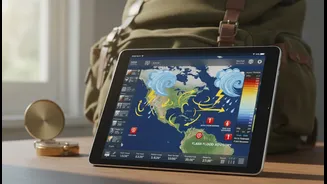
Forget generic weather reports. During the monsoon, conditions are hyperlocal and change rapidly. You need tools that provide real-time, detailed cloud cover information. Apps like Windy.com and Skymet Weather offer layered maps that show cloud cover at different
altitudes. Look for the 'low clouds' and 'high clouds' layers. Gaps in the low-level clouds are your best bet for a clear view, even if high, wispy cirrus clouds are present. Astronomy-specific apps like Clear Outside or Astrospheric are even better, as they provide an hour-by-hour forecast for 'seeing' (atmospheric stability) and transparency, which are crucial for stargazing. Set your location precisely and check these apps frequently, especially in the late evening, to spot potential clearings.
Use Satellite Imagery Like a Pro
For a bigger picture, turn to satellite imagery. The India Meteorological Department (IMD) provides public access to imagery from its INSAT series of satellites. Its website offers visible, infrared, and water vapour maps that are updated regularly. On an infrared map, brighter white areas represent colder, higher clouds (like thick cumulonimbus), which are impossible to see through. Darker areas are warmer and indicate lower clouds or clear skies. By watching the animation loops, you can track the movement and dissipation of large cloud systems. Services like Zoom Earth also provide high-resolution, frequently updated satellite views, allowing you to visually identify and track gaps in the cloud cover as they move toward your location. This helps you anticipate a clear window an hour or two in advance, giving you time to prepare your telescope or binoculars.
Learn to Read the Monsoon Sky
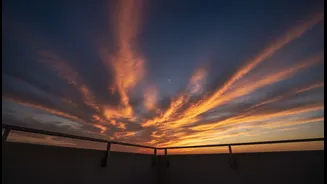
Technology is powerful, but traditional observation skills are invaluable. Not all clouds are created equal. Puffy, cotton-like cumulus clouds that build up during a hot afternoon often dissipate after sunset, leaving behind clear nights. The air after a heavy downpour can also be exceptionally clear, as the rain washes dust and pollutants from the atmosphere. Learn to recognise the signs of a break in the weather. A shift in wind direction, a visible thinning of the cloud layer on the horizon, or the appearance of a reddish sky at sunset can signal improving conditions. These visual cues, combined with your app-based forecasts, create a much more reliable prediction system. Patience is key; monsoon weather is a dynamic drama, and the scene can change completely in less than an hour.
Target the Brightest Objects
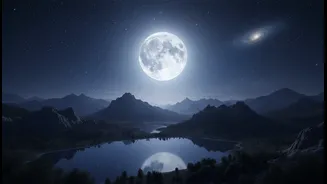
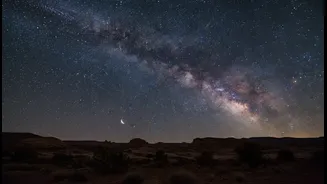
When you only have a short, uncertain window of clear sky, you can't afford to waste time searching for faint, fuzzy objects. Plan your observing session around bright, easy-to-find targets. The Moon is an excellent choice, even when a thin haze is present. Its craters and seas are fascinating to explore with even a small pair of binoculars. Bright planets like Jupiter, Saturn, and Mars are also perfect targets. They are easy to locate and their features, like Jupiter's moons or Saturn's rings, are rewarding sights. Use a planetarium app like Stellarium or SkyView to know exactly where these objects will be in your sky. This way, the moment the clouds part, you can swing your telescope into position without delay and make the most of every clear minute.
Be Ready to Act Fast
The perfect gap between monsoon clouds waits for no one. Having your equipment ready is crucial. Keep your telescope or binoculars in a quickly accessible spot. If you use a telescope, have it assembled and, if possible, roughly aligned. Ensure your eyepieces are clean and your finderscope is aligned. If you plan to do astrophotography, make sure your camera batteries are charged and memory cards are clear. The goal is to go from spotting a clearing to observing within minutes. A comfortable chair and a flask of a warm beverage can make the waiting more pleasant. Balcony skywatching during the monsoon is a game of opportunistic glimpses, and being prepared ensures you never miss a fleeting moment of cosmic beauty.