






A Discovery in a Chhattisgarh Lake
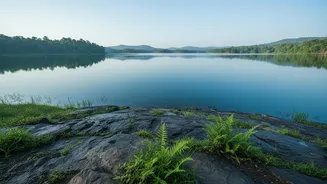
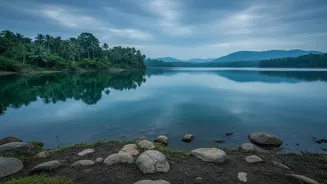
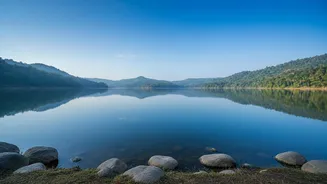
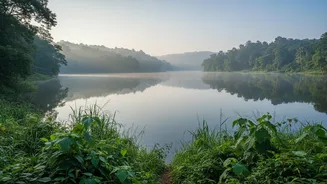
Scientists have found evidence that the Indian Summer Monsoon was significantly stronger about a thousand years ago than previously believed. This discovery comes from a study of ancient pollen grains preserved in the sediment at the bottom of Raja Rani
Lake in Korba district, Chhattisgarh. Researchers from the Birbal Sahni Institute of Palaeosciences (BSIP) in Lucknow extracted a 40-centimetre-long core of mud, which contained a 2,500-year-old record of environmental changes in the region. This area is part of India's Core Monsoon Zone (CMZ), a critical region that receives the vast majority of the country's annual rainfall, making it highly sensitive to shifts in the monsoon.
How Pollen Tells the Climate Story
The science of using pollen to reconstruct past environments is called palynology. Every plant species produces pollen with a unique shape and a tough outer wall that allows it to be preserved for thousands, or even millions, of years in sediment layers, like those at the bottom of a lake. By drilling a core and analysing the pollen in each layer, scientists can identify which plants were growing at a specific time. Since different plants thrive in different climates—some prefer warm, humid conditions while others indicate a drier environment—the types and abundance of pollen create a detailed timeline of past climate conditions. Forest-loving plants, for example, point to a strong monsoon and high rainfall, while grasses and herbs can suggest drier phases.
What the Pollen Revealed
The Chhattisgarh pollen analysis showed a clear shift in vegetation over time. About 2,000 years ago, the landscape was primarily savannah, but it gradually transformed into mixed tropical deciduous forests. The most significant finding relates to a period known as the Medieval Climate Anomaly (MCA), roughly between 1060 and 1725 CE. During this time, the pollen record was dominated by species found in dense, moist tropical forests, indicating a period of intense and sustained monsoon rainfall coupled with a warm, humid climate. This suggests the Indian Summer Monsoon was much more powerful during this medieval warm period than previously thought, a finding that helps refine our understanding of natural climate cycles.
Connecting the Past to Future Forecasts
Understanding how the monsoon behaved during past warm periods like the MCA is crucial for predicting its future in a warming world. These long-term historical records provide invaluable data for improving climate models. By inputting information about past monsoon intensity and its drivers—such as La Niña-like conditions and high solar activity, which were linked to the stronger medieval monsoon—scientists can create more accurate simulations of future rainfall patterns. The past doesn't offer a direct forecast, but it reveals what is physically possible within Earth's climate system, helping to anticipate how the delicate balance of forces that drive the monsoon might shift as global temperatures rise.
Why Ancient Clues Matter Now
With climate change expected to increase the frequency of extreme weather events, a comprehensive understanding of the monsoon is more critical than ever. This research from Chhattisgarh provides a high-resolution glimpse into the monsoon's natural variability, free from modern human influence. It underscores the importance of palaeoclimate studies—looking at clues from ice cores, tree rings, and, in this case, ancient pollen—to establish a baseline for long-term climate behaviour. By reconstructing the past, researchers can better distinguish between natural cycles and human-induced changes, leading to more informed water resource management and agricultural planning for the millions who depend on the monsoon's reliability.