


The High Cost of Power
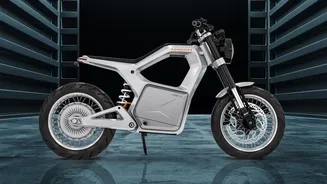
For years, the electric vehicle dream has come with a significant catch: the battery. Accounting for 30-40% of an electric scooter's total price, the lithium-ion battery pack has been the single most expensive component, keeping sticker prices stubbornly
high for the average Indian consumer. This cost is driven by reliance on imported raw materials like lithium and cobalt, as well as the complex manufacturing processes involved. The result has been a market where, despite growing environmental awareness and attractive running costs, the high upfront investment remains a major obstacle, pushing electric scooters out of reach for a large segment of the population.
Localisation and New Chemistries
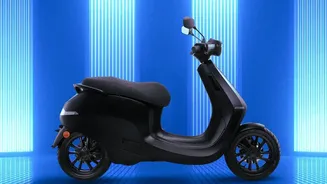
A major shift is underway, thanks to a concerted push towards local manufacturing and alternative battery chemistries. The Indian government's Production Linked Incentive (PLI) scheme for Advanced Chemistry Cell (ACC) manufacturing is spurring companies to build gigafactories on home soil. This move reduces import dependency and cuts down on supply chain costs. More importantly, companies are innovating with different battery types. Ola Electric, for instance, recently launched its S1Z scooter featuring its own 'Bharat Cell' technology, which uses Lithium Iron Phosphate (LFP). LFP cells are known for being more stable, safer, and having a longer life cycle than conventional NMC (nickel-manganese-cobalt) cells, all while being cheaper to produce. This kind of indigenous development is key to bringing down costs at a mass-market level.
Rethinking Ownership: Battery-as-a-Service
Perhaps the most immediate game-changer for affordability is a new business model called Battery-as-a-Service (BaaS). Instead of buying the scooter and the battery together, BaaS allows you to purchase just the vehicle and pay a monthly subscription for the battery. This move can slash the initial purchase price by a staggering 25-40%. Major players like Ather, Hero MotoCorp (through its Vida brand), and TVS have already rolled out BaaS plans. For example, under a BaaS model, a scooter's price can drop significantly, making it competitive with traditional petrol scooters. This not only solves the upfront cost problem but also removes a key consumer worry: battery degradation. Since the provider owns and maintains the battery, the risk of replacement costs is eliminated for the user.
The Convenience of Swapping
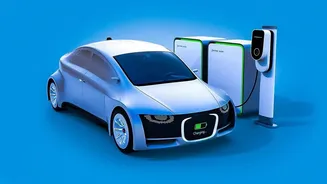
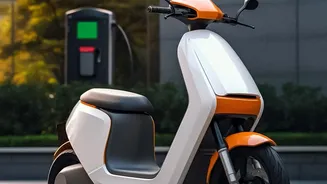
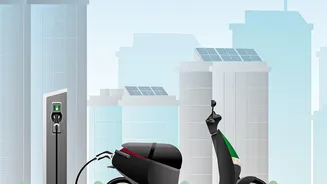
Closely tied to BaaS is the rise of battery swapping. Instead of plugging in your scooter and waiting hours for it to charge, you can simply visit a swapping station and exchange your depleted battery for a fully charged one in minutes. This model eliminates range anxiety and the need for personal charging infrastructure, a huge advantage for people living in apartments or areas with limited parking. Companies like Bounce Infinity were pioneers in this space, even selling scooters without a battery at all, relying entirely on their swapping network. This unbundling of the vehicle and energy components fundamentally changes the economics of ownership, making the transition to electric mobility more practical and accessible than ever before.
On the Horizon: Sodium-Ion and Solid-State
Looking further ahead, the future of battery tech promises even greater affordability and performance. Sodium-ion batteries are emerging as a strong contender, using abundant and inexpensive raw materials like sodium instead of lithium. While currently similar in cost to LFP batteries, their structural cost floor is lower, promising significant price drops as manufacturing scales. Even more advanced are solid-state batteries, which replace the liquid electrolyte in current batteries with a solid material. This technology promises to dramatically increase energy density (meaning longer range), improve safety by eliminating flammable liquids, and allow for ultra-fast charging. While premium electric scooters with solid-state batteries are expected to appear around 2027-2028, the technology is projected to become mainstream by 2030, eventually making range anxiety and long charging times a thing of the past.