



The Sun's Turbulent Threat
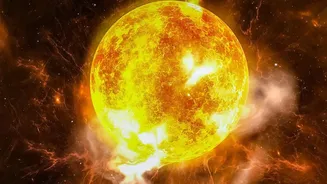
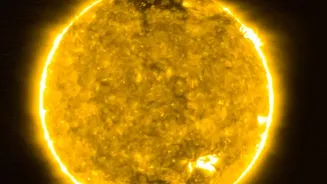
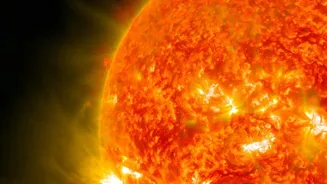
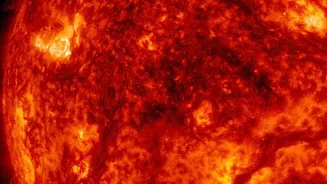
The Sun, the star that makes life on Earth possible, has a volatile side. It periodically unleashes massive bursts of energy and plasma known as Coronal Mass Ejections (CMEs). These solar storms hurl billions of tonnes of charged particles into space
at immense speeds. When a CME is aimed at Earth, it can have serious consequences. These events can trigger geomagnetic storms that disrupt our planet's magnetic field, posing a significant threat to our technology-dependent society. Severe space weather can damage or disable satellites, interfere with GPS navigation and communication systems, and even cause widespread power outages by overloading electrical grids on the ground. Historically, preparing for these events has been a major challenge, but that is beginning to change thanks to India's ambitious solar observatory.
India’s Strategic Vantage Point
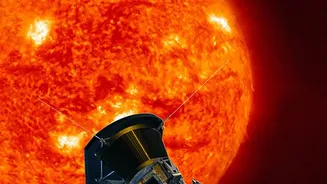
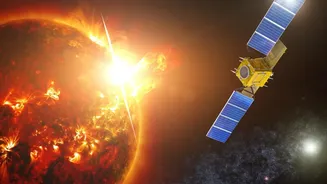
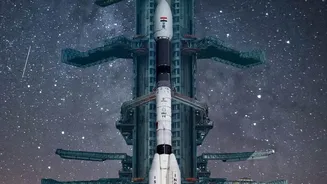
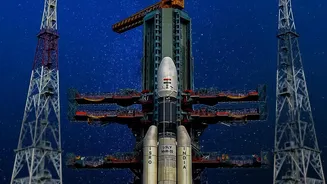
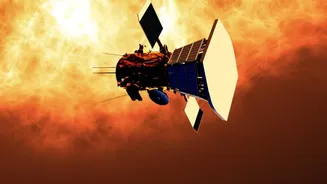
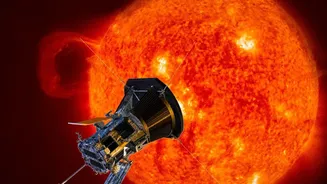
Launched by the Indian Space Research Organisation (ISRO), the Aditya-L1 spacecraft is a dedicated solar observatory, the first of its kind for India. It is strategically positioned at Lagrange Point 1 (L1), about 1.5 million kilometres from Earth. This unique spot between the Sun and Earth allows the spacecraft to maintain a constant, uninterrupted view of the Sun without being blocked by our planet or the Moon. Aditya-L1 is equipped with a suite of seven advanced instruments designed to observe the Sun's atmosphere—the photosphere, chromosphere, and the outermost corona—in unprecedented detail. Four of these payloads are for remote sensing of the Sun, while three are for in-situ measurements, directly sampling the solar wind and magnetic fields that flow past the spacecraft. This dual capability is key to its success.
The Breakthrough in Forecasting
The core of the new capability lies in Aditya-L1's ability to act as an early warning system. By being at the L1 point, it gets hit by solar wind and CMEs before they reach Earth. Instruments like the Aditya Solar wind Particle EXperiment (ASPEX) and the Plasma Analyser Package for Aditya (PAPA) measure the speed, density, and composition of the incoming solar particles. Crucially, its magnetometer measures the strength and direction of the interplanetary magnetic field carried within a CME. A strong, south-pointing magnetic field in a CME is particularly effective at coupling with Earth's magnetosphere and causing intense geomagnetic storms. By detecting these properties as the storm passes the L1 point, scientists can make a much more accurate and timely forecast of its potential impact. This provides a crucial warning window before the storm front hits our planet's environment.
From Minutes to a Head Start
Previously, space weather prediction relied on coronagraphs on other satellites to see a CME leaving the Sun. While this tells us that something is coming, determining its exact trajectory and internal characteristics remained difficult. Satellites at L1, like Aditya-L1, provide the first concrete measurements of what is actually heading our way. The data from Aditya-L1 can give authorities a lead time of anywhere from 30 to 60 minutes, and sometimes more depending on the storm's speed, before the main impact on Earth. While this may not sound like much, it is invaluable for taking protective measures. A few dozen minutes is enough time for satellite operators to put their spacecraft into a safe mode, for power grid companies to reconfigure their networks to handle electrical surges, and for airlines to reroute flights away from polar regions where communication and radiation risks are highest during a storm.
A Shield for a Digital India
This enhanced forecasting ability is not just an academic achievement; it has tangible benefits for India and the world. India has significant assets in space, with ISRO alone operating satellites worth thousands of crores that support everything from digital payments and communication to weather forecasting and disaster management. Protecting these assets is a matter of national importance. Furthermore, Aditya-L1's data contributes to a global effort to understand and predict space weather, with ISRO sharing its findings with the international scientific community. The mission has already provided groundbreaking insights into the Sun's behaviour, helping to solve mysteries like the coronal heating problem and observing the fine details of solar flares. Each new discovery improves the models that scientists use to forecast the Sun's activity, making our world a little safer.