





1. The Essential Shoulder Roll
Shoulder rolls are a foundational movement for anyone who spends their day at a desk. They are simple, effective, and can be done almost anywhere. This exercise targets stiffness in the neck and shoulders, improves blood circulation, and helps counteract
the hunched-forward posture many of us adopt. To perform a shoulder roll correctly, sit or stand tall with your arms relaxed at your sides. Slowly lift your shoulders up toward your ears, then roll them backward in a smooth, circular motion, gently squeezing your shoulder blades together. Finally, let them drop down and relax completely. Repeat this movement 5-10 times, focusing on a slow, controlled motion rather than speed. You can then reverse the direction, rolling your shoulders forward for another 5-10 repetitions. This simple act helps lubricate the shoulder joints and provides an immediate sense of release.
2. Chin Tucks for 'Tech Neck'
Staring down at screens often leads to 'tech neck,' a forward head posture that strains your neck and upper back muscles. Chin tucks directly counteract this. Sit upright and gently draw your chin and head straight back, creating a double chin. Be careful not to tilt your head up or down. Hold this position for about five seconds, feeling a gentle stretch at the back of your neck, and then release. Repeat this 10 times. It’s an excellent way to realign your head over your shoulders and relieve pressure at the base of your skull.
3. Seated Spinal Twist
Sitting in one position for long periods can make your spine feel stiff and immobile. A seated spinal twist helps to gently increase mobility in your back. While sitting with your feet flat on the floor, contract your core and gently rotate your torso to the left. You can use the arm of your chair to deepen the stretch. Hold for 15-20 seconds, breathing normally, and then slowly return to the center before twisting to the right. This movement helps relieve tension in the lower and middle back.
4. Upper Trapezius Neck Stretch
Tension often accumulates in the upper trapezius muscles, which run from your neck down to your shoulders. To stretch this area, sit tall and gently tilt your right ear toward your right shoulder. You should feel a stretch along the left side of your neck. To deepen it slightly, you can place your right hand on your head and apply very light pressure. Hold for 20-30 seconds and repeat on the other side. This stretch is perfect for easing the tightness that can lead to tension headaches.
5. Shoulder Blade Squeeze
To combat the rounded shoulders that come from typing and mousing, the shoulder blade squeeze is a must. While sitting or standing, simply squeeze your shoulder blades together as if you are trying to hold a pencil between them. Hold this contraction for 5-10 seconds, then release. This exercise activates the rhomboid and trapezius muscles in your upper back, which are crucial for maintaining good posture and preventing your shoulders from rolling forward. Repeat 10 times throughout the day.
6. Overhead Stretch
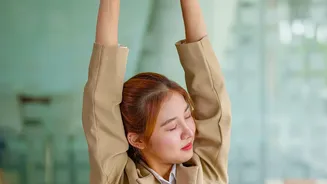
An overhead stretch is a fantastic way to lengthen your entire spine and release tension in your back, shoulders, and arms. While seated or standing, interlace your fingers and push your palms up toward the ceiling. Stretch as high as you comfortably can, take a deep breath, and hold for 15 seconds. This simple movement helps to decompress the spine and provides a quick burst of energy by improving circulation.
7. Seated Figure-Four Stretch
Prolonged sitting also tightens your hips and glutes, which can contribute to lower back pain. The figure-four stretch targets these areas effectively. While seated, cross your right ankle over your left knee. Gently press down on your right knee until you feel a stretch in your right glute and hip. For a deeper stretch, you can lean your torso forward slightly. Hold for 20-30 seconds, then switch legs. This helps improve hip mobility and eases tension in the lower body.