


A New Class of Worlds
For decades, the search for habitable exoplanets focused on worlds similar to our own: small, rocky planets orbiting their stars at just the right distance for liquid water to exist. But the JWST has opened our eyes to a different, intriguing possibility:
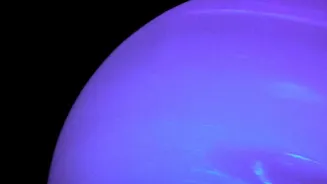
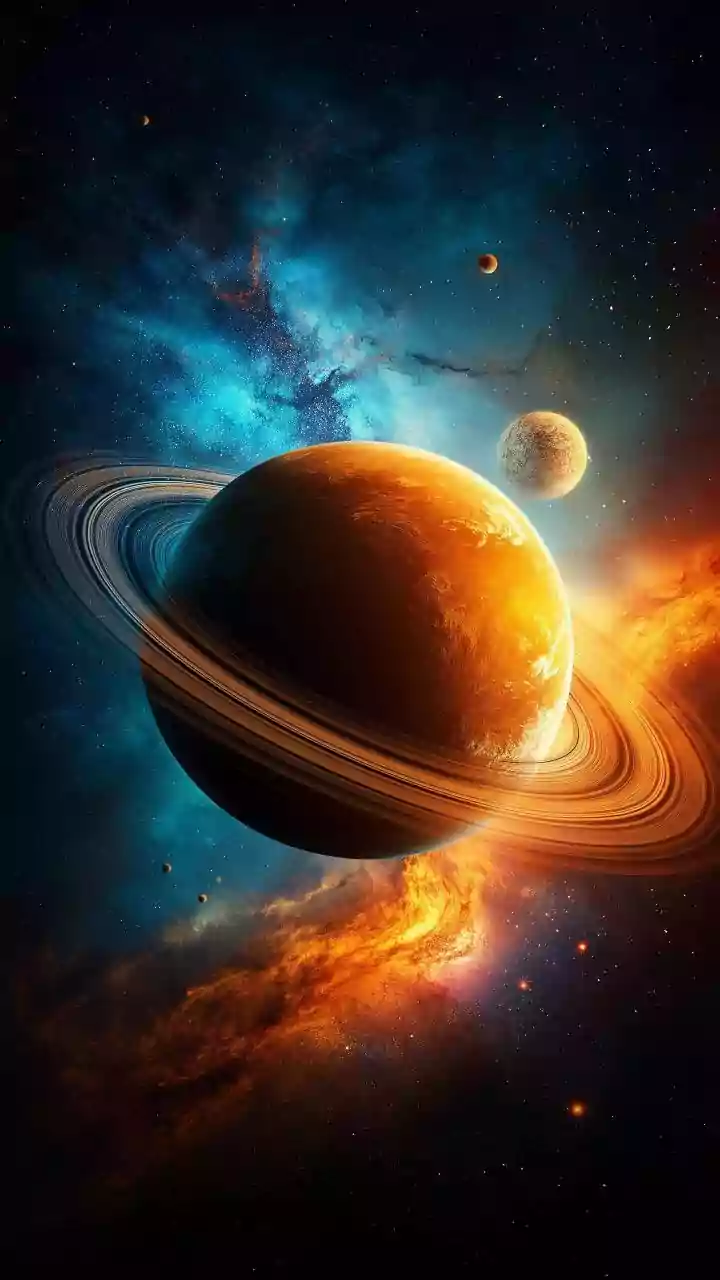
'Hycean' worlds. These are planets larger than Earth but smaller than Neptune, thought to possess vast liquid water oceans beneath hydrogen-rich atmospheres. One such world, K2-18 b, located 124 light-years away, has become a primary target for astronomers. Unlike the rocky planets in our solar system, these 'sub-Neptunes' or 'warm Neptunes' present a completely new environment, and studying their atmospheres offers a tantalizing, if complicated, opportunity to find signs of life.
The Methane and DMS Puzzle
Using its powerful infrared instruments, the JWST detected carbon-bearing molecules, including methane and carbon dioxide, in the atmosphere of K2-18 b. This was significant because the specific mix of gases hinted at the presence of a water ocean. Methane itself can be a 'biosignature'—a substance that provides evidence of life. On Earth, biological activity, from microbes in wetlands to cows, produces massive amounts of methane. Because methane is quickly broken down by sunlight, its persistent presence in an atmosphere suggests it is being constantly replenished. More tantalizingly, the initial observations of K2-18 b showed a potential hint of another molecule: dimethyl sulfide (DMS). On Earth, DMS is produced exclusively by life, primarily marine phytoplankton, making it a very strong potential biosignature.
Not So Fast: The Challenge of False Positives
The initial excitement around these detections has been tempered by the rigorous process of scientific verification. Methane, while a promising sign, is not definitive proof of life. It can also be produced by non-biological, geological processes like volcanic activity. Scientists are now in a heated debate over the data from K2-18 b. Follow-up analyses by different teams have questioned the initial findings, with some suggesting the signal for DMS might be a statistical anomaly or misinterpreted data. The confidence level for the DMS detection, while promising, did not meet the stringent 'five-sigma' standard required for a conclusive scientific discovery. This highlights a central challenge in astrobiology: distinguishing a genuine biosignature from a geological imposter. The unique chemistry of a hydrogen-rich atmosphere like K2-18 b's could potentially create molecules like DMS through non-living processes that don't occur on Earth.
Refining the Toolkit for Life Detection
The discoveries on worlds like K2-18 b and another warm Neptune, WASP-107b, are not a setback but a crucial learning experience. They are forcing astronomers to move beyond searching for a single 'smoking gun' molecule. Instead, the focus is shifting to evaluating the entire planetary context. For methane to be considered a strong biosignature, scientists now argue, it should be found in an atmosphere that also contains carbon dioxide but has very little carbon monoxide. This is because many non-biological processes that create methane also produce large amounts of carbon monoxide, whereas life on Earth tends to consume it. These new, complex criteria mean that simply finding methane is no longer enough. Astronomers must build a comprehensive chemical profile of a planet's atmosphere to rule out false positives. The work on warm Neptunes is providing the essential roadmap for how to do this, refining the methods that will one day be used to scrutinize Earth-like planets.