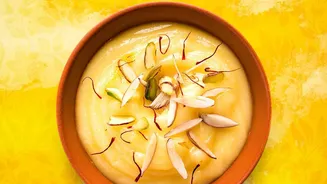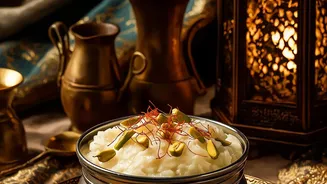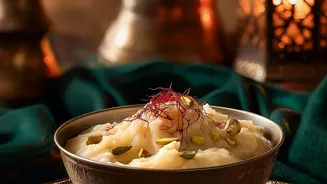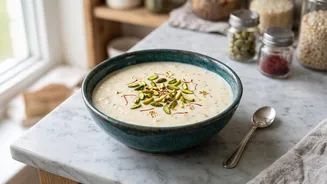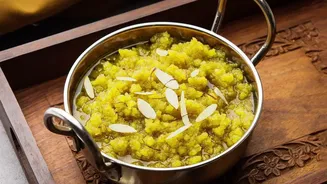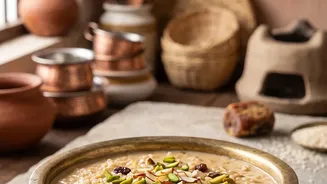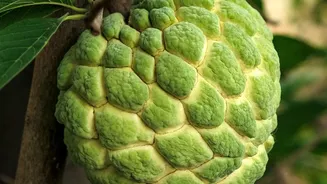



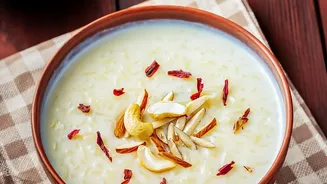
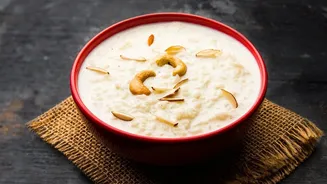
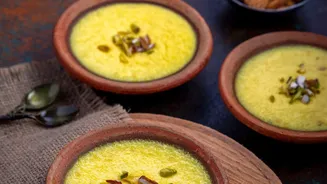
As the air turns cooler, the arrival of sitaphal, or custard apple, signals a time for unique seasonal desserts. This creamy, fragrant fruit finds its perfect match in phirni, a classic rice pudding, creating a truly special festive treat.
The Magic of Sitaphal Phirni
Phirni is a
beloved North Indian dessert with roots tracing back to Mughal kitchens. Unlike its cousin, kheer, which uses whole rice grains, phirni is made with ground rice, giving it a distinctively smooth and creamy texture. The rice paste is slow-cooked in milk until it thickens into a delicate pudding, traditionally flavoured with cardamom and saffron. While classic phirni is a delight on its own, adding seasonal fruit elevates it to another level. Sitaphal, with its custardy pulp and honey-like sweetness, is a perfect addition. The fruit's season, generally running from August to November, makes this dessert a true celebration of autumn's bounty. The creamy pulp of the sitaphal blends seamlessly into the rice pudding, adding natural sweetness and a luxurious texture that is hard to resist.
Preparing Your Sitaphal
The most time-consuming part of making any sitaphal dessert is separating the flesh from the numerous seeds. However, a few simple techniques can make this process much easier. First, ensure you are using a ripe, soft sitaphal. Break the fruit open and scoop the pulp, along with the seeds, into a bowl. One popular method involves placing the pulp into a food chopper and pulsing it for just a few seconds at a time. This short burst is enough to loosen the pulp from the seeds without breaking the seeds themselves. Alternatively, you can press the pulp through a large-meshed strainer or a ladle with holes, mashing it with the back of a spoon. The soft pulp will pass through, leaving the seeds behind. Whichever method you choose, the goal is to get a smooth, seedless pulp ready for your phirni.
Ingredients for Sitaphal Phirni
This recipe yields about four to six servings. For the best flavour, use full-fat milk and fragrant basmati rice. - 1 litre Full-Fat Milk - 1/4 cup Basmati Rice - 1/2 to 3/4 cup Sugar (adjust to taste, as sitaphal adds sweetness) - 1 cup Sitaphal (Custard Apple) Pulp, deseeded - 1/2 teaspoon Green Cardamom Powder - A few strands of Saffron, soaked in 2 tablespoons of warm milk - 2 tablespoons chopped Pistachios and Almonds for garnish - Rose petals for garnish (optional)
Step-by-Step Instructions
1. First, prepare the rice. Rinse the rice thoroughly and soak it in water for at least 30–60 minutes. Drain the water completely and transfer the soaked rice to a grinder. Grind it into a coarse, grainy paste; avoid making it too fine, as the slightly granular texture is key to good phirni. You can add a tablespoon or two of milk to help with the grinding. 2. In a heavy–bottomed pan, bring the milk to a boil. Once it boils, reduce the heat to low. Add the ground rice paste to the milk, stirring continuously to prevent any lumps from forming. It is crucial to keep the heat low and stir frequently to stop the milk from sticking to the bottom of the pan. 3. Cook the mixture on low heat for about 15–20 minutes. Stir every few minutes until the rice is fully cooked and the mixture has thickened to a creamy, custard–like consistency. To check if it's done, a spoon dipped into the phirni should be evenly coated on the back. 4. Once the phirni has thickened, add the sugar and cardamom powder. Stir well until the sugar dissolves completely and cook for another 5 minutes. 5. Turn off the heat and let the phirni cool down slightly. It's important not to add the sitaphal pulp when the phirni is piping hot, as it can alter the fruit's delicate flavour. Once it's warm, gently fold in the deseeded sitaphal pulp and the saffron–infused milk. Mix until just combined. 6. Pour the phirni into traditional earthenware bowls (shikoras) or any serving bowls of your choice. Serving in earthenware helps absorb excess moisture, making the phirni thicker. Garnish with chopped pistachios, almonds, and rose petals. 7. Refrigerate for at least 4 hours, or preferably overnight, before serving. Phirni is best enjoyed chilled, as this allows the flavours to meld and the pudding to set perfectly.