



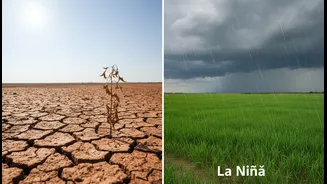


The Pacific's Global Mood Swings
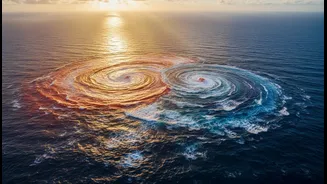
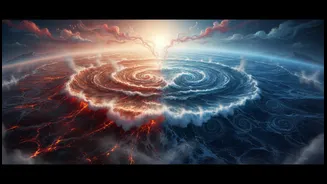
At its simplest, El Niño and La Niña are two opposite phases of a natural climate cycle called the El Niño-Southern Oscillation (ENSO). This cycle involves the periodic warming (El Niño) and cooling (La Niña) of sea surface temperatures in the central
and eastern tropical Pacific Ocean. Think of it as a massive climatic mood swing that doesn't just stay in the Pacific; it disrupts weather patterns across the globe, and India is one of the most significantly affected regions. The names, meaning 'the little boy' and 'the little girl' in Spanish, were given by South American fishermen centuries ago who noticed the ocean warming around Christmas. These events typically occur every two to seven years and can last for nine months to over a year.
El Niño: The Warm Phase and Weaker Monsoons
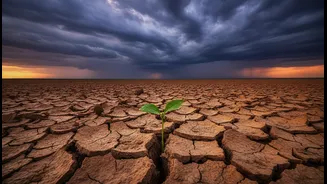
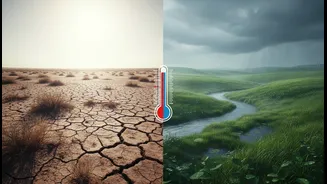
During an El Niño event, the trade winds that normally blow west across the Pacific weaken. This causes a massive pool of warm ocean water to shift eastward, towards the coast of South America. This change might seem distant, but it has a powerful domino effect. The shift in ocean heat alters atmospheric pressure and disrupts the large-scale circulation that drives the Indian summer monsoon. For India, El Niño is often bad news. It is strongly linked with weaker monsoon winds and suppressed rainfall, leading to drought-like conditions, particularly in the Kharif crop season. Historically, many of India's worst drought years have coincided with El Niño events. This impacts everything from agricultural output and food prices to the water levels in our reservoirs.
La Niña: The Cool Phase and Stronger Rains
La Niña is the opposite. During this phase, the trade winds become even stronger, pushing more warm water towards Asia and allowing cold water to well up along the South American coast. This cooling of the eastern Pacific reinforces the normal weather patterns. For India, this is generally beneficial. La Niña conditions are associated with a stronger-than-average monsoon, often bringing abundant rainfall. While this is good for agriculture and refilling water sources, a very strong La Niña can also lead to heavy floods and related problems. It is also linked with colder winters, especially in the northern parts of India.
The Other Player: The Indian Ocean Dipole
However, the Pacific's ENSO cycle isn't the only factor. India's weather is also heavily influenced by a similar phenomenon closer to home: the Indian Ocean Dipole (IOD), sometimes called the 'Indian Niño'. The IOD is a measure of the temperature difference between the western Indian Ocean (Arabian Sea) and the eastern Indian Ocean. It has three phases: positive, negative, and neutral. A 'positive' IOD, with warmer waters in the Arabian Sea, helps the monsoon and can bring good rains to India. Crucially, a strong positive IOD can sometimes counteract the negative effects of an El Niño, saving the monsoon from complete failure, as seen in some past years like 1997. Conversely, a 'negative' IOD can worsen drought conditions, especially if it occurs during an El Niño year. This is why forecasters at the India Meteorological Department (IMD) monitor both ENSO and the IOD very closely.
Why It Matters Now
These terms frequently appear in forecasts because their development gives a crucial long-range indication of how the upcoming monsoon might perform. As of mid-2026, forecasters are noting the presence of El Niño conditions in the Pacific, which have been associated with a rainfall deficit in the early part of the monsoon season. At the same time, models are predicting the potential development of a positive IOD later in the season, which could offer some relief by boosting rainfall. This complex interplay between the Pacific and Indian Oceans is why meteorologists are constantly analysing these patterns. The outcome determines the fortunes of millions of farmers and has a direct bearing on India's overall economic health for the year.