



Why These Three Movements Matter
In our daily lives, our bodies move in three dimensions. We bend, we twist, we carry unbalanced loads like shopping bags or children. Yet, many traditional workout routines focus on simple, one-dimensional movements. To build a body that's resilient to
injury and performs well in everyday life, you need to train the way you move. That's where bracing, rotation, and stability come in. Bracing protects your spine, rotation generates power and allows for fluid movement, and stability keeps you balanced and in control. Together, they form the foundation of functional strength, helping you move better and feel stronger in everything you do.
Mastering the Brace
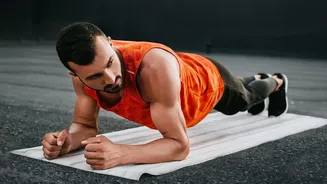
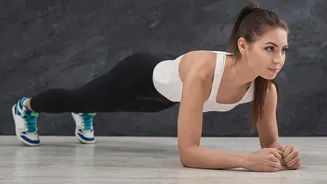
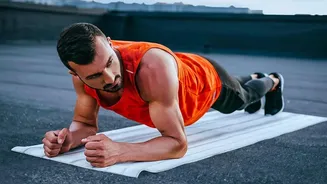
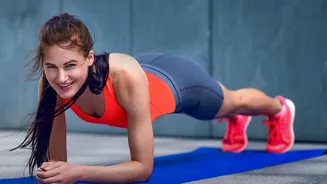
Bracing is the act of tensing the muscles of your core to create a rigid, stable trunk that protects your spine. Think of it as creating a natural weightlifting belt. This is crucial not just when lifting heavy objects, but for maintaining good posture and preventing lower back pain. A properly braced core provides a solid platform for your limbs to produce force efficiently and safely. A great exercise to practice this is the plank. How to do a Plank: Start in a push-up position, either on your hands or forearms. Your body should form a straight line from your head to your heels. Engage your core by pulling your belly button towards your spine and squeeze your glutes. Avoid letting your hips sag or rise too high. Hold this position, breathing steadily, for 30-60 seconds.
The Power of Rotation
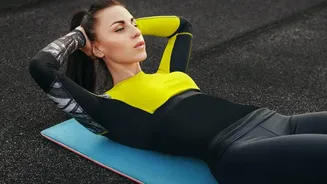
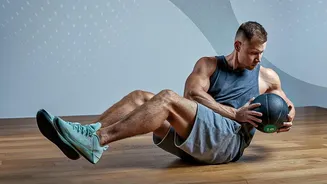
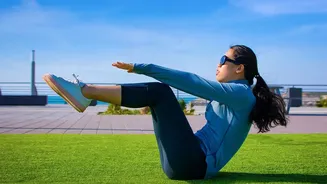
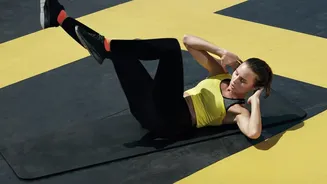
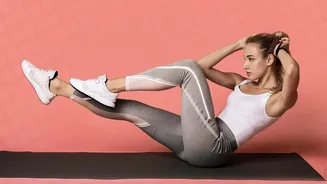
Rotational movements are fundamental to countless daily activities and nearly all sports, from throwing a ball to swinging a golf club. Training rotation helps build strength and power in your obliques and the deep muscles of your core. This not only enhances athletic performance but also improves your ability to twist and turn safely in everyday life. Neglecting rotational exercises can leave your core unprepared for the demands of multi-directional movement. The Russian Twist is an excellent exercise to build this capacity. How to do a Russian Twist: Sit on the floor with your knees bent and lean back slightly, lifting your feet off the floor if you can. Clasp your hands together in front of your chest. Keeping your core tight, rotate your torso from side to side, touching your hands to the floor beside each hip. Move in a controlled manner, using your abdominal muscles to power the twist.
Building Unshakeable Stability
Stability is about your body's ability to maintain balance and control against disruption. It involves tiny muscles around your joints firing constantly to keep you steady, whether you're standing on one leg or walking on uneven ground. Good stability prevents injuries by helping your body absorb and control forces effectively. An unstable core or weak stabiliser muscles can lead to poor movement patterns and increase your risk of sprains and strains. The Bird-Dog is a fantastic exercise for developing this control. How to do a Bird-Dog: Start on all fours, with your hands under your shoulders and your knees under your hips. Keep your back flat and your core engaged. Slowly extend your right arm straight forward and your left leg straight back, keeping your hips and shoulders level. Hold for a moment, focusing on balance, then return to the start and repeat on the other side. The key is to move slowly and avoid any rotation in your torso.