


Catch the Tail-End of the Perseids
While the Perseid meteor shower peaked around August 12-13, the show isn't completely over. This annual spectacle, caused by debris from the comet Swift-Tuttle, remains active until around August 24. Although the rate of meteors will be lower than the peak,
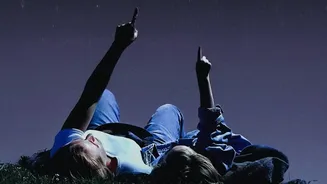
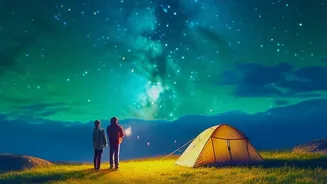
you can still spot several bright, fast-moving streaks across the sky each hour. For your best chance, find a location away from city lights, especially after midnight. The later you stay up, the higher the shower's radiant point in the constellation Perseus will be, increasing your chances of seeing these celestial fireworks. No special equipment is needed; just lie back, let your eyes adjust to the darkness for about 30 minutes, and enjoy the cosmic display.
The Perfect Nights for Dark Skies
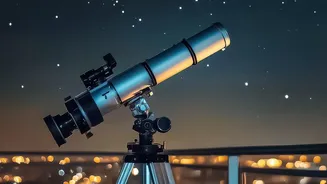
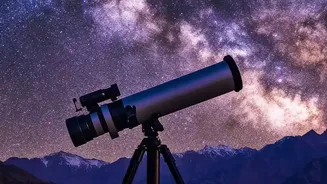
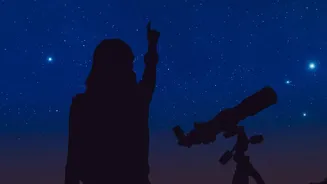
The key to good stargazing is a dark sky, and the moon is the biggest factor. The New Moon on August 12 created perfect conditions for the Perseid peak. Now, as we move through the month, the next best opportunity for observing faint objects like galaxies and star clusters will be the nights just before and after the New Moon. The First Quarter Moon arrives on August 20, meaning the nights leading up to it will still have relatively dark skies for a few hours after sunset. Use this window to explore the constellations or hunt for faint deep-sky objects with binoculars or a small telescope before the moonlight becomes too bright.
A Partial Lunar Eclipse to End the Month
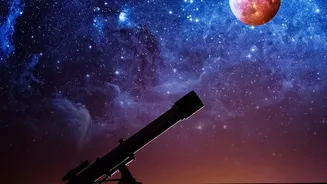
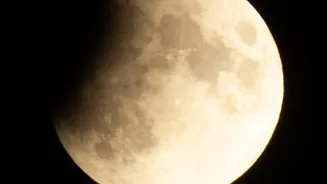
Mark your calendars for August 28, when a partial lunar eclipse will be visible across India. During this event, a portion of the Full Moon will pass through the Earth's darkest shadow, the umbra. This will cause part of the lunar surface to appear noticeably dimmer or even reddish. The eclipse will occur in the morning, and the Full Moon on this day is also known as the Sturgeon Moon. Unlike a solar eclipse, a lunar eclipse is perfectly safe to view with the naked eye, binoculars, or a telescope, so don't miss this chance to see our planet's shadow fall upon its natural satellite.
Planet Spotting: Saturn, Neptune, and Venus
While August doesn't feature any major planetary oppositions, there are still planets to spot. Saturn will be an excellent object to observe in the evening sky as it approaches its opposition in early October. This means it will be rising in the east around sunset and visible for most of the night, growing brighter each week. Neptune is also heading towards its opposition in September, but you'll need a telescope to spot its tiny, distant disk. Meanwhile, the brilliant planet Venus reaches its greatest eastern elongation on August 15, making it a stunning 'evening star' in the western sky right after sunset.
Tips for the Urban Astronomer
Living in a city doesn't mean you have to miss out. While light pollution hides fainter stars, bright events like lunar eclipses and the visibility of planets like Venus and Saturn are easily accessible. For meteor showers, even from a city terrace, you might catch the brightest meteors, known as fireballs. The key is to find the darkest possible spot, perhaps a park or a rooftop, and block out any direct streetlights. Give your eyes at least 20-30 minutes to adapt to the dark; this will dramatically increase the number of stars you can see. Mobile apps can also help you locate planets and constellations, pointing your gaze in the right direction even with a light-polluted sky.