





Start With the Right Toolkit
Before you touch your walls, gathering the correct tools is essential. Abrasive materials are the enemy of matte finishes, as they can create shiny spots or remove the print. Your go-to kit should include a soft microfibre cloth, a feather duster, and
a vacuum with a soft brush attachment. For any marks that go beyond simple dust, have a clean, white sponge and a mild, dye-free dish soap on hand. Using a white cloth or sponge is crucial, as coloured ones can sometimes transfer dye onto a damp wall. Never use scouring pads, harsh chemical sprays, or wet sponges, as these can cause irreversible damage.
The Gentle Dusting Routine
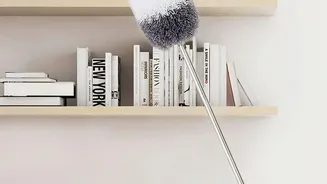
Regular dusting is the most effective way to keep your wallpaper looking fresh and prevent grime from building up. Aim to dust every few weeks, or more often if you live in a dusty area. Always work from the top of the wall downwards. This ensures that any dislodged dust falls onto areas you haven't cleaned yet. You can use a long-handled duster or a vacuum with a soft brush attachment set to low suction. This simple, dry-cleaning method will handle the majority of your maintenance needs and is the safest first step for any type of wallpaper, especially delicate matte surfaces.
Tackling Scuffs and Fingerprints
For marks that dusting can't fix, a 'less is more' approach is best. Matte finishes are more delicate than glossy ones and can be damaged by aggressive scrubbing. The golden rule is to always start with the mildest method. For light scuffs or fingerprints, first try a simple art gum eraser, which can often lift the mark without any liquid. If that doesn't work, proceed to a damp-cleaning method. Mix a few drops of mild dish soap into a bucket of lukewarm water. Dip a clean, white cloth or sponge into the solution and wring it out until it is barely damp to the touch. Excess water is the main culprit for damaging wallpaper paste and seams. Blot the mark gently instead of rubbing, as rubbing can burnish the matte surface and create a shiny patch. Always work from the outside of the stain inwards to avoid spreading it.
Always Spot-Test First
Before applying any moisture or cleaning solution to a visible area, it is absolutely critical to perform a patch test. Find an inconspicuous spot on the wall, such as behind a piece of furniture, near the skirting board, or inside a closet. Apply your chosen cleaning method to this small area and allow it to dry completely before assessing the result. Wallpaper can react differently based on its material—whether it's paper, vinyl, or non-woven—and some inks are more sensitive than others. This simple 60-second check can save you from creating a large, noticeable blemish on your statement wall.
Preserving Sharp, Colour-Blocked Lines
The appeal of colour-blocking lies in its crisp, clean lines between different hues. When cleaning, pay special attention to these seams. Avoid scrubbing aggressively across the joins where colours meet, as this can cause smudging, bleeding, or lift the edges of the paper. When damp-cleaning, use very light pressure and blot carefully near these transitions. If you're cleaning one colour block, try to avoid getting the damp cloth onto the adjacent colour until you're ready to clean that section. After cleaning, blot the area dry immediately with a clean, dry microfibre towel to prevent any moisture from seeping into the seams and weakening the adhesive.