




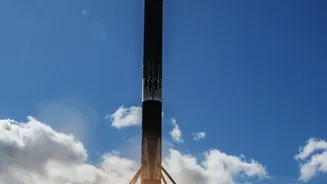
A Mission of Two Halves
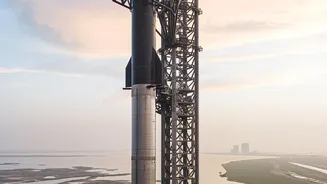
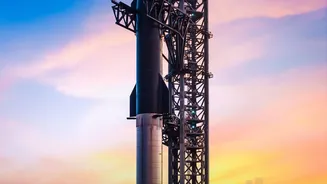
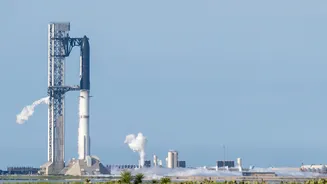
SpaceX's 15th test flight, which lifted off from Starbase, Texas, on November 13, had an audacious goal: to launch the world's most powerful rocket and then recover both of its massive stages back at the launch tower. This 'double catch' has been described
as the holy grail for achieving a fully and rapidly reusable spaceflight system, a cornerstone of Elon Musk's vision for making humanity multi-planetary. The mission plan involved the Super Heavy booster returning to the launch site minutes after liftoff, while the Starship upper stage would complete a 22.5-hour journey in orbit before its own nail-biting return. One part of this plan worked to perfection; the other was deliberately aborted.
The Booster's Fiery Plunge
The first major test of the mission came minutes after a successful liftoff. The Super Heavy booster, a 236-foot-tall behemoth, separated from the Starship and began its journey back to Earth. It was meant to be caught by the giant mechanical arms of the launch tower, nicknamed 'Mechazilla'. However, the booster’s onboard guidance system detected an issue and automatically aborted the catch attempt. Early analysis from SpaceX suggested the boostback burn, designed to send the rocket back to the launch site, ended early due to a low fuel mass alarm. Prioritizing safety, the system redirected the booster for a controlled splashdown in the Gulf of Mexico, where it exploded moments before hitting the water, as designed in such a contingency.
‘Chopsticks’ Snag a Starship From Orbit
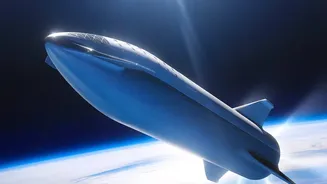
While the booster's recovery was unsuccessful, the Starship upper stage, known as Ship 42, continued its flawless journey. After reaching orbit, it successfully deployed 26 Starlink internet satellites. Nearly a day later, on November 14, the world watched as Ship 42 re-entered Earth's atmosphere and descended toward the launch tower. In a feat never before accomplished, the 'chopstick' arms of the Mechazilla tower closed around the descending spacecraft, catching it securely in mid-air. The unprecedented landing maneuver was a stunning success and a massive milestone for the program.
Why One Catch Changes Everything
The successful catch of the Starship upper stage is more than just a spectacular achievement; it is a fundamental validation of SpaceX's entire reusability architecture. Unlike the Falcon 9, which lands on its own legs, catching Starship with the tower eliminates the weight and complexity of landing gear on the vehicle itself. This allows for a greater payload capacity and, more importantly, enables a much faster turnaround for relaunch. Elon Musk stated the recovered spacecraft looked to be in great condition and could potentially fly again within weeks. This single event proves that the most critical and difficult part of the recovery system is viable, bringing low-cost, frequent access to space a significant step closer to reality. It's the key that could unlock future missions to the Moon and Mars.
What Comes Next for SpaceX
Despite the loss of another Super Heavy booster, the overall mood at SpaceX is one of triumph. The successful orbital flight, payload deployment, and historic catch of the Starship provide an enormous amount of valuable data. The company's engineers will now comb through the flight information to determine the root cause of the booster's fuel alarm and correct it for future flights. While catching the booster has been done on previous flights, perfecting it remains a priority. However, the success with the upper stage proves the most novel and challenging part of the system works. The focus will now be on refining the process, inspecting the recovered Ship 42 for refurbishment, and preparing for the next flight, moving forward with the confidence that their ambitious vision is, piece by piece, becoming reality.