




A Surprise Celestial Visitor
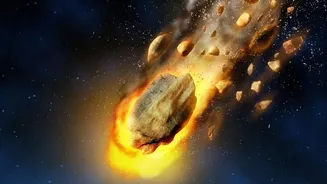
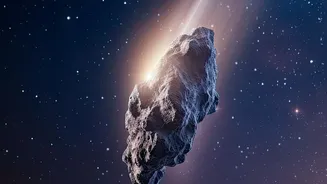
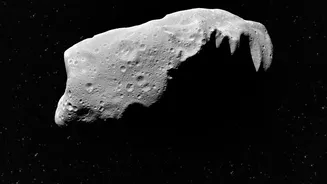
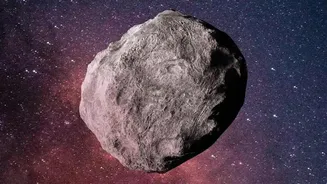
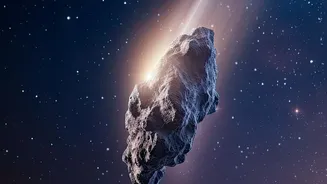
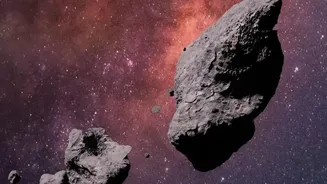
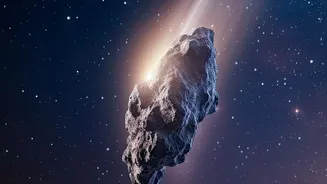
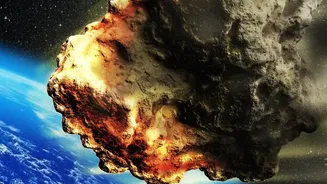
The asteroid, dubbed 2026 PT3, was a sobering example of what astronomers have long feared. Measuring roughly 60 metres across—large enough to flatten a major metropolitan area—it passed within a quarter of the distance to the Moon. While it posed no actual
impact risk on this pass, the alarming part was the timing of its discovery. Sky surveys only picked it up as it was receding from its closest approach to Earth. Had it been on a direct collision course, humanity would have had virtually no time to prepare or react. This last-minute sighting wasn't a failure of a specific telescope but rather a clear demonstration of the inherent limitations baked into our current planetary defense network.
The Sun: Our Biggest Blind Spot
So, how did a relatively large object get so close without being seen? The answer lies in the Sun. Asteroid 2026 PT3 approached Earth from the sunward direction, meaning it was lost in the immense glare of our own star. Ground-based telescopes, which do the bulk of our asteroid hunting, are essentially blinded when looking in that direction. They operate at night, scanning the dark sky for the faint, reflected light of distant space rocks. An object coming from the Sun's vicinity is rendered invisible. This isn't the first time this has happened. The 2013 Chelyabinsk meteor, which exploded over Russia with the force of a small nuclear weapon, also arrived undetected from the direction of the Sun. These events underscore a critical vulnerability: our ability to detect a threat depends entirely on where it comes from.
Our Current Line of Defense
For decades, programs like the Catalina Sky Survey and Pan-STARRS have been our primary sentinels against near-Earth objects (NEOs). These ground-based optical surveys have been incredibly successful, discovering thousands of asteroids and mapping their orbits. They have found the vast majority of the truly enormous, dinosaur-extinction-level asteroids, and we know that none of them pose a threat for the foreseeable future. However, their effectiveness dwindles for smaller objects, those under 140 meters in diameter, which are still large enough to cause catastrophic regional damage. In 2005, the U.S. Congress mandated that NASA find 90% of these city-killer-sized objects, a goal we are still far from reaching. The current systems are hampered by daylight, bad weather, and their inability to spot asteroids coming from the Sun or those that are particularly dark and non-reflective.
Building a Better Watchtower
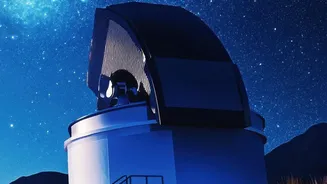
Fortunately, a new generation of asteroid hunters is on the way, designed specifically to plug these dangerous gaps. The Vera C. Rubin Observatory, a massive new telescope in Chile that began full operations in 2026, will scan the entire southern sky every few nights, creating an unprecedented time-lapse movie of the cosmos. Its vast field of view and incredible sensitivity will dramatically increase the discovery rate of all types of asteroids. Even more crucial is NASA's upcoming NEO Surveyor, a space-based telescope scheduled for launch by 2028. Operating from a point in space far from Earth, NEO Surveyor will use infrared sensors to spot asteroids by their heat signatures. This allows it to find them regardless of how dark they are. Most importantly, being in space frees it from the constraints of weather and daylight, allowing it to look in the direction of the Sun to find asteroids like 2026 PT3 that are currently hidden in the glare.