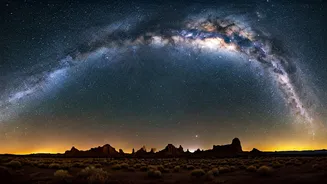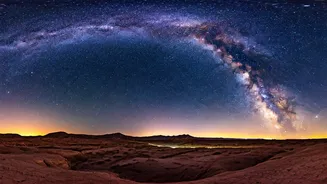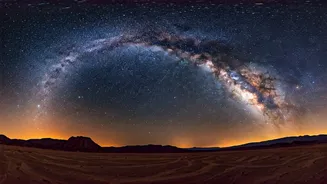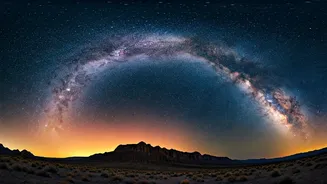




The Great Escape from City Lights
For generations, the cosmos was humanity’s calendar, compass, and canvas for myths. Today, for over 80% of the world’s population living under light-polluted skies, the Milky Way is a forgotten spectacle. In India's rapidly growing cities, the constant
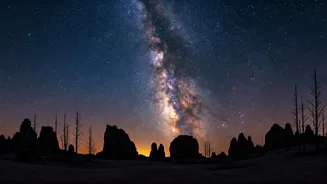
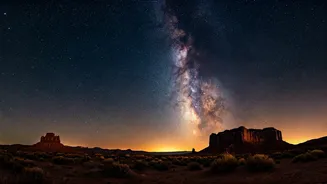
glare from streetlights, buildings, and advertisements creates a perpetual twilight, obscuring all but the brightest celestial objects. This has given rise to a new form of wanderlust, driven not by the desire to see a monument, but by the longing to see nothing—or rather, the brilliant nothingness of a truly dark sky.
What is Astro-Tourism?
Astro-tourism, or stargazing tourism, is travel for the specific purpose of observing the night sky. It's an immersive experience that goes beyond a casual glance upwards. It involves travelling to locations with minimal artificial light, often coinciding with celestial events like meteor showers or planning around the new moon for the darkest possible conditions. For many, it’s a meditative and humbling experience, a chance to disconnect from screens and reconnect with the vastness of the universe. This isn’t just for amateur astronomers with expensive telescopes; it’s for anyone curious about the cosmos.
The Crown Jewel: Hanle, Ladakh
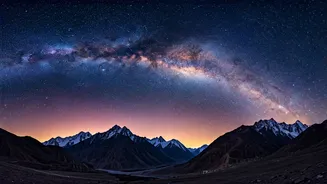
No discussion of Indian astro-tourism is complete without mentioning Hanle. In 2022, the Indian government officially designated the Hanle village area in Ladakh as India’s first Dark Sky Reserve. Located at a high-altitude, with dry weather and minimal human disturbance, the conditions here are pristine. Home to the Indian Astronomical Observatory, Hanle offers breathtaking views of the Milky Way’s galactic core, nebulae, and constellations invisible from anywhere else in the country. A trip here is a pilgrimage for serious stargazers, offering an unparalleled celestial show.
High-Altitude Wonder: Spiti Valley, Himachal Pradesh
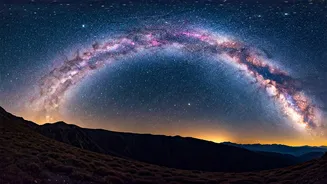
Long before Hanle was designated, Spiti Valley was the go-to destination for stargazers. This high-altitude cold desert offers a similar combination of clear skies, low pollution, and breathtaking landscapes. Villages like Kibber and Langza are famous vantage points. By day, you explore ancient monasteries and stark mountain scenery; by night, you are treated to a canopy of stars that feels close enough to touch. The lack of infrastructure, while a challenge for some, is precisely what preserves its dark-sky credentials.
Desert Cosmos: Rann of Kutch, Gujarat
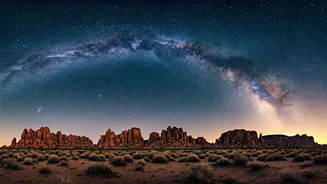
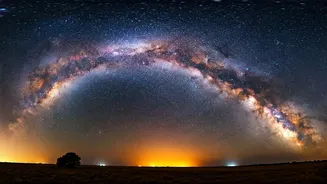
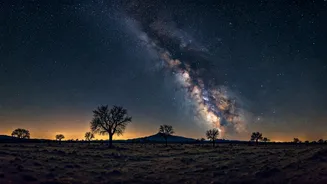
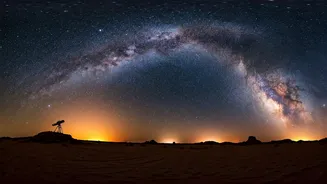
A dark-sky experience isn't limited to the mountains. The vast, flat expanse of the Rann of Kutch provides a unique setting for stargazing. During the winter months, especially around the Rann Utsav, the salt desert offers an unobstructed 360-degree horizon. As the sun sets over the white desert, the sky transforms into a deep, dark canvas. The experience of lying on the cool salt flats and watching meteor showers or tracking constellations is profoundly different from a mountain experience, offering a sense of infinite space both above and around you.
Southern Skies: Coorg, Karnataka
For those in South India, the Western Ghats offer their own pockets of darkness. While not as pristine as the Himalayas, the hills of Coorg provide a welcome escape from the lights of Bengaluru and Chennai. Several homestays and resorts located deep within coffee plantations have started catering to astro-tourists, offering clearings and guided sessions. It's a more accessible option for a weekend trip, proving that you don't always need to travel to extreme altitudes to find a slice of the cosmos.
Tips for Your First Trip
Ready to plan your own celestial adventure? First, check the lunar calendar and travel during or near a new moon for the darkest skies. Download a stargazing app like Stellarium or SkyView to help you identify constellations. Pack layers, as even desert locations get cold at night. Crucially, bring a red-light torch instead of a white one; red light preserves your night vision. And most importantly, allow your eyes at least 20-30 minutes to fully adjust to the darkness. The stars will be there, waiting.