







The Invisible Danger: What are PM10 and PM2.5?
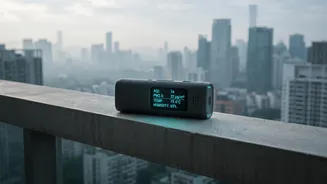
Particulate Matter (PM) refers to tiny solid and liquid particles floating in the air. For health purposes, we focus on two sizes: PM10 and PM2.5. PM10 particles (like dust, pollen, and mould) are 10 micrometres or smaller. They are coarse enough to be
mostly trapped in your nose and throat, causing irritation and coughing. PM2.5 particles are the real danger. At 2.5 micrometres or smaller—about 30 times smaller than a human hair—they are fine enough to bypass your body's natural defences, travel deep into your lungs, and even enter your bloodstream. These particles are linked to serious health issues, including asthma, bronchitis, heart attacks, and other respiratory illnesses, making them the most critical pollutant to track during winter.
Why Air Quality Worsens in Winter
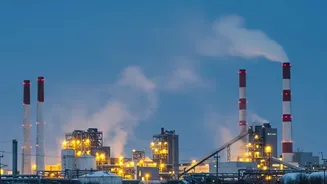
Several factors combine to create India's notorious winter smog, especially across the Indo-Gangetic Plain. Agricultural stubble burning in states like Punjab and Haryana releases massive plumes of smoke. This combines with ongoing emissions from vehicles, industry, and construction dust. The problem is then sealed in by winter weather. Cold, heavy air and lower wind speeds trap these pollutants close to the ground, a phenomenon known as temperature inversion. The Himalayas can also act as a geographical barrier, preventing the polluted airmass from dispersing.
Step 1: Choose a Reliable Monitoring Tool
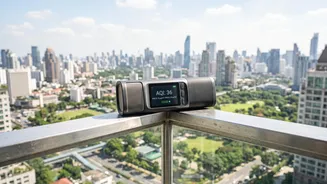
The most crucial step is to get data from a reliable source. While many apps are available, official government sources provide the most authoritative data. The primary tool for Indians is the 'SAMEER' app, developed by the Central Pollution Control Board (CPCB). It provides hourly updates to the National Air Quality Index (AQI) for over 100 cities directly from government monitoring stations. Another official source is SAFAR (System of Air Quality and Weather Forecasting and Research), from the Ministry of Earth Sciences, which covers major metro areas like Delhi, Mumbai, and Pune. Several reputable third-party apps like IQAir AirVisual and Breezometer also provide detailed data, often with forecasts and user-friendly interfaces, but they may use a mix of government and other data sources.
Step 2: Check the Data for Your Location
Using an app like SAMEER is straightforward. After downloading it, you can select your city to see the overall AQI. The app colour-codes the reading for quick understanding. You can then tap on your city to see more details, including the specific concentrations of different pollutants like PM2.5 and PM10. Many apps allow you to view data from specific monitoring stations within a city. This is useful as pollution levels can vary significantly across a large urban area. Check the station closest to your home or office for the most relevant information.
Step 3:' Understand the Air Quality Index (AQI)
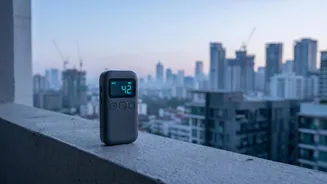
The AQI is a single number that simplifies complex pollution data. India's National AQI runs on a scale from 0 to 500 and is divided into six colourcoded categories. The final AQI number you see is determined by the pollutant with the highest reading at that time, which in winter is almost always PM2.5. The categories are:
Good (0–50): Minimal impact.
Satisfactory (51–100): Minor breathing discomfort to sensitive people.
Moderate (101–200): Breathing discomfort for those with lung or heart disease.
Poor (201–300): Breathing discomfort for most people on prolonged exposure.
Very Poor (301–400): Can lead to respiratory illness after long exposure.
Severe (401–500): Affects even healthy people and seriously impacts those with existing conditions.
Step 4:' Take Action Based on the Reading
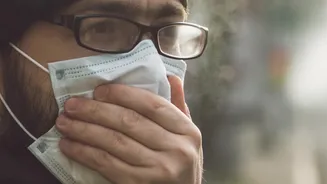
Knowing the numbers is only useful if you act on them. For a 'Moderate' AQI (101–200), sensitive groups—children, the elderly, and people with heart or lung conditions—should reduce prolonged or heavy outdoor exertion. When the AQI enters the 'Poor' category (201–300), everyone should consider reducing heavy outdoor activity. In 'Very Poor' (301–40) conditions, avoid all prolonged outdoor exertion. This means postponing morning jogs or moving workouts indoors. At 'Severe' levels (401+), it is advisable to stay indoors as much as possible, keep windows closed, and use an air purifier if you have one. Simple measures like wearing a wellfitted N95 mask can also significantly reduce your exposure if you must go outside.