




With the US midterm elections concluded, a new era of divided government in Washington sets the stage for political clashes. Central to this new dynamic is the presidential veto, a powerful tool that could shape everything from domestic policy to global
markets.
Understanding the Presidential Veto
The US Constitution grants the president the authority to reject legislation passed by Congress. This power, known as the veto, is a cornerstone of the American system of checks and balances. When a president vetoes a bill, it is sent back to Congress with objections. To overcome the veto, both the House of Representatives and the Senate must vote to override it with a two-thirds majority, a historically difficult threshold to meet. The mere threat of a veto can be enough to force lawmakers to change legislation, a practice known as 'veto signaling'. In a divided government, where the president's party does not control both chambers of Congress, the veto transforms from a latent power into a frequently used tool to block the opposing party's agenda.
Midterms, Gridlock, and Market Reactions
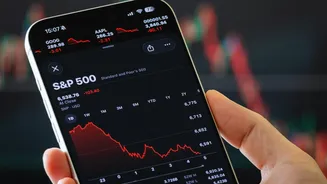
US midterm elections often result in the president's party losing control of at least one chamber of Congress, leading to a scenario known as political gridlock. This outcome increases the likelihood that the president will use the veto to stop legislation passed by the opposition. Immediately following an election that creates a divided government, markets often react with a sense of relief and can even rally. This may seem counterintuitive, but investors often prefer gridlock to sweeping, one-sided policy changes. The certainty that major tax hikes, spending bills, or stringent regulations are unlikely to pass provides a more predictable environment for businesses and investors. As a result, market volatility often decreases once the election uncertainty is over.
Is Political Stalemate Good for Business?
The idea that markets 'like' gridlock is a recurring theme among financial analysts. A split government, reinforced by the presidential veto, can prevent drastic shifts in economic policy. This stability is often viewed favourably by investors, who are wary of sudden changes that could affect corporate earnings or investment strategies. For example, a divided government can curb excess government spending, which may help ease pressure on bond yields. However, this preference for stalemate is not universal. Some analysts caution that gridlock can also lead to damaging funding standoffs and government shutdowns, which introduce their own brand of uncertainty into the market. Furthermore, while gridlock might prevent new, potentially disruptive laws, it can also stall necessary reforms.
Sector-Specific Impacts of a Veto Standoff
The impact of potential vetoes and legislative gridlock is not felt evenly across the market. Specific sectors can be big winners or losers. For instance, following the recent midterms, there were concerns that a new Congress could pursue tighter regulations on artificial intelligence and data centres, which put pressure on some technology stocks. Conversely, a presidential veto could be used to block such regulations, protecting those industries. The energy sector is another key area, where a president might veto attempts to roll back deregulation or impose new environmental restrictions. Similarly, the healthcare and pharmaceutical industries watch closely, as legislation affecting drug pricing or insurance mandates could be stopped by a veto. These sector-specific battles become the new focus for investors navigating a divided government.
Why Global and Indian Markets Pay Attention
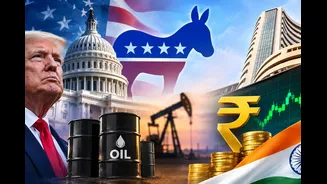
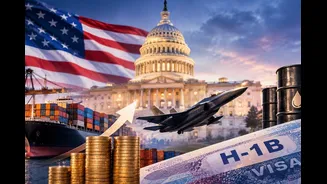
US political dynamics have significant ripple effects on the global economy, including India. A divided government in Washington can influence global financial conditions, trade policy, and geopolitical developments. For India, a key channel of impact is through the US dollar and Treasury yields. Policy gridlock in the US can lead to a weaker dollar and lower bond yields, which can, in turn, encourage foreign portfolio investors to move capital into emerging markets like India. This can boost Indian equities and strengthen the rupee. Furthermore, changes in US trade policy, such as scrutiny on tariffs or H-1B visa rules, are directly influenced by the power balance in Washington and can affect India's crucial IT services sector.