


The High-Stakes Hunt for Lunar Water
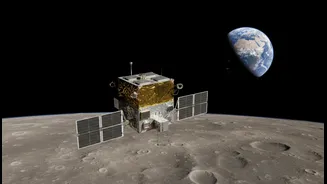
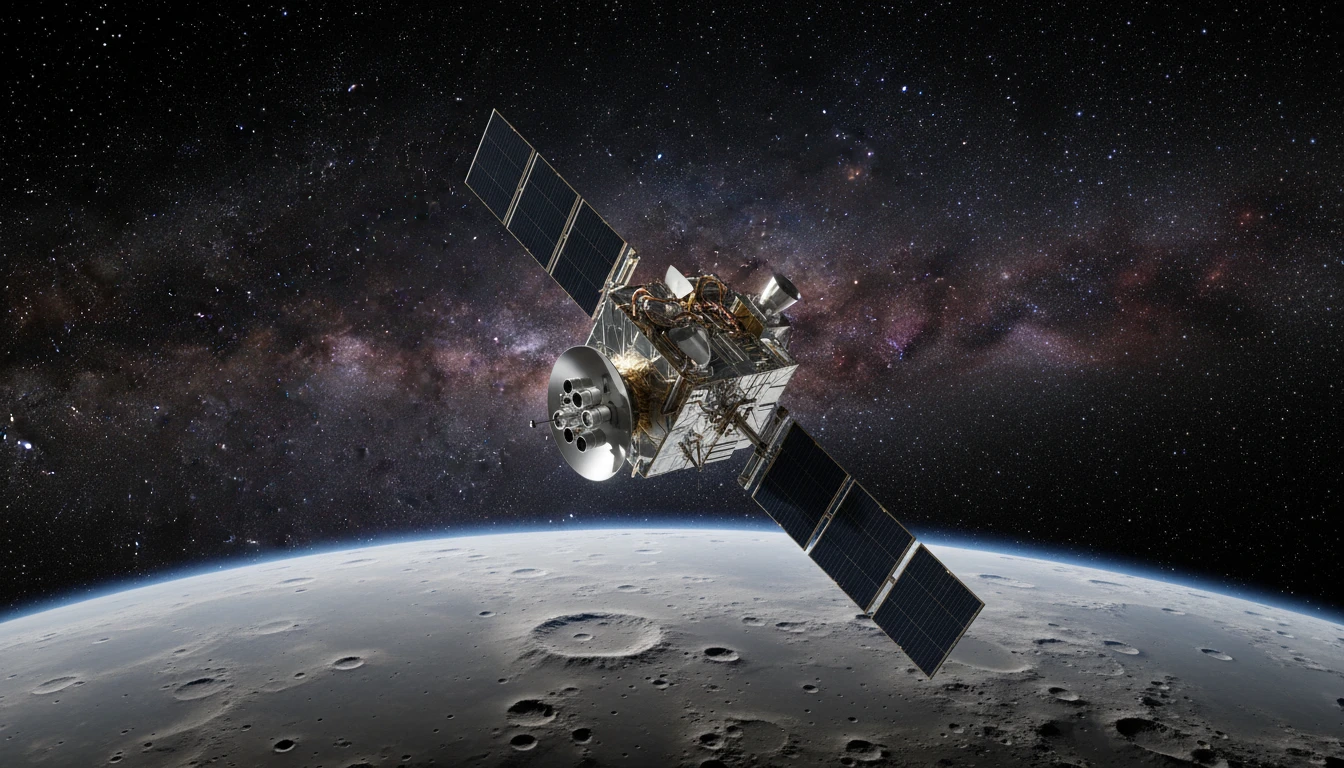
Humanity is heading back to the Moon, and this time, it’s not just about flags and footprints. International programs like Artemis and ambitious commercial ventures have their sights set on the lunar south pole for one primary reason: water. Locked away
in permanently shadowed craters where temperatures are colder than on Pluto, billions of years old ice could be a game-changer for space exploration. This ice could provide drinking water, breathable air, and, most importantly, be split into hydrogen and oxygen to create rocket propellant. A refueling station on the Moon would dramatically lower the cost and complexity of missions to Mars and beyond, making lunar water one of the most valuable resources in the solar system.
An Unintended Consequence of Landing
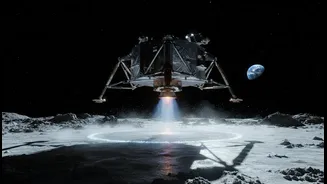
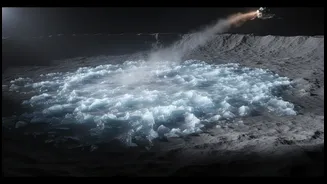
There's a fundamental irony in our lunar ambitions. To land softly on the Moon's airless surface, a spacecraft must fire powerful rocket engines to slow its descent. These engines, depending on their fuel, can eject tonnes of hot gas. Much of this exhaust is composed of water (H2O) and other volatile chemicals like methane (CH4) and hydrogen. On Earth, this exhaust would quickly dissipate into the thick atmosphere. But on the Moon, which has virtually no atmosphere, these gas molecules are unhindered. They shoot out from the lander in a rapidly expanding cloud that can travel vast distances. Simulations show that exhaust from a single landing can spread globally in mere hours, blanketing the entire lunar surface with a thin layer of contaminants.
When Lander Fumes Look Like Ancient Ice
This is where the scientific problem becomes acute. The primary goal is to find and analyze pristine, ancient ice to understand the history of water in our solar system and potentially find clues about the origins of life. But when water vapor and methane from a lander's exhaust eventually settle in the same ultra-cold polar craters, they freeze. To a rover's scientific instruments, this freshly deposited frost can be indistinguishable from the native ice it was sent to study. A recent study showed that over half of the methane from a single landing could become trapped in these polar cold traps, effectively polluting the scientific record for decades or even centuries. It’s like trying to find an ancient artifact in a museum while a sprinkler system is spraying everything with a layer of modern grime.
The Critical Limits of Computer Models
Scientists are well aware of this problem and use sophisticated computer models to predict where the exhaust will go. These simulations track how molecules are kicked out of the engine, how they bounce across the lunar surface—a process described as ballistic hopping—and where they are likely to end up. However, these models have significant limitations. As the headline warns, they are often generic and not validated with mission-specific data. Every lander is different, with a unique engine, propellant mixture, mass, and landing trajectory. Furthermore, the exact chemical reactions that occur when hot exhaust gases meet the super-chilled, radiation-blasted lunar soil are not fully understood. Without real-world data from actual landings, these models remain educated guesses.
The Urgent Call for Mission-Specific Validation
This is why there is a growing call from scientists to make validation a mandatory part of every lunar mission. "Mission-specific validation" means equipping landers and orbiters with sensors to measure the spread of contaminants in real time. It involves taking baseline measurements before landing and then carefully tracking the changes afterward. One planetary protection officer at the European Space Agency, Silvio Sinibaldi, stated that we risk missing an opportunity if we don't have instruments on board to validate these models. This data would be used to refine the computer simulations, turning them from general forecasts into precise tools. It would allow scientists to distinguish between man-made contamination and genuine lunar ice, preserving the integrity of one of the most important scientific quests of our time.